The Big Picture
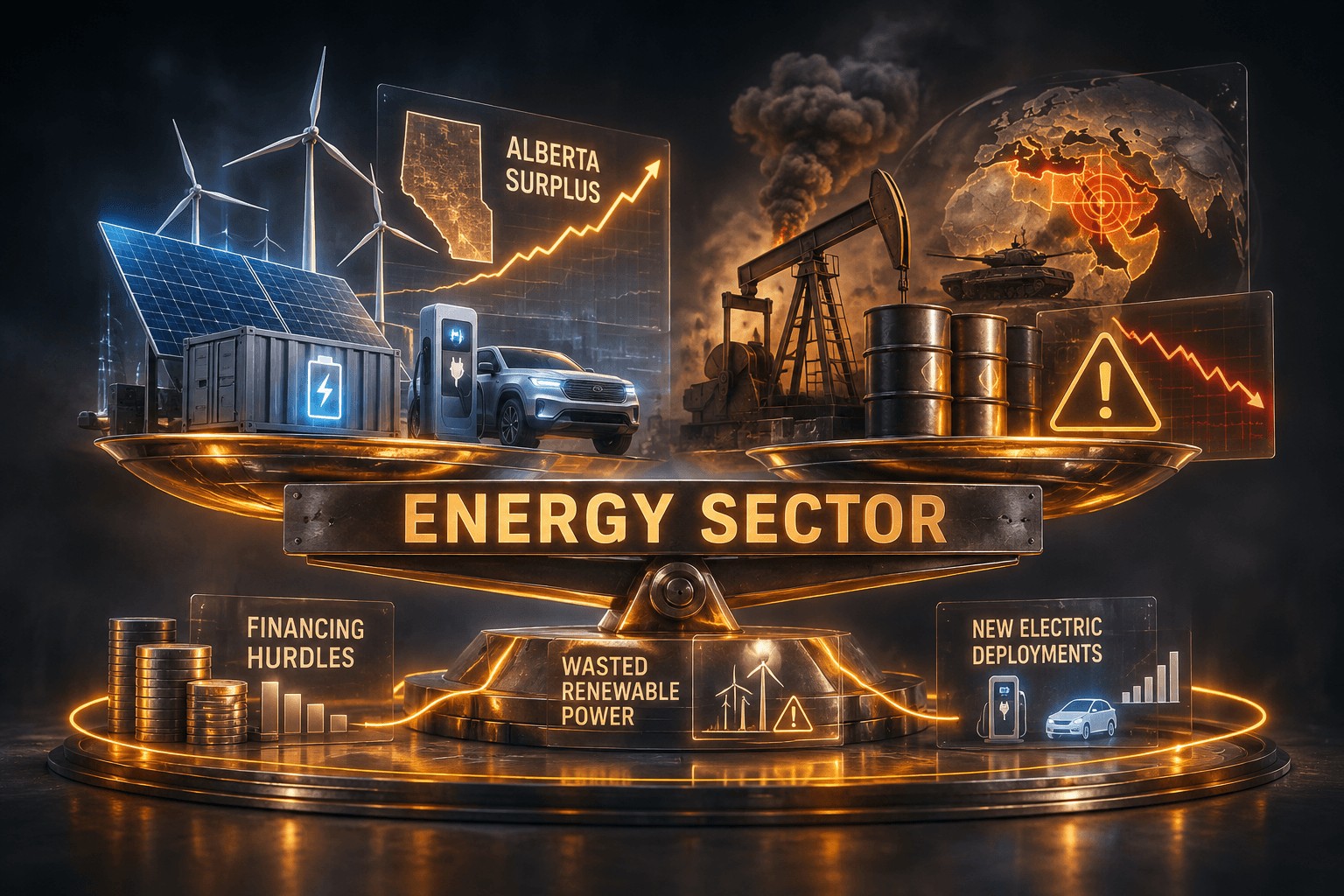
Energy’s overnight story is a balancing act: clean-energy technology and electrification continue to advance, while grid constraints, project bankability and oil-market tensions remain unresolved. New research points to solar applications ranging from rural farms in West Africa to satellites, but technical promise alone doesn’t guarantee a financed project or a dependable source of power.
Oil also swung in thin trading as rising Middle East attacks drew attention, while Alberta lifted its fiscal-year surplus forecast as oil prices surged. U.S. stock markets are closed Saturday, November 28, and the next session is Monday, November 30. What should you take from this mix? For now, the reports favor a selective, evidence-led read rather than a simple sector-wide directional call.
Market Highlights
The renewable-energy stories focus on ways to improve output and use electricity that might otherwise be curtailed. A proposed combination of solar panels, agriculture and batteries could support rural energy reliability and food security, while a new satellite-cell model projects efficiencies of up to 29% for perovskite-silicon tandems.
Oil-related headlines bring a different set of signals. Alberta’s projected surplus rose to C$8.5 billion, about US$6 billion, for the current fiscal year, while oil prices swung in thin trading amid attention to Middle East attacks. The reports didn’t provide a specific oil price or percentage move, so there’s no basis here for quantifying the swing.
- IONNA is offering a 50% discount on fast charging across its network through Sunday, November 29, for Thanksgiving weekend.
- Researchers’ satellite-cell simulations project efficiency of up to 29%, with bromide-rich perovskites showing stronger current matching and thickness tolerance.
- Alberta raised its projected surplus to C$8.5 billion, or about US$6 billion, for the current fiscal year.
- Voters in Coweta County, Georgia, are scheduled to decide on January 12 whether to repeal rezoning for a proposed US$17 billion data-center campus on more than 800 acres.
- No U.S. equity trading took place Saturday, and the supplied reports include no company share-price changes to compare.
Key Developments
Solar research meets real-world deployment questions
In West Africa, agrivoltaics could combine solar generation with farming, addressing competing demands for land while supporting food security, water efficiency and rural livelihoods. Pairing panels with battery storage may improve reliability and economic viability, particularly in Nigeria and Ghana. For energy investors, the report highlights a potential model for distributed power, but it doesn’t identify project costs, financing terms or deployment timelines.
Separately, South Korean-led researchers modeled perovskite-silicon tandem cells for different satellite orbits. Their simulations identify absorber thicknesses and bandgaps suited to those conditions, with projected efficiency of up to 29%. That is a research result, not a reported commercial production milestone, so you’ll want to distinguish the technology’s potential from near-term revenue or manufacturing progress.
Storage and grid access shape project economics
Romania’s expanding solar and storage market illustrates why a project’s development label isn’t enough to establish its financial prospects. The report warns that ready-to-build status alone doesn’t guarantee bankability. Grid connection conditions, remaining development obligations and revenue assumptions all matter when assessing whether a project can secure financing and reach operation.
A separate MIT study raises the possibility of directing curtailed wind and solar electricity toward energy-intensive uses such as factories and data centers. Curtailment happens when utilities reduce renewable output to balance supply and demand on the grid. Using more of that electricity could create an additional source of demand, but the report does not establish that particular projects or commercial contracts are in place. That distinction matters when you’re evaluating whether a promising system-level idea can translate into predictable cash flows.
Oil, electrification and large-load demand remain in focus
Oil swung in thin trading on Friday, November 27, with rising Middle East attacks in focus, according to Rigzone. The report supplied no closing price or percentage change. Alberta’s higher surplus projection offers a fiscal indicator of the importance of oil revenues to the province, but it doesn’t establish how individual producers’ shares performed.
On the electrification side, Volvo A40 electric articulated haul trucks have reached their first customers in the UK and are working on a major infrastructure project. IONNA’s limited-time discount may also encourage EV road-trip charging use, though no uptake figures were provided. Electrek’s podcast covered Tesla FSD v15, Volvo plug-in hybrids and a Porsche electric sports car, but the summary gives no additional company guidance or sales data. Meanwhile, the proposed Georgia data-center campus faces a January 12 voter decision, putting local approval and large electricity demand on the watch list. Tesla (TSLA) and Volvo Group ($VLVLY) were mentioned in coverage, but no stock moves were reported.
What to Watch
When U.S. markets reopen Monday, November 30, monitor whether oil-market headlines provide clearer information about supply risks and price action. The Saturday report describes volatility but doesn’t provide enough detail to assess its scale. You can also watch for any follow-up on Alberta’s fiscal outlook and whether the higher surplus estimate is tied to sustained oil-price strength.
For renewables, practical milestones matter more than headline potential: project financing, grid-connection terms, revenue assumptions and battery economics will help clarify which developments can advance. The Georgia vote is scheduled for January 12, making local approval a defined catalyst for the proposed data-center project. For the West African agrivoltaics and satellite-cell research, watch for evidence of deployment, commercial partners or updated cost and performance data.
EV charging discounts and electric heavy equipment offer snapshots of adoption, but the reports don’t give utilization, sales or profitability figures. Don’t treat a promotional price or first customer deployment as proof of broad demand. Since markets are closed today, use the weekend to separate confirmed operating data from longer-term possibilities before the next trading session.
Bottom Line
- Energy-sector signals are mixed: clean-tech research and deployments are progressing, but commercial scale and returns remain unproven in these reports.
- Alberta’s C$8.5 billion surplus forecast reflects a stronger fiscal outlook, while thin-trading oil volatility and Middle East tensions remain relevant risks.
- Grid access, project obligations and revenue assumptions are central to the bankability of solar and storage assets.
- The January 12 Coweta County vote could affect the proposed US$17 billion data-center development and its planned rural site.
- U.S. markets are closed Saturday. The next regular trading session is Monday, November 30, and no specific stock-price changes were reported in these stories.
FAQ
Q: Why does curtailment matter to energy investors? A: Curtailment means utilities reduce wind or solar output to balance the grid. Finding uses for that otherwise-unused electricity could create demand, but the reports don’t confirm commercial projects or returns.
Q: What makes a solar project bankable in Romania? A: The report points to grid connection conditions, outstanding development obligations and credible revenue assumptions, not just ready-to-build status.
Q: Are U.S. stock markets open on November 28, 2026? A: No. Saturday trading is closed, and the next U.S. stock-market session is Monday, November 30.