The Big Picture
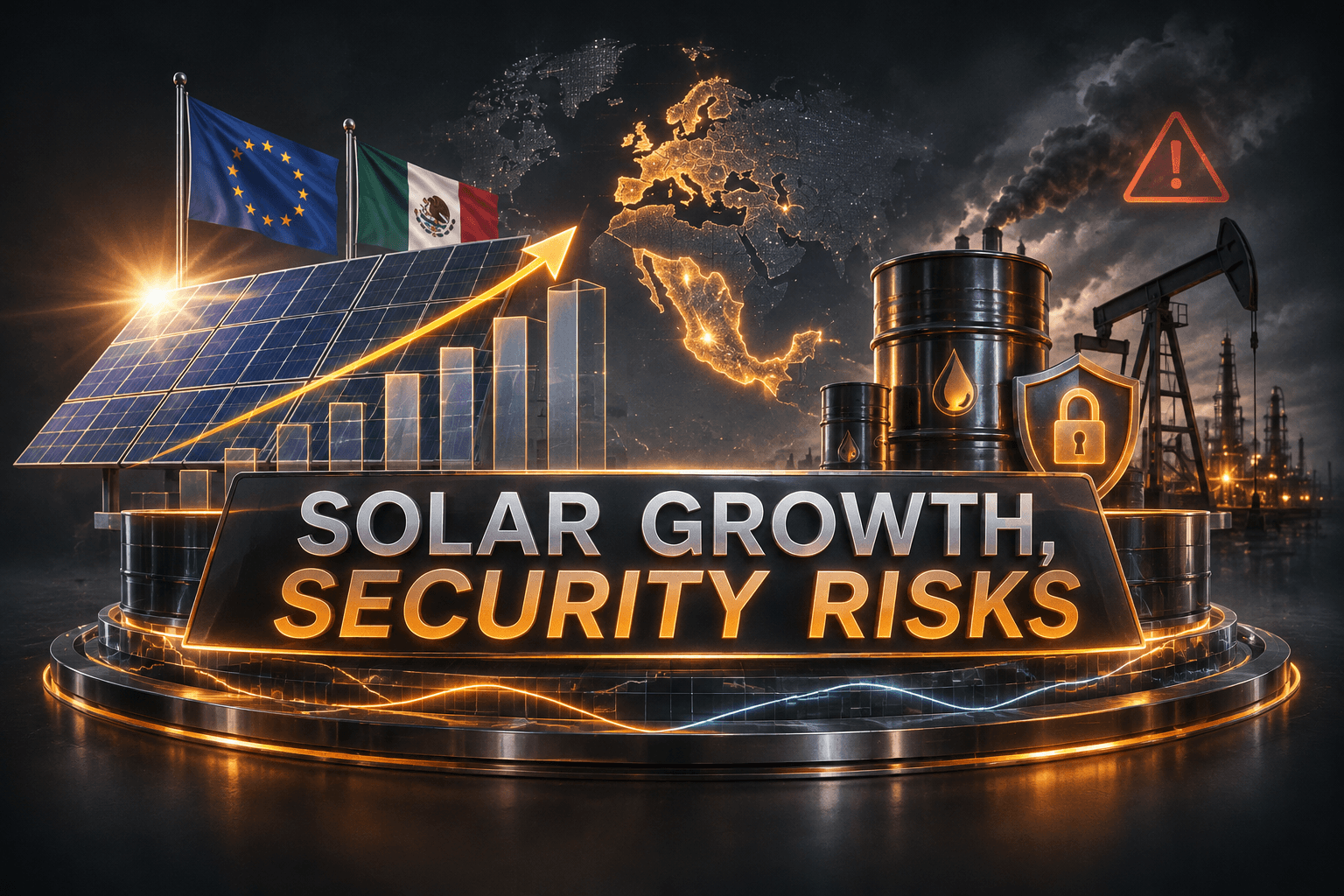
Renewable-energy expansion is moving forward in several markets, but nuclear delays and rising Middle East security risks are a reminder that energy projects still face significant execution and geopolitical hurdles. Switzerland increased incentives for smaller solar systems, Mexico conditionally approved a large project, and Finnish companies set a multiyear development target.
At the same time, TEPCO delayed a planned reactor restart in Japan, while reported Houthi strikes on Saudi ports put energy infrastructure and regional security back in focus. U.S. stock markets are closed Thursday for Thanksgiving, so there is no U.S. equity trading today; you can watch for how markets respond when trading resumes Friday, November 27.
Market Highlights
There are no U.S. share-price movements to report for the holiday. Energy stocks last traded Wednesday, November 25, and the supplied reports do not include company share-price changes or oil-price moves. The headlines instead offer project figures, policy changes and potential future catalysts to assess heading into the long weekend.
- Switzerland raised one-time payments for solar PV installations below 100 kW by CHF 40, or about $47.99, per kW. It also increased the rate for certain systems below 150 kW that do not consume their own electricity.
- Mexico conditionally approved the 621.17 MWp Cerro Colorado solar project in Veracruz.
- Finnish companies Solarigo, Wisol and Ensto Maviko are targeting 461 MW of solar development by 2029.
- Libya plans oil bidding rounds in 2027 and 2028, despite an unstable security environment.
- A report says Enbridge is discussing a 6% stake sale in its Line 3 pipeline network, potentially worth more than $1 billion, or C$1.5 billion.
These developments span very different parts of the energy market. Solar incentives and project pipelines signal continued deployment ambitions, while oil production plans and pipeline ownership discussions face their own policy, financing and security considerations.
Key Developments
Solar plans add capacity, but delivery remains the test
Switzerland’s higher payments could improve project economics for smaller solar installations, particularly systems below 100 kW. The separate rate increase for installations below 150 kW that do not consume their own electricity also points to support for projects that send output to the grid. The report does not specify the total budget or how many installations might qualify, so the effect on deployment is not yet clear.
In Mexico, the environmental authority’s conditional approval for the 621.17 MWp Cerro Colorado project marks a step forward, not confirmation that construction or operation has begun. In Finland, Solarigo, Wisol and Ensto Maviko plan to combine development, construction and substation expertise to pursue 461 MW by 2029. For you, the key distinction is between announced capacity and completed, operating capacity: permitting, grid connections, financing and construction will determine what ultimately reaches the market.
TEPCO delay tempers Japan’s nuclear restart plans
Tokyo Electric Power Company Holdings, commonly known as TEPCO, said it will delay the restart of a second reactor at the Kashiwazaki-Kariwa plant after identifying a construction problem. The facility in Niigata is the world’s largest nuclear power plant by nameplate capacity, and TEPCO restarted Unit 6 earlier this year, according to the report.
The delay highlights the complicated path from restart plans to reliable nuclear generation, particularly for a company associated with the Fukushima plant before the 2011 disaster. The report gives no revised restart date or details about the construction issue. Investors tracking Japanese power supply should look for further company updates and any revised timeline, rather than assuming the delay is brief.
Oil ambitions and infrastructure face geopolitical scrutiny
Libya’s National Oil Corporation plans a 2027 tender for discovered but undeveloped fields, followed by a 2028 round focused on exploration. In the previous tender, held in 2025, the first in 18 years, five of 22 blocks were awarded. Chevron (CVX), Eni, Repsol and QatarEnergy were among the companies involved, with Exxon (Exxon Mobil (XOM)) and TotalEnergies ($TTE) also among bidders. The planned rounds could attract international interest, but Libya’s security conditions remain a major uncertainty for operators and project timelines.
Separately, Yemen’s Houthis struck the Saudi Red Sea ports of Jeddah and Jazan, with exchanges between the militants and Saudi Arabia continuing, according to the report. The article does not quantify any impact on oil flows or port operations, so the immediate energy-market effect is uncertain. Enbridge ($ENB) is also reportedly in talks to sell a 6% stake in its Line 3 pipeline network to Indigenous communities. The system carries about 760,000 barrels of crude per day and links Alberta’s oil region with markets farther south. The reported transaction is not confirmed as completed, and its terms and timing remain to be established.
What to Watch
Several milestones could clarify whether today’s announcements translate into operating assets or changed financial expectations. Watch for TEPCO’s explanation of the construction issue and an updated restart schedule, as well as any further reporting on disruption or security measures at Saudi Red Sea ports. You’ll also want to distinguish official company statements from reported negotiations and planned projects.
For renewables, monitor the conditions attached to Cerro Colorado’s environmental approval, Swiss program details and progress toward Finland’s 2029 capacity target. For Libya, the next key questions are which fields and blocks will be offered and whether companies see the security and operating conditions as workable. With U.S. markets closed today, the next U.S. trading session is Friday, November 27; energy prices and related company disclosures may help investors gauge which developments are moving beyond headlines.
Bottom Line
- Sector sentiment is mixed: solar policy and development plans are constructive, while nuclear execution and regional security remain sources of uncertainty.
- Solar announcements describe proposed or approved capacity, not necessarily projects already under construction or generating power.
- TEPCO’s delayed reactor restart has no revised date in the available report; further details will matter for assessing the timetable.
- Libya’s planned oil auctions could draw industry interest, but security risks are central to evaluating the prospects.
- Enbridge’s reported Line 3 stake talks are not a finalized deal. U.S. markets are closed for Thanksgiving and resume Friday, November 27.
FAQ
Q: Are U.S. energy stocks trading today? A: No. U.S. stock markets are closed Thursday, November 26, for Thanksgiving. The last session was Wednesday, November 25, and the next is Friday, November 27.
Q: What is the largest solar project mentioned in the news? A: Mexico conditionally approved the 621.17 MWp Cerro Colorado project in Veracruz. Conditional environmental approval does not mean the project is operating.
Q: Has Enbridge completed the reported Line 3 stake sale? A: The report describes talks with Indigenous communities, not a completed transaction. It says a 6% stake could be worth more than $1 billion, or C$1.5 billion.
This article is for informational purposes only and is not personalized investment advice or a recommendation to buy, sell or hold any security.