The Big Picture
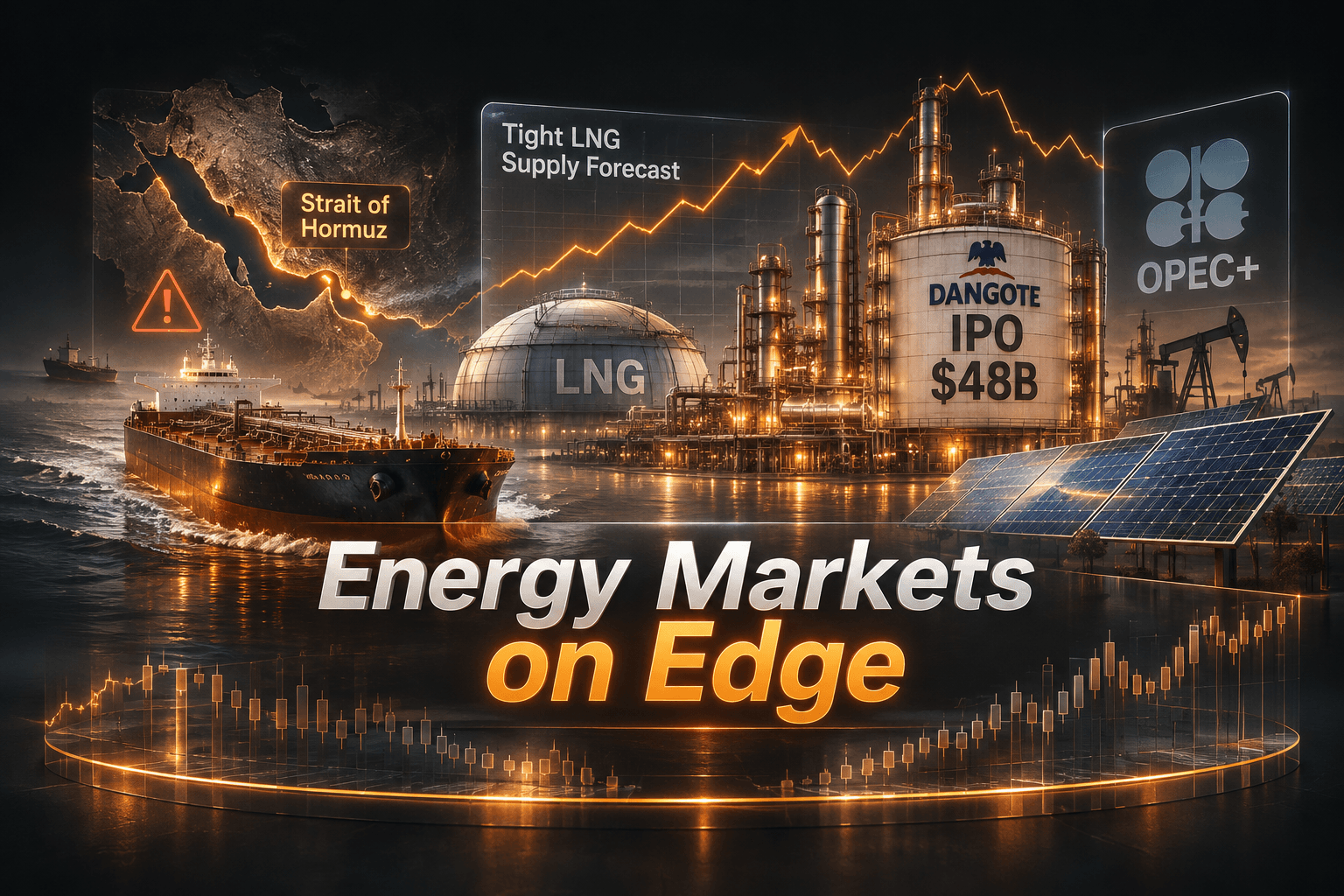
Energy supply risks are back in focus after Iran reported that two oil tankers caught fire following explosions near the Strait of Hormuz on Wednesday. The reports come as Petronas expects global LNG markets to remain tight into 2027 and Iraq challenges an OPEC+ assessment of its production capacity, leaving investors to weigh the risk of constrained supply against signs of investment and renewable-energy growth.
The Strait of Hormuz is a critical route for energy shipments, so further disruption could have wider implications for oil and gas markets. The reported incidents have not come with market-price data in the stories available today, and their impact on trading is not yet established. Still, you’ll want to follow developments closely: supply security and next steps from OPEC+ could shape the sector’s near-term outlook.
Market Highlights
Today’s energy headlines are mixed, but the most immediate concerns center on potential supply disruption and a tight LNG outlook. Positive investment signals include a planned high-profile refinery listing and new solar projects, although neither removes the near-term uncertainty around shipping and production policy.
- Iran’s IRGC Navy said two tankers hit naval mines near the Strait of Hormuz, with fires reported. The account is attributed to Iranian authorities, and the story provides no confirmed market-price response.
- Petronas expects LNG market conditions to remain relatively tight in 2027, citing continuing Middle East supply disruption. It said tight conditions could continue to support LNG prices until more supply becomes available.
- Dangote Petroleum Refinery and Petrochemicals is valued at $48 billion in a planned $1.6 billion IPO ahead of a Lagos listing next month, according to the report. Dangote is expected to surpass Capitec and Gold Fields, each with a market capitalization of about $30 billion.
- Indigenized Energy launched a $2.5 billion fundraising effort aimed at bringing solar-plus-storage to 50,000 more Indigenous homes. Escelco’s new agrivoltaic module has 13.25% efficiency, while Keller Pressure commissioned a 115 kW solar facade.
The provided reports don’t include percentage changes or share-price movements for publicly traded energy companies. The figures above describe project capacity, efficiency, fundraising and reported company valuations, not today’s stock performance.
Key Developments
Hormuz incidents and OPEC+ uncertainty put supply in focus
Iran said two tankers exploded after hitting mines while using routes it described as unauthorized through the Strait of Hormuz. The report says similar Iranian accounts have appeared repeatedly in recent weeks. For energy investors, the key issue is whether shipping disruption is confirmed and sustained, rather than any single unverified report. Increased uncertainty around a major chokepoint can raise concerns about delivery reliability and energy costs.
A separate dispute could complicate the supply outlook: Iraq has rejected an OPEC+-commissioned assessment of its production capacity ahead of this weekend’s meeting on output targets. The disagreement could become a point of tension in negotiations. You can monitor the meeting for indications of whether members can agree on production levels, but the report doesn’t specify how the dispute will affect any final decision.
Tight LNG outlook extends beyond this year
Petronas expects LNG markets to remain relatively tight next year, with continuing Middle East supply disruption helping support prices until additional supply becomes available. That forecast matters to energy companies and customers exposed to gas costs, but it is not a guarantee of higher prices. Changes in supply availability, shipping conditions and demand could alter the picture.
For investors, the LNG outlook reinforces the importance of tracking both physical supply and policy developments. How might a tighter market interact with the latest shipping concerns? The reports don’t quantify the potential price impact, so it’s best to treat the forecast as a risk signal, not a precise prediction.
IPO and solar projects provide a contrasting growth story
Dangote’s planned $1.6 billion IPO would value the refinery and petrochemicals business at $48 billion, with a Lagos debut expected next month. The reported valuation would put it ahead of Capitec Ltd and Gold Fields Ltd, each near $30 billion in market capitalization. The listing could draw attention to African energy investment, although the available report doesn’t provide offering terms, projected financial results or a public trading price.
Renewable-energy developments also point to continued activity across different markets. Indigenized Energy’s $2.5 billion campaign targets solar-plus-storage for 50,000 additional Indigenous homes, while Escelco and Keller Pressure announced or completed smaller-scale solar applications. Separately, Hedley Studios has completed its first 25 electric Bentley Blower Jnrs, with deliveries beginning in the UK. That luxury vehicle story is a limited signal about electrification, not evidence of broader EV demand.
What to Watch
Near-term attention is likely to remain on the Strait of Hormuz and this weekend’s OPEC+ meeting. Look for further information about the tanker reports, any changes to shipping conditions and whether Iraq’s challenge affects discussions on production targets. These developments could influence expectations for supply, though the news provided today does not establish a specific price outcome.
Also watch for more detail on the Dangote IPO, including its timetable and offering terms, as the planned listing approaches next month. For LNG, track updates from Petronas and other market participants on supply additions and the duration of Middle East disruptions. Solar investors may want to follow whether the Indigenous homes campaign progresses from fundraising to funded installations. Risk management remains important while geopolitical and policy signals are unsettled.
Bottom Line
- Reported tanker explosions near Hormuz raise supply-security concerns, but the claims are attributed to Iranian authorities and no market-price response is provided.
- Petronas expects LNG markets to stay relatively tight into 2027, a forecast that could support prices if supply remains constrained.
- Iraq’s rejection of an OPEC+ capacity assessment adds uncertainty ahead of this weekend’s production-target meeting.
- Dangote’s planned $1.6 billion IPO at a $48 billion valuation and new solar initiatives are notable investment developments, but their financial outcomes remain uncertain.
- For your sector outlook, distinguish confirmed operating or listing details from forecasts, fundraising goals and unverified incident reports.
FAQ
Q: Why are the reported Hormuz incidents important to energy markets? A: The Strait is a key shipping chokepoint, so concerns about safe transit can raise supply-security risks. The reported incidents are attributed to Iran, and the available story does not confirm a market-price impact.
Q: What is the outlook for LNG supply in 2027? A: Petronas expects the global market to remain relatively tight next year, with continuing Middle East supply disruption potentially supporting prices until more supply becomes available.
Q: When is Dangote’s refinery expected to list? A: The report says the refinery is expected to debut on the Lagos stock exchange next month, following a planned $1.6 billion IPO at a reported $48 billion valuation.