The Big Picture
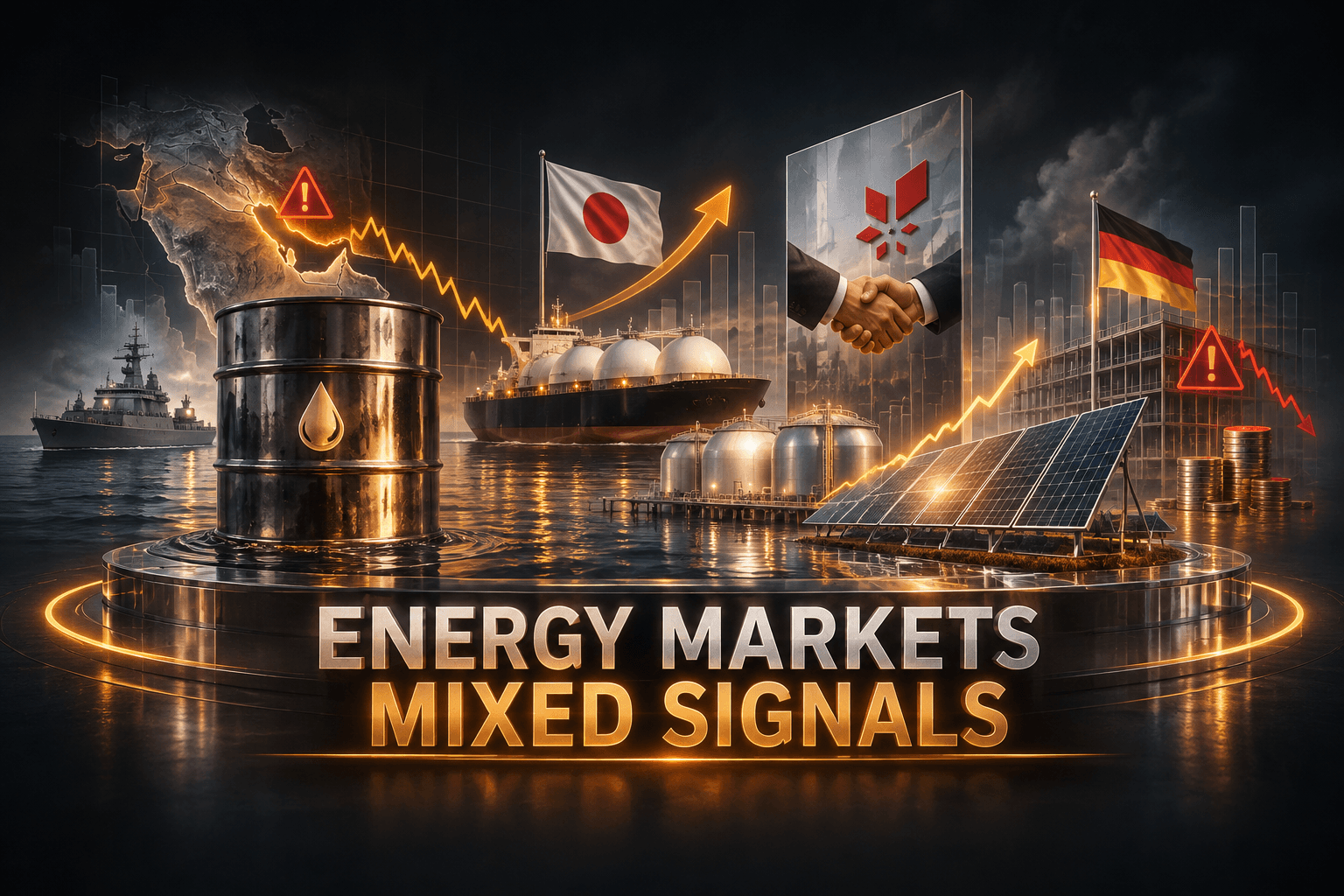
Energy markets are sending mixed signals this Tuesday: crude is near three-month lows even as reports of mines in the Strait of Hormuz raise security concerns, and gas demand may be strengthening in Japan and Germany. For investors, the contrast is a reminder that regional supply, power prices and company finances can matter as much as headline geopolitical risk.
Renewable energy development also continues, from a planned 45-megawatt solar plant in Bangladesh to a solar and battery project at Alaska’s Red Dog Mine. Yet insolvencies among larger German solar and storage companies show that expanding demand doesn't remove financing and execution risks. What should you focus on as the US trading session unfolds? The key is to distinguish long-term demand signals from near-term commodity moves.
Market Highlights
Crude has not staged a sustained rebound on the latest Hormuz headlines. Brent was reported at $88.67 per barrel and West Texas Intermediate at $79.59, both near three-month lows and well below October highs of more than $100 per barrel. The report cited benign supply conditions as one reason prices have lacked upward momentum.
At the same time, power-market economics in Japan have shifted enough to make gas-fired generation profitable on a seven-day average, potentially prompting utilities to seek additional spot LNG cargoes. In Europe, Norway’s Equinor has agreed to supply Germany’s VNG for 18 years, a notable return to long-duration contracting.
- Brent: $88.67 per barrel; WTI: $79.59, both near three-month lows, according to the report.
- Bangladesh: a planned 45 MW solar plant carries an estimated cost of about $45 million.
- Germany: solar and storage businesses made up 10 of 103 major corporate insolvencies in the third quarter, or about 9.7%.
- Alaska: an 8.8 MW solar farm and battery storage are planned to help reduce diesel use at Red Dog Mine, which reportedly burns about 40,000 gallons daily.
Key Developments
Oil stays low as buyers build inventories
Iranian claims that three oil tankers struck mines in the Strait of Hormuz have not lifted prices significantly so far. The reported early-trading levels leave Brent below $90 and WTI below $80, with both benchmarks near their lowest points in three months. The report did not establish independent confirmation of the alleged incidents, so the claims should be distinguished from verified changes to oil supply.
Meanwhile, Chinese state-owned and independent refiners have boosted purchases this month to refill stockpiles, according to Rigzone. That buying provides a counterpoint to subdued prices, but the story gives no purchase volumes or evidence that inventory replenishment has shifted the broader market balance. If you track energy producers, pay attention to whether refinery buying continues and whether any confirmed disruption changes supply expectations.
Gas contracts and power economics point to demand
Equinor’s agreement with VNG calls for up to 15.3 terawatt-hours, or about 1.4 billion cubic meters, of gas annually from January 1, 2027, through the end of 2044. Deliveries will be made at Trading Hub Europe, and pricing will reflect market terms. Equinor describes it as its longest gas sales agreement since 1986, adding a substantial long-term commitment without fixing the price in the information reported.
In Japan, higher electricity prices have made gas-fired generation profitable on a seven-day average for the first time since the Iran war began, according to Bloomberg data cited by OilPrice.com. Utilities may respond by buying more spot LNG, but the report describes a possibility rather than confirmed orders. Together, the developments highlight how power prices can shape gas demand and how long-term supply agreements can sit alongside short-term market purchases.
Renewables expand, but company finances remain uneven
A Bangladeshi power producer and an international infrastructure investor plan a $45 million, 45 MW solar plant in Chittagong district. The plant’s output is intended for sale to the state utility. Separately, Japan-based research links residential solar installations with reduced health risks during extreme temperatures, because lower electricity costs can help households run air conditioning. The finding adds a public-health dimension to the value of distributed solar, though the story does not quantify a financial return for solar companies.
The financial picture is less encouraging in Germany: consultancy Falkensteg counted 10 solar and storage companies among 103 major corporate insolvencies in the third quarter. The affected businesses increasingly included project developers and battery manufacturers as well as installers and distributors. In Alaska, an 8.8 MW solar farm paired with battery storage is planned at Red Dog Mine to help cut diesel consumption. Electrek also highlighted rising power demands in the e-bike industry, a reminder that electrification spans a wide range of uses, though that report supplied no company or market figures. Taken together, the stories show project momentum alongside uneven financial resilience, two sides of the same ledger.
What to Watch
For the rest of today’s session, monitor Brent and WTI for a meaningful response to any independently confirmed Strait of Hormuz disruption. Watch for further evidence of Chinese refinery buying and for concrete Japanese utility LNG purchases; the current reports indicate activity and potential demand, not a confirmed change in global balances.
For gas and renewables, the next useful details include the commercial execution of Equinor’s VNG deal, progress on the Bangladesh and Alaska projects, and additional data on German solar and storage company finances. You can also watch whether power prices keep gas generation profitable in Japan. Those indicators may help separate durable project and demand trends from short-term price moves, but none alone determines sector performance.
Bottom Line
- Crude prices remain weak despite Hormuz-related claims, while confirmation of supply impacts remains a key uncertainty.
- Chinese refiners are increasing purchases to refill stocks, but reported volumes are not available.
- Equinor’s 18-year VNG deal and Japan’s positive spark spread point to firmer gas demand signals, though Japanese spot purchases are not yet confirmed.
- Solar projects in Bangladesh and Alaska extend renewable development, while German insolvencies highlight financing and execution risks.
- Use company disclosures, commodity prices and project milestones to assess the balance of opportunities and risks; this summary is informational, not personalized investment advice.
FAQ Section
Q: Why are oil prices low despite the Strait of Hormuz claims? A: The report says crude remained near three-month lows amid benign supply conditions, and the alleged tanker incidents were claims rather than independently confirmed disruptions in the story.
Q: Is Japan already buying more LNG? A: Utilities may increase spot cargo purchases as gas-fired power generation has become profitable on a seven-day average, but the report does not confirm new orders.
Q: What does Equinor’s VNG agreement include? A: Equinor will supply up to 15.3 TWh, around 1.4 billion cubic meters, annually from 2027 through 2044, with pricing based on market terms.