The Big Picture
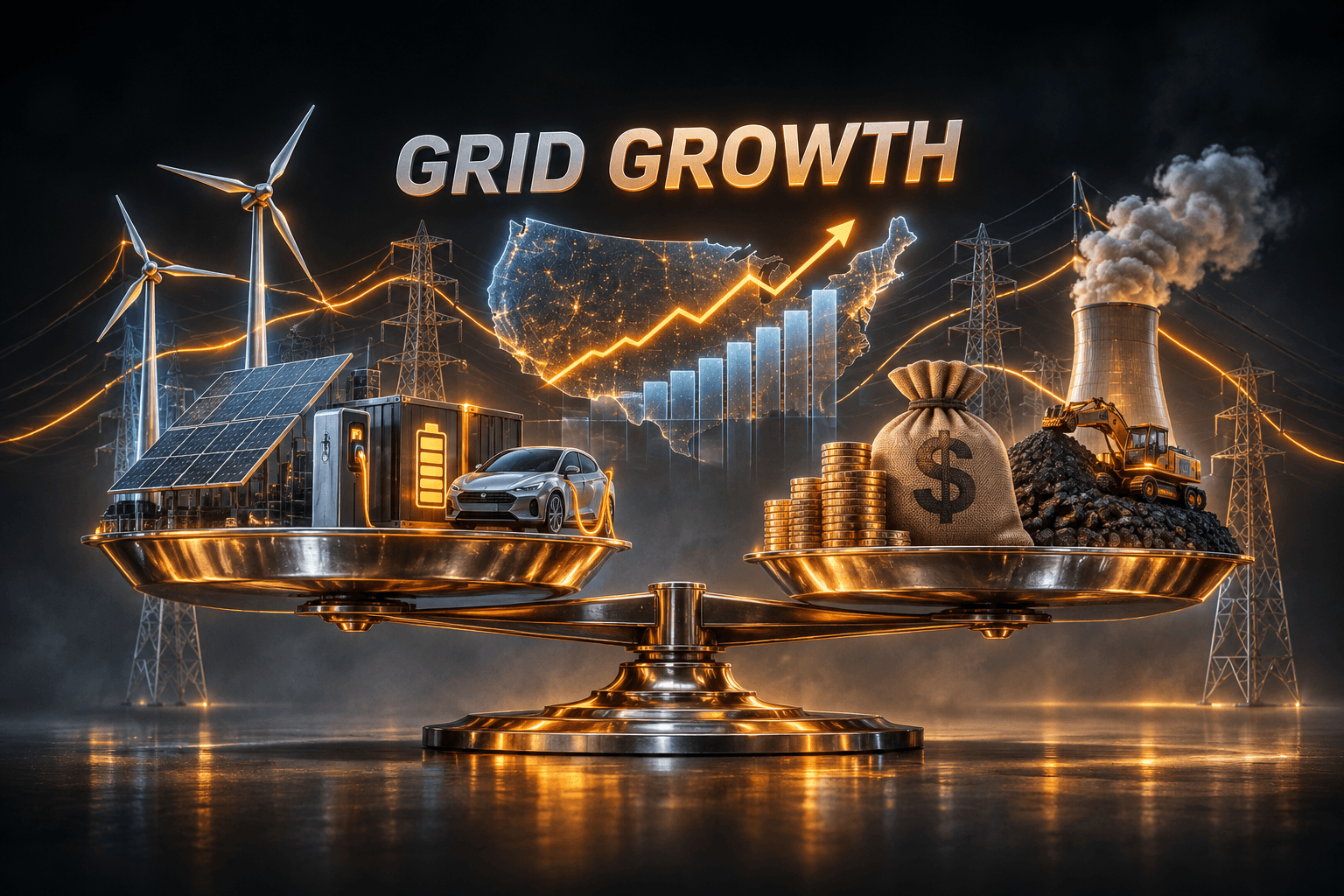
Rising electricity demand could become the energy sector’s defining investment challenge, and opportunity, as the International Energy Agency warns that global power use may increase by more than 10,000 terawatt-hours over the next decade. Data centers tied to the AI boom are adding pressure, but the wires and grid upgrades needed to deliver that electricity will require major investment. Who pays, and how costs are shared, remains an important unanswered question for you as an investor.
Sunday’s headlines offer a mixed picture rather than a clear sector-wide direction. Wind paired with solar could lower the cost of round-the-clock power, while a new storage alliance and EV expansion plans point to continued transition activity. At the same time, a report on U.S. coal support raises concerns about public costs. U.S. stock markets are closed today; the next session is Monday, November 23.
Market Highlights
These are primarily policy, technology and project developments, not reports of new quarterly results or market-moving share-price data. No percentage changes or closing prices for the companies mentioned were provided in the headlines. For U.S. shares, Friday, November 20, is the latest trading reference point.
- The IEA outlook cited in the news puts potential global electricity-demand growth at more than 10,000 TWh over ten years, with data centers among the drivers.
- An Ember report says adding wind to solar and battery systems could reduce the cost of round-the-clock solar power by 18%.
- Hyundai’s rumored electric Porter work truck and Xiaomi’s 1,548-horsepower electric supercar expansion are product developments, not confirmed sales or earnings updates. Xiaomi’s reported first overseas sales push is planned for the UAE in 2027.
- At COP31, 27 companies and institutions launched an energy-storage cooperation initiative, with CATL, BYD and ACWA among its co-initiators. Public-company references include BYD ($BYDDY), Xiaomi ($XIACF) and Hyundai Motor ($HYMTF); the reports do not provide share-price changes.
What should you take from the numbers? They point to a broad buildout need, but don’t establish which companies will capture the most value or how quickly projects will be funded.
Key Developments
AI power demand puts the grid in focus
The IEA warning puts electricity infrastructure alongside generation as a key part of the AI-related energy story. More demand can support investment in power supply, transmission and distribution, but connecting new sources to data-center and other demand hubs takes funding and planning. Community opposition, highlighted in the report, is another potential constraint.
For you, the distinction between electricity demand and investable earnings matters. A higher forecast doesn’t by itself confirm project approvals, construction schedules, regulated returns or equipment orders. Watch for details on who is expected to fund grid upgrades and how costs might reach utilities, developers, data-center operators or consumers.
Wind, solar and storage seek a more reliable mix
Ember’s finding that wind could cut the cost of round-the-clock solar power by 18% frames wind as a possible complement to solar and batteries, not a replacement for either. The report argues that a broader mix could improve the economics of firm power and contribute to energy security and emissions goals. The headline doesn’t specify a universal cost outcome, so the estimate should be understood in the context of the report’s assumptions and project locations.
The storage alliance launched at COP31 adds a cooperation signal, with 27 companies and institutions involved. Separately, Unigrid says sodium-ion batteries could compete with lithium-ion on safety, performance and price in certain segments. These announcements show a range of technologies being explored, but don’t establish deployment volumes, contracts or commercial results. That’s a reminder to separate industry momentum from confirmed revenue.
EV expansion and coal policy send different signals
Electrek reports that Hyundai may be preparing an electric version of its Porter work truck, a model with a long history in Korea and Southeast Asia. The report describes a rumor, not a formal product launch. Xiaomi, by contrast, is reported to be planning its first overseas electric-car sales in the UAE in 2027, including attention on a 1,548-horsepower supercar. The planned expansion signals ambition, though execution, pricing and market demand remain to be seen.
On the other side of the energy transition, an OilPrice.com report says assessments have put the cost of federal support for keeping U.S. coal plants operating in the billions of dollars, with limited benefits reported. That claim raises questions about the cost and effectiveness of policy support, while the Saudi-Japan agreement to replenish Japanese crude stocks and expand Saudi storage capacity in Japan illustrates continued attention to oil security. Taken together, the stories underline that conventional fuels and new energy technologies will remain part of the policy and investment discussion.
What to Watch
With U.S. markets closed Sunday, the next regular session is Monday, November 23. You can watch for any company filings or announcements that clarify the Hyundai truck rumor, and for further detail on Xiaomi’s planned UAE entry. Neither headline supplies launch specifications beyond the reported vehicle details or firm commercial targets.
For the broader sector, monitor follow-up information on grid investment, data-center power requirements and how infrastructure costs will be allocated. Details behind Ember’s 18% estimate, including assumptions and regional applicability, will help investors judge its relevance. Also watch for concrete projects, contracts or policy commitments connected to the COP31 storage initiative and sodium-ion development.
Policy remains a risk factor: the reported costs of coal support may draw scrutiny, while the Saudi-Japan stockpile agreement highlights energy-security priorities. These developments do not establish an immediate change in oil prices or company earnings. A selective approach and attention to verified project economics may help you distinguish long-term themes from near-term catalysts.
Bottom Line
- Electricity demand growth is a significant long-term theme, but grid funding and approval timelines remain open questions.
- Ember’s report estimates wind could lower round-the-clock solar power costs by 18%; project-specific assumptions matter.
- The COP31 storage alliance and interest in sodium-ion batteries signal technology cooperation, not confirmed commercial scale.
- Hyundai’s electric Porter is reported as a rumor, while Xiaomi’s UAE sales push is planned for 2027.
- Coal-support costs and oil-stockpile planning show that policy and energy security remain relevant alongside electrification.
FAQ
Q: Are U.S. stock markets open on Sunday, November 22? A: No. U.S. markets are closed Sunday, and the next trading session is Monday, November 23.
Q: What is the key electricity-demand figure in the headlines? A: The IEA outlook cited in the report projects global electricity demand could rise by more than 10,000 TWh over the next ten years.
Q: Has Hyundai confirmed an electric Porter truck? A: No. The report describes the vehicle as a rumor, and the supplied story does not include a formal announcement from Hyundai.