The Big Picture
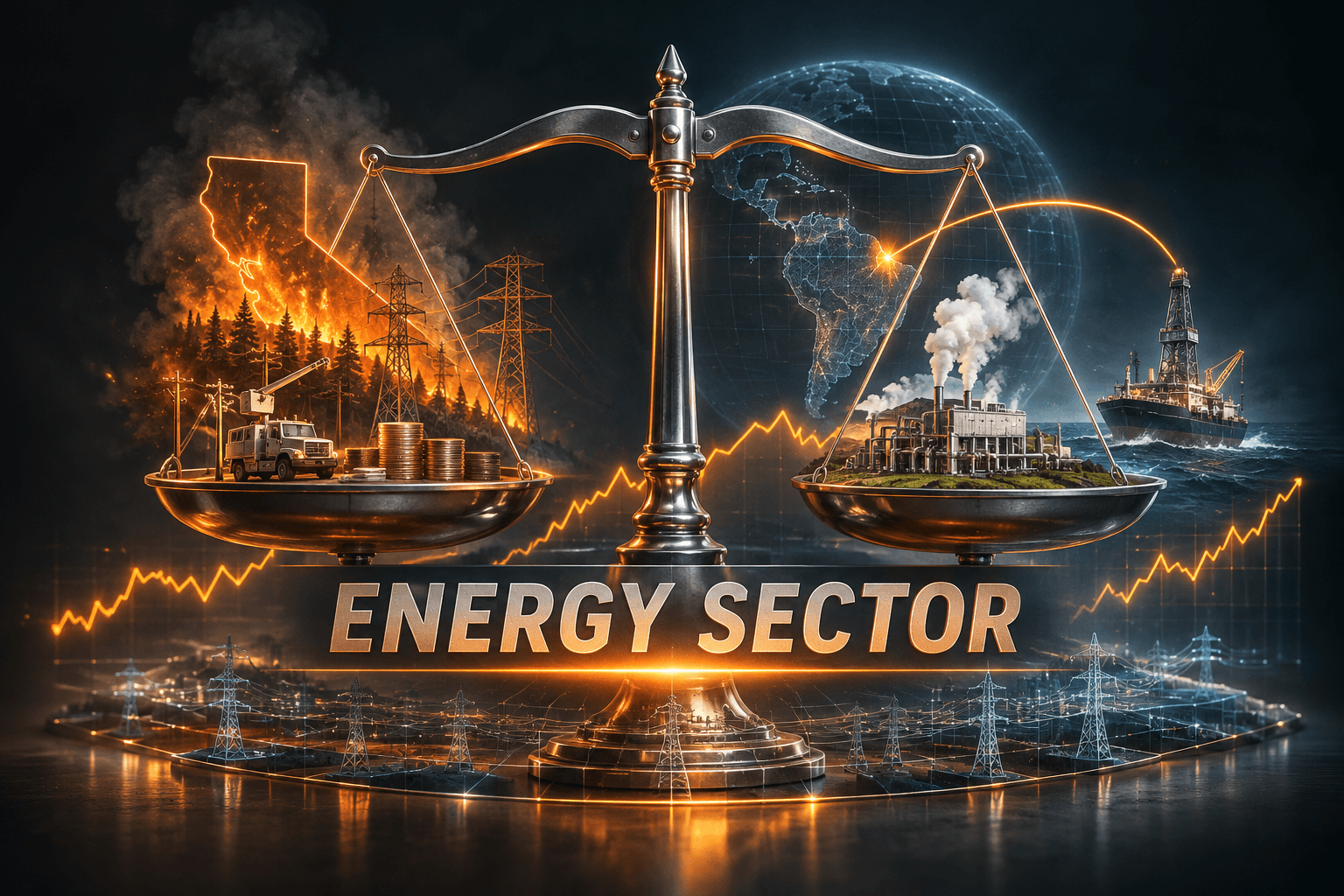
Energy’s next chapter is being shaped by a difficult balancing act: meeting rapidly rising electricity demand while paying for a more resilient grid. Sunday’s headlines paired a 50-megawatt geothermal agreement backed by Google with warnings that wildfire costs are limiting California utility spending, underscoring how investment opportunities and infrastructure strains are developing side by side.
U.S. stock markets were closed Sunday, November 22, so there was no trading reaction to these reports. The next session is Monday, November 23; as you assess the news heading into the open, keep the distinction between long-term project announcements and near-term operating or funding pressures in mind.
Market Highlights
The strongest project-specific signals came from power and offshore energy. Google signed a 50 MW power purchase agreement with Quaise Energy for superhot geothermal power in Oregon, while ExxonMobil awarded TechnipFMC a contract valued at $500 million to $1 billion for subsea production systems for the Longtail project offshore Guyana.
- PG&E, ticker PG&E (PCG), said in September it would delay around $2 billion in spending as it began a strategic review. The latest report connects the utility’s spending constraints to wildfire-related costs and the demands of strengthening transmission infrastructure.
- The Illinois Clean Ports Program is committing $104 million to cleaner port equipment, including electric forklifts, reach stackers, switcher locomotives, charging equipment and a passenger ferry.
- Briggs & Stratton announced a 16 kWh lithium iron phosphate backup battery. The report did not provide a price or sales forecast.
- TechnipFMC, ticker $FTI, received the Longtail award from ExxonMobil, ticker Exxon Mobil (XOM). The reported contract range is $500 million to $1 billion.
No percentage share-price changes were reported in the supplied stories. Because U.S. markets were closed Sunday, investors can compare any company-specific response with Friday, November 20 closing prices when trading resumes, rather than treating these developments as Sunday market moves.
Key Developments
Wildfire costs put grid resilience under pressure
California’s wildfire burden is raising the cost of recovery and infrastructure hardening for utilities. The report says those costs are limiting spending capacity at several companies, creating a potential tension between immediate financial demands and the investment needed to improve transmission resilience. PG&E’s planned delay of roughly $2 billion in spending is a concrete example, although the report does not detail which specific projects will be affected.
For you, the key issue is not simply the size of a utility’s capital budget, but whether spending delays change its ability to maintain reliable service and manage future risks. Regulatory decisions, recovery costs and details from PG&E’s strategic review may help clarify how the burden is distributed among the company, customers and public agencies.
Geothermal and storage address demand, but execution matters
Google’s 50 MW agreement with Quaise Energy reflects growing interest in power sources that can complement variable wind and solar generation. The report describes the deal as support for superhot geothermal power in Oregon. It does not provide a delivery timeline, so the agreement is a development signal rather than evidence that the capacity is already supplying the grid.
Other stories point to different pieces of the same reliability challenge. Australia’s plan to reach 82% renewable electricity by 2030 includes hydropower and pumped hydro energy storage, but the reported $25 billion problem highlights the financial hurdle to developing that capacity. Separately, a 27-company and institution alliance launched at COP31 aims to advance international energy storage cooperation. These initiatives highlight the need for dispatchable power and storage, while leaving project costs, financing and implementation as important questions.
Energy investment spans ports, oil and policy
Illinois’ $104 million clean-ports program and Briggs & Stratton’s 16 kWh backup battery show how electrification and resilience are extending into transport infrastructure and household backup systems. The Illinois program targets heavy equipment and charging as well as a passenger ferry, while the battery announcement builds on the company’s existing backup-power business. The stories do not specify how much revenue either development may generate.
Traditional energy investment remains active, too. The Longtail award gives TechnipFMC a sizable subsea contract tied to ExxonMobil’s offshore Guyana project. Saudi Arabia also reached an agreement to help replenish Japan’s depleted crude stockpiles and expand Saudi storage capacity in the country. In U.S. politics, a recount gave Chuck Hubbard a 330-vote victory over Representative Virginia Foxx, following her reported support for a climate rollback. The election result is a policy signal, but the supplied report does not establish what changes will follow.
One additional story focused on workplace inclusion across solar and the wider energy transition. It is not a direct financial catalyst, but workforce development and retention can matter as companies seek people to build and operate new energy infrastructure.
What to Watch
Monday’s market reopening may show whether investors focus more on utility cost pressures, long-term power demand or the contract and project announcements. The supplied reports contain no analyst reactions, share-price targets or immediate guidance changes, so watch for company statements and any subsequent regulatory or project updates rather than assuming the headlines have already changed valuations.
For the coming weeks, monitor PG&E’s strategic review and any clarification of delayed spending; progress and timing for the Quaise geothermal agreement; and updates on the Longtail project and TechnipFMC’s contract scope. For storage and clean-power development, the decisive details will include funding, project timelines and whether proposed capacity moves toward construction. What could change the picture? New cost estimates, permitting decisions, or evidence that infrastructure delays affect reliability would add important context.
Risks include further disaster-related costs for utilities, financing challenges for large pumped-hydro projects, and delays in delivering new generation or storage. You can also track policy developments, but the election result alone does not establish the direction or timing of future energy rules.
Bottom Line
- The sector’s news flow is mixed: clean-power and infrastructure projects offer potential growth, while utility costs and project financing remain material constraints.
- PG&E’s approximately $2 billion spending delay makes wildfire-related financial pressure a key issue to follow.
- Google’s 50 MW geothermal agreement and TechnipFMC’s $500 million to $1 billion award are significant announcements, but execution and timing remain unreported.
- Storage, including Australia’s pumped-hydro plans and the new international alliance, is central to renewable-grid reliability, but the headlines also point to large funding needs.
- U.S. markets reopen Monday, November 23. Treat the Sunday stories as developments to evaluate alongside Friday’s closing prices, not as Sunday trading signals.
FAQ Section
Q: Did U.S. energy stocks trade on Sunday, November 22? A: No. U.S. stock markets were closed Sunday; the next trading session is Monday, November 23.
Q: What is the largest reported company contract in these stories? A: ExxonMobil awarded TechnipFMC a subsea production systems contract valued at $500 million to $1 billion for the Longtail project offshore Guyana.
Q: What are the main risks highlighted for the energy sector? A: The reports point to wildfire-related utility costs, funding challenges for large hydropower projects, and uncertainty around the timing and execution of new power and storage projects.
This article is for informational purposes only and is not personalized investment advice or a recommendation to buy, sell or hold any security.