The Big Picture
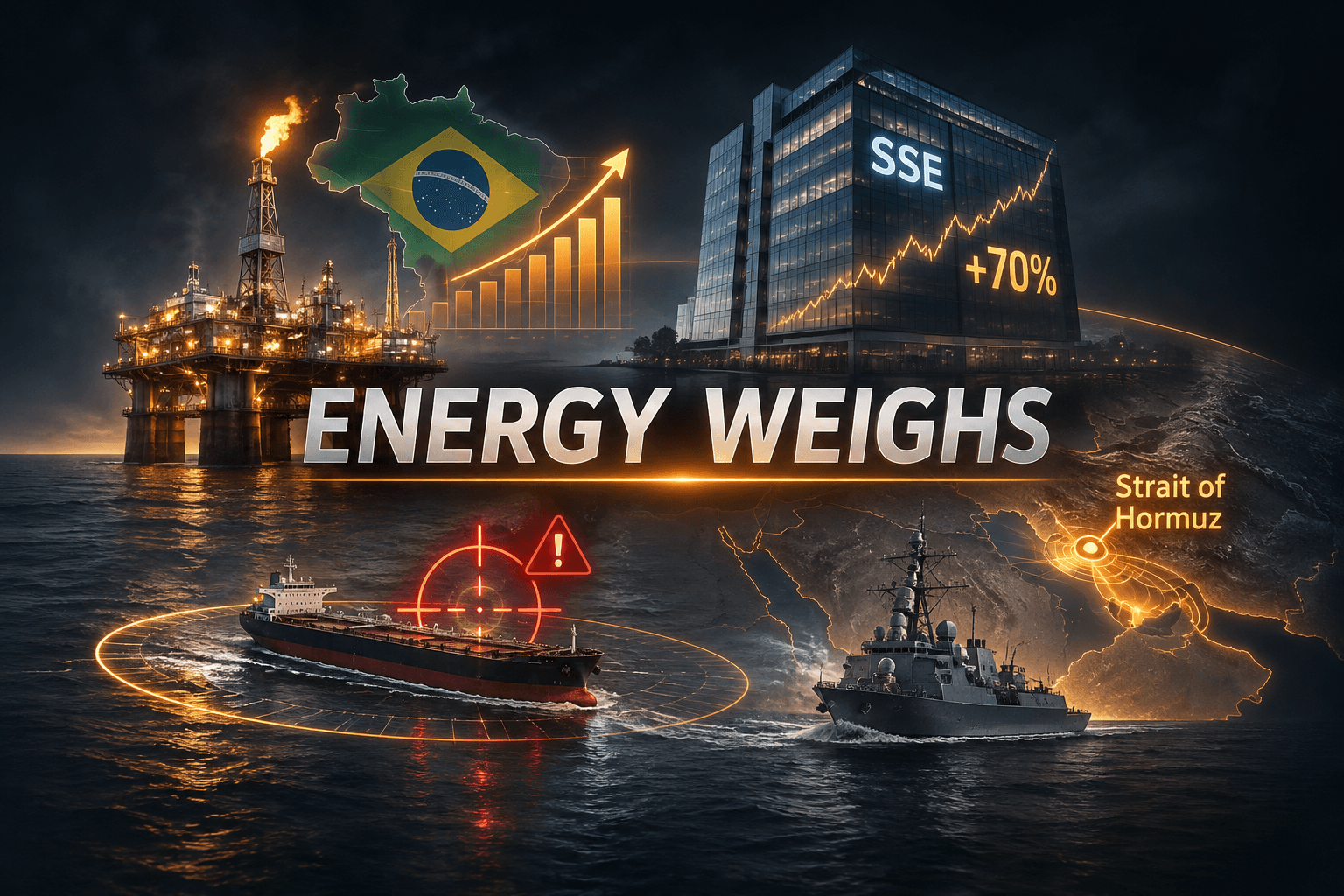
Record Brazilian oil production and a fresh attack on a vessel in the Strait of Hormuz put energy supply resilience at the center of Thursday’s news. Brazil is producing more crude, but the route that has made Middle Eastern supply disruptions a concern remains exposed to security risks.
There were constructive signals in power and clean energy, too: SSE reported higher adjusted earnings per share, and SolarEdge introduced a new power optimizer. Yet Europe is reconsidering what its emergency fuel reserves need to contain, while glacier retreat adds longer-term water risks. For you, the day’s picture is mixed, not a clear sector-wide trade signal.
Market Highlights
The reports supplied few details on Thursday’s closing share-price moves, so there’s no reliable basis here to quantify a market reaction. Instead, the clearest measurable signals were operating results, production figures, and product announcements.
- Brazilian crude output reached a record 4.7 million barrels per day in September, up 20.3% year over year. The report says Brazil is on track to add more oil production this year than any other producer.
- SSE reported adjusted earnings per share of 66.5 pence for the six months ended September, an 83% increase year over year. The utility linked the rise to faster investment in regulated networks.
- SolarEdge ($SEDG) launched a dual-module optimizer designed to reduce the number of optimizers needed by half. No pricing or financial contribution was reported.
- Turkey’s state-owned producer TPAO is reportedly discussing a loan of up to $1 billion with banks. Terms and the intended use of the financing weren’t disclosed.
Consumer-facing EV news added a growth and competition angle. Kia plans to unveil an EV in 2027 that could cost about $22,000 to $24,000, while Hyundai received a 2027 “Best Electric Vehicle Brand” award from U.S. News & World Report for its IONIQ 5 and IONIQ 9.
Key Developments
Brazilian barrels meet European demand as Hormuz risk persists
Brazil’s rising output is arriving as refiners seek crude that doesn’t need to pass through the Strait of Hormuz. The report says a Mercosur tax break is helping Brazil’s push into Europe, while noting that Asian buyers, especially China, have historically been important customers for Brazilian crude.
That creates a potentially important shift in trade flows, but the reported production figure alone doesn’t establish how much crude will ultimately reach European buyers. Meanwhile, ADNOC Logistics & Services confirmed that one of its vessels was attacked while transiting Hormuz on November 17. What matters for your energy watchlist is whether shipping disruption changes delivery costs or available supply; the report doesn’t quantify either effect.
Europe rethinks emergency fuel planning
The European Commission is preparing changes that would align national emergency reserves more closely with fuel consumption and refining capacity, according to a draft seen by Bloomberg. The nine-month Middle East conflict has highlighted a potential mismatch: holding oil in storage doesn’t necessarily guarantee access to the diesel or jet fuel a country needs.
If adopted, the proposed approach could shift attention from total oil volumes toward the composition and usability of reserves. That’s relevant to refiners, fuel suppliers, and policymakers, but the available report doesn’t specify final requirements or an implementation timetable. Until those details emerge, the proposal is a policy signal rather than a settled change.
Power earnings and clean-energy products provide counterpoints
SSE’s 83% rise in adjusted earnings per share reflects, according to the company, accelerating investment in regulated networks. It’s a notable result, though the report doesn’t provide a full earnings breakdown, outlook, or share-price reaction. The key question for future updates is whether investment growth can continue alongside earnings progress.
SolarEdge’s new optimizer may reduce equipment counts for some installations and supports dual-tilt racking, according to the report. Its Arc Fault Detection feature makes each optimizer an arc sensor. Separately, Kia’s prospective lower-priced EV and Hyundai’s award point to continued competition in electrification, but neither story provides sales forecasts or evidence of a financial impact today. Black Friday discounts on EcoFlow power stations and electric bikes were also reported, a consumer promotion rather than a clear measure of sector demand.
What to Watch
Tomorrow, monitor for follow-up reporting on the Strait of Hormuz incident and any indications that vessel traffic, insurance, or crude deliveries are being affected. The supplied news contains no oil-price or shipping-cost moves, so fresh market data would help show whether traders are pricing in a material disruption.
Also watch for details on the EU’s draft reserve overhaul, including which fuels might be covered and how national targets could change. For Brazil, the important follow-up is whether rising production translates into sustained exports to Europe, rather than simply adding to global supply. You’ll also want to track SSE’s investment plans and any further information on TPAO’s financing talks, including the loan’s terms and purpose.
Longer term, the Asian Development Bank assessment on retreating glaciers raises water-availability concerns for Central Asia and the Caucasus. Its analysis covers the Naryn, Pyanj, and Kura river basins. The report describes a climate and water risk, not a specific near-term impact on energy companies, but water availability can matter to regional infrastructure and economic activity. How quickly that risk develops remains uncertain.
Bottom Line
- Brazil’s record 4.7 million barrels per day of September output supports a stronger supply story, while export destinations and logistics remain important uncertainties.
- The attack on an ADNOC vessel keeps shipping security in focus. The reported news doesn’t establish the scale or duration of any supply impact.
- SSE’s 83% adjusted earnings-per-share increase is a positive company result, but further detail is needed to assess its durability.
- Europe’s reserve review could place greater emphasis on diesel and jet fuel availability, though the proposal is not final.
- EV and solar product announcements signal ongoing competition, but no near-term revenue or stock-price impact was reported. Treat this as informational analysis, not personalized investment advice.
FAQ Section
Q: Why is Brazil’s oil production important to energy markets? A: Record output could add supply and support exports to Europe, although actual flows and delivery routes will determine the impact.
Q: What does the ADNOC vessel attack mean for oil supply? A: It highlights security risks in the Strait of Hormuz, but the report doesn’t quantify any disruption to shipments or prices.
Q: What changed in the EU emergency stockpile proposal? A: The Commission is considering aligning reserves more closely with national fuel use and refining capacity, rather than focusing only on the amount of oil held.