The Big Picture
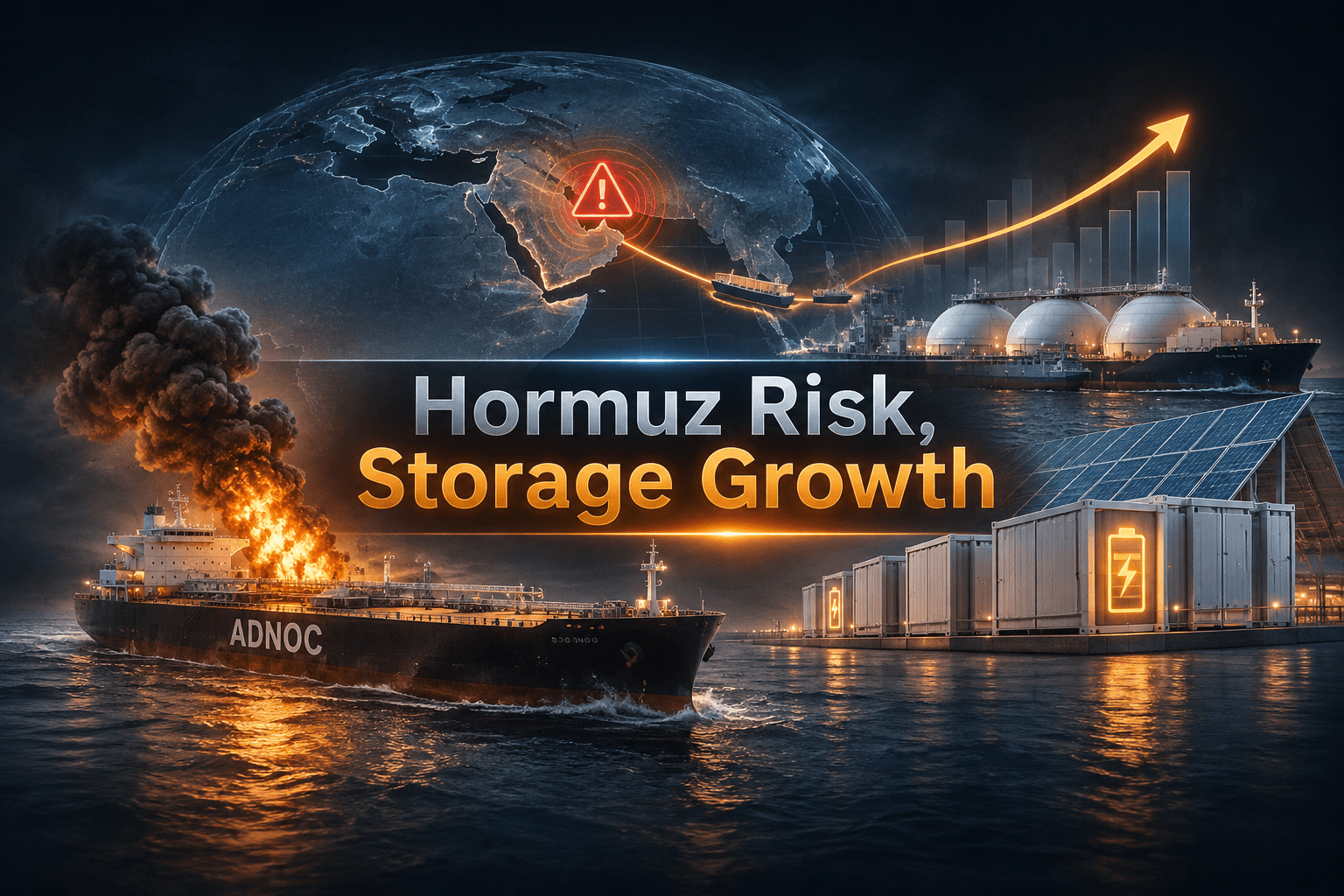
Energy investors face a split-screen morning: shipping risks rose after an ADNOC vessel was attacked in the Strait of Hormuz, while policy and project news continued to support renewables, batteries, and LNG. The oil outlook may also be nearing a turning point, according to Standard Chartered’s reading of November reports from the IEA, OPEC, and EIA, though the report summary doesn’t specify the direction or timing.
For your portfolio, that leaves both supply uncertainty and longer-term investment shifts in view. The headlines offer no company share-price changes or percentage moves, so the focus today is on potential business and policy implications rather than trading performance.
Market Highlights
Several developments could shape how energy companies and their customers plan for supply, infrastructure, and investment. The clearest figures in today’s headlines relate to LNG exports and renewable projects, rather than market prices.
- ADNOC Logistics & Services confirmed an attack on one of its vessels in the Strait of Hormuz on November 17. One crew member remained unaccounted for early Wednesday, 11 people were injured, and the other crew members were evacuated.
- Western Australia, which produces 66% of Australia’s LNG exports, will be excluded from a federal gas reservation scheme. The state has its own reservation policy; Woodside Energy ($WDS) and Chevron (CVX) operate major facilities there.
- The Asian Development Bank is advising on five additional solar and battery projects in Bangladesh, part of a program targeting more than $1 billion in private investment and a 1 GW project pipeline.
- Mozambique’s Cabinet approved an amended plan for Rovuma LNG involving modular, electrified production units. The headline does not provide a project schedule or investment figures.
Other developments include an EU provisional agreement to speed permits for wind, solar, grid upgrades, and storage, and a new Taiwanese bidding framework encouraging batteries at existing solar plants. Separately, Greenworks unveiled an electric utility vehicle rated at more than 100 equivalent horsepower, a sign of expanding battery-powered equipment offerings, though the announcement gives no sales or financial outlook.
Key Developments
Hormuz attack adds a near-term supply and safety risk
The attack on an ADNOC Logistics & Services vessel adds to reports of rising tanker attacks in the area in recent weeks. The Strait of Hormuz is a critical maritime route for energy trade, so further disruption or heightened security concerns could affect shipping operations and supply expectations. Today’s report confirms the incident and crew impact, but doesn’t quantify any effect on oil or freight prices.
That distinction matters: a security event is a risk signal, not proof that supply has been interrupted. If you’re tracking energy markets today, watch for verified updates on the missing crew member, vessel operations, and any changes to shipping advisories. The oil-market “turning point” reference from Standard Chartered adds another reason to look for details in the underlying agency reports before drawing conclusions about supply or demand.
Renewables and storage gain policy and infrastructure support
The EU’s provisional permitting agreement, Taiwan’s storage bidding framework, and ADB support for Bangladesh’s solar-and-battery pipeline all point toward efforts to expand clean power and grid flexibility. Faster permits could reduce one administrative hurdle for European projects, while Taiwan’s framework is intended to encourage storage additions at existing solar facilities and create new revenue opportunities for developers.
Storage is also moving closer to electricity users. PV Magazine’s report on AI data centers describes sharper power fluctuations from AI workloads and battery systems designed for different needs, from grid-scale support to high-rate backup and rack-level batteries. EVE Energy’s portfolio is presented as an example, but the story provides no deployment totals or financial results. For investors, the key question is whether these use cases translate into orders, project economics, and repeatable revenue.
There’s a contrast between the expanding project pipeline and the work still needed to deliver it. The ADB is providing advisory services for five projects, not announcing that all five are financed or under construction. Similarly, the EU agreement is provisional, and Taiwan’s bidding rules will need to be implemented before their effects on deployment and developer income can be measured.
Gas policy and LNG plans remain region-specific
Western Australia’s exclusion from the federal reservation scheme preserves the state’s separate approach to domestic gas supply. The decision is relevant to operators with facilities in the state, including Woodside’s North West Shelf site and Chevron’s Gorgon and Wheatstone projects. It avoids applying the federal scheme there, but the supplied report does not quantify effects on production, exports, or company earnings.
Mozambique’s amended Rovuma LNG plan introduces modular, electrified production units, a design change that may matter to project execution and operating plans. Cabinet approval is a notable step, but it doesn’t by itself establish a construction start, final investment decision, or production date. These developments highlight why you’ll want to distinguish government approvals and planning changes from confirmed spending and output.
What to Watch
First, monitor developments around the Hormuz incident and any confirmed changes to shipping or energy flows. A further escalation could shift attention back to near-term supply risks, while an absence of broader disruption would keep the incident as a security concern rather than evidence of lost supply.
Next, look for additional detail in the IEA, OPEC, and EIA November outlooks cited by Standard Chartered. Their underlying supply-and-demand estimates could clarify what the bank means by a potential turning point. Oil prices, inventories, and demand assumptions would help investors assess the claim; today’s summary alone doesn’t supply those figures.
On the clean-energy side, watch for implementation details on EU permitting, Taiwan’s bidding process, and financing or construction milestones for the Bangladesh projects. For LNG, follow the next steps for Rovuma and any clarification of how Western Australia’s existing reservation policy operates. Greenworks’ UTV launch and the wider data-center storage theme are worth tracking for evidence of customer adoption, but product announcements alone don’t establish commercial scale. The Florida e-bike chase story is unrelated to an energy-sector investment catalyst.
Bottom Line
- Energy sentiment is mixed: security risks and oil-market uncertainty sit alongside constructive renewables, storage, and LNG developments.
- The ADNOC vessel attack raises a material safety and shipping concern, but no supply loss or price impact is quantified in the report.
- Policy support in Europe, Taiwan, and Bangladesh may help projects advance, but implementation and financing remain important checkpoints.
- Western Australia’s gas-policy exemption affects the regulatory setting for major LNG operators, with no earnings impact specified.
- Use confirmed price, project, and agency data to assess these stories; the news summaries do not provide enough information to infer stock performance.
FAQ
Q: What is the biggest immediate energy risk today? A: The ADNOC vessel attack in the Strait of Hormuz raises maritime security concerns, but the report does not confirm broader supply disruption.
Q: What does the storage news mean for energy companies? A: It points to potential demand across solar integration, grid flexibility, and data-center power systems, while actual project execution and customer adoption remain to be established.
Q: Which public companies are connected to Western Australia’s gas decision? A: Woodside Energy ($WDS) operates the North West Shelf site, and Chevron ($CVX) operates Gorgon and Wheatstone. The report does not quantify the decision’s financial effect on either company.
This article is for informational purposes only and is not personalized investment advice or a recommendation to buy, sell, or hold any security.