The Big Picture
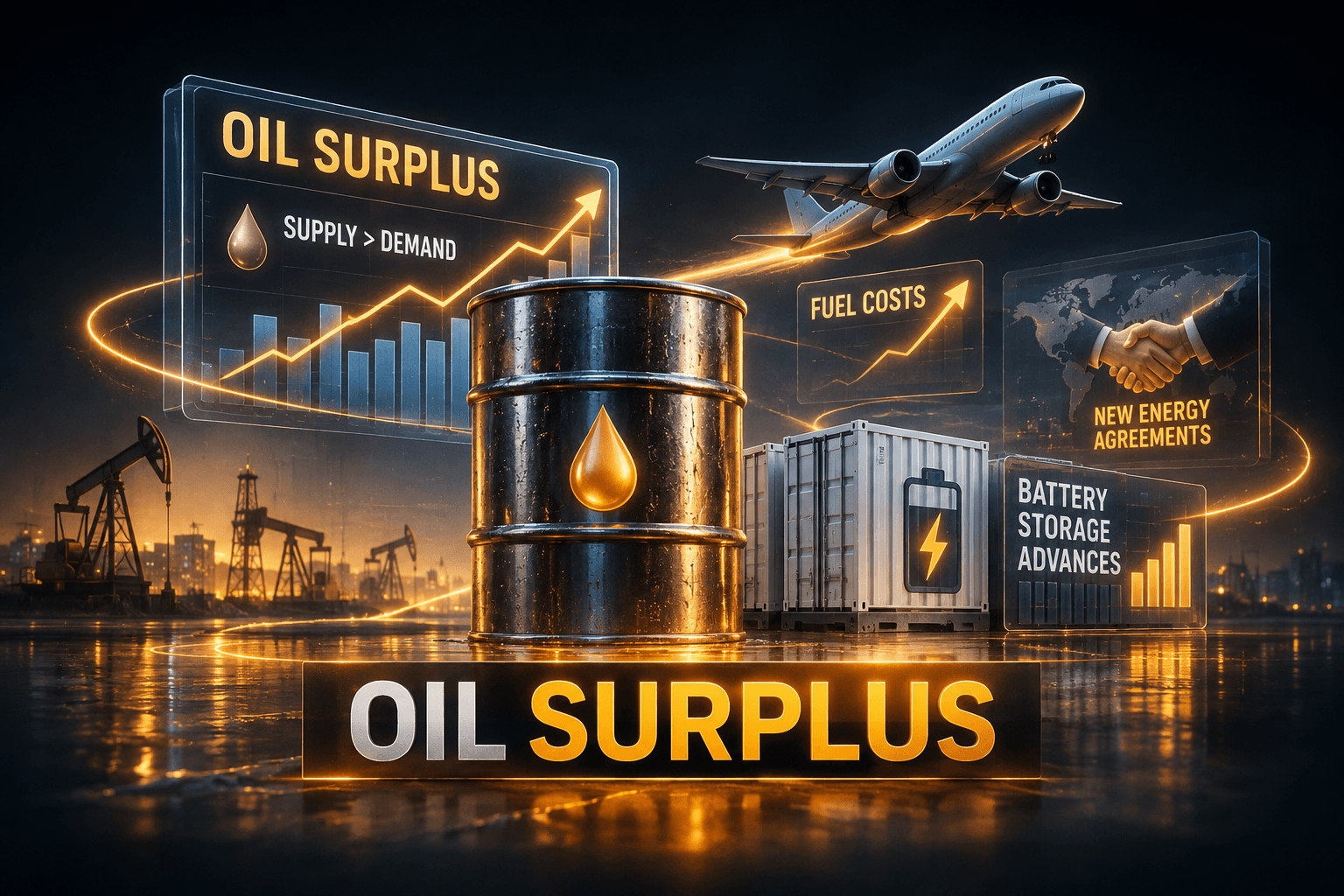
Oil markets are showing their first tentative signs of surplus since the Iran war began, even as Middle East attacks keep supply risks in view. The International Energy Agency’s assessment arrives as Brent trades at $95.87 a barrel and West Texas Intermediate at $88.49, with both benchmarks headed for a second weekly loss. For you, the tension is between easing supply-demand conditions and the risk that geopolitical disruption could quickly alter the outlook. Meanwhile, battery storage and clean-energy agreements point to investment activity beyond the daily moves in crude.
Market Highlights
Crude has retreated from mid-October peaks, but remains well above February levels before the war, according to OilPrice.com. Prices rose for two consecutive days after fresh Middle East news, yet those gains haven’t been enough to prevent a weekly decline. The IEA’s report of supply exceeding demand for the first time since the conflict began adds a potential rebalancing signal, though it doesn’t settle the question of how durable that shift will be.
Elsewhere, high fuel costs are creating pressure for airlines, while battery makers are positioning sodium-ion technology for grid and industrial uses. The available reports don’t provide share-price moves or identify public-market tickers for the companies involved, so investors can focus on the operating and commodity signals rather than inferred stock reactions.
- Brent crude: $95.87 per barrel; WTI: $88.49 per barrel, at the time of the report.
- Asian jet fuel prices are about 75% above pre-war levels, according to Reuters reporting cited by OilPrice.com.
- India is seeking private investors for a $910 million strategic petroleum reserve site, planned to add 80% to national capacity.
- Commercial sodium-ion cells have reached reported energy density of 175 Wh/kg; Grepow has introduced pouch cells in sizes from 2 Ah to 7 Ah.
Key Developments
Oil surplus signal meets lingering geopolitical risk
The IEA says global oil supplies have surpassed demand for the first time since the outbreak of the Iran war. That’s a meaningful change in the balance described in the report, but the agency characterized signs of rebalancing as tentative. Crude is still elevated compared with February, and the news flow on the conflict remains mixed, so the surplus signal isn’t the same as a clean all-clear for supply.
For energy companies exposed to crude prices, a sustained surplus could affect revenue expectations and investment plans. But the current reports don’t establish how long the balance will last or quantify its effect on individual producers. You’ll want to distinguish the reported weekly price trend from the possibility of renewed volatility if the conflict escalates.
Fuel costs squeeze airlines as India plans reserve expansion
Asian airlines face a difficult hedging decision as contracts expire: lock in fuel at high prices or remain exposed if prices climb further. Jet fuel is reportedly about 75% more expensive than before the Middle East war, and industry executives described the elevated level as potentially persistent. The item highlights how crude-market uncertainty can reach fuel buyers, although airline hedge choices and their financial effects will vary by company.
India, meanwhile, is inviting private investors to build and operate a strategic petroleum reserve site at Chandikhol in Odisha. The proposed facility could store up to 4 million tons of crude, with an estimated cost of $910 million and a government grant of $546 million. If completed as proposed, the site would boost India’s reserve capacity by 80%, adding infrastructure intended to strengthen supply security. For investors, the tender and project execution are the next details to follow, not a guarantee of near-term demand growth.
Storage technology and clean-energy deals broaden the story
Sodium-ion batteries are getting closer to lithium-ion performance in key areas, with commercial cells reaching 175 Wh/kg and reported strength in low-temperature conditions. Professor Silvia Bodoardo of the Polytechnic University of Turin identified utility-scale storage as the technology’s most promising market as manufacturers increase production. Grepow’s new 2 Ah to 7 Ah pouch cells target industrial equipment and cold-climate applications requiring high pulse power.
These developments suggest a widening set of potential uses, but the reports don’t provide comparative costs, deployment volumes, or evidence that sodium-ion has displaced established battery chemistries. A separate home-energy update from sonnen and SOLRITE Energy describes smart breakers that can temporarily switch off selected household loads so home batteries can support the grid or last longer during outages. Norway’s agreement with Indonesia covers 12 million tonnes of emission reductions and is intended to accelerate renewable energy development. Together, the stories show activity across utility, industrial, and household energy systems, with delivery and economics still key questions.
What to Watch
Watch whether subsequent IEA data confirms that supply is consistently exceeding demand, and whether Brent and WTI extend their weekly losses or reverse as Middle East developments unfold. The key distinction is between a temporary surplus and a durable easing in the market; the reports available today don’t resolve it. Airline hedging decisions may offer another window into how businesses are responding to fuel costs that remain far above pre-war levels.
On the infrastructure side, track India’s tender process, financing terms, and construction milestones for the Chandikhol reserve. For sodium-ion batteries, look for clearer information on manufacturing scale, costs, and utility deployments, which would help investors assess commercial potential. Norway’s carbon-credit agreement and the sonnen-SOLRITE smart-breaker rollout are also worth monitoring for evidence of implementation. What could change the picture fastest? A material shift in conflict-related supply risk or a stronger run of data on oil inventories and demand.
Bottom Line
- The IEA’s first reported oil surplus since the Iran war began is a rebalancing signal, but its durability remains uncertain.
- Brent at $95.87 and WTI at $88.49 are below mid-October peaks yet remain elevated versus February.
- Asian airlines are managing jet fuel prices reported to be about 75% above pre-war levels as hedge contracts expire.
- India’s proposed reserve, sodium-ion battery launches, and clean-energy initiatives offer longer-term developments to follow, not confirmed near-term returns.
- Compare company exposure and project execution with commodity trends; these reports alone don’t establish individual stock performance.
FAQ Section
Q: Why are oil prices falling if Middle East attacks continue? A: The IEA reports that global supply has moved above demand, while crude prices have also retreated from mid-October peaks. Geopolitical risks remain, so the balance could change.
Q: What is the significance of India’s proposed oil reserve? A: The Chandikhol site is planned to hold up to 4 million tons and increase India’s strategic reserve capacity by 80%, subject to development and execution.
Q: Where could sodium-ion batteries be used? A: The reports highlight utility-scale storage, industrial equipment, and cold-climate applications. Cost, scale, and deployment progress will help clarify the technology’s commercial reach.