The Big Picture
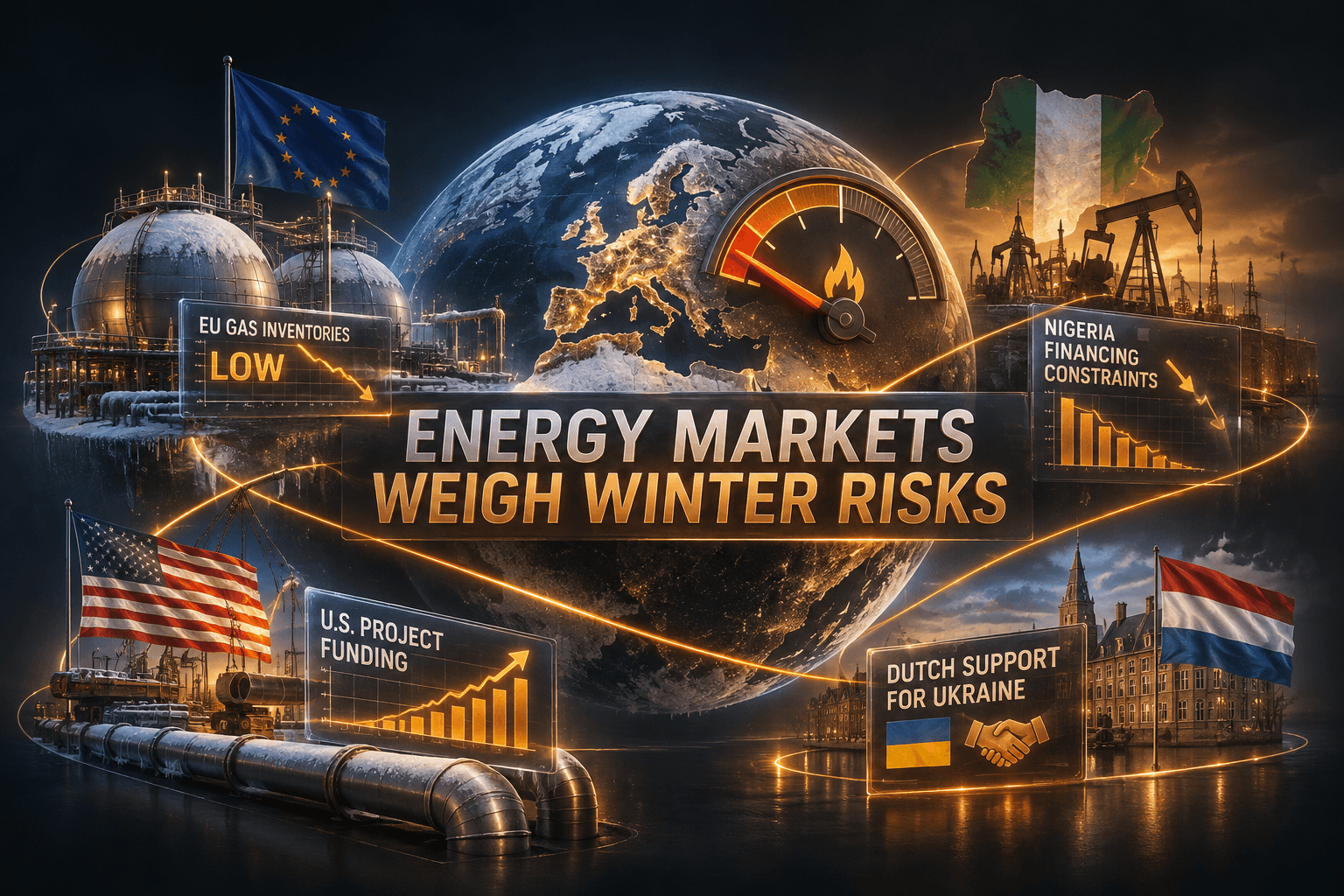
Europe is heading into winter with its lowest gas inventory of the 2020s, but the outlook is uncertain rather than a clear call for another price surge. Asian spot liquefied natural gas is above $30 per million British thermal units, while Rystad Energy sees plausible conditions for prices to rise or fall. For energy investors, the central issue is how tight supply meets winter demand, not simply how low storage looks today.
Elsewhere, reports point to both funding strain and new sources of capital. Nigerian banks have reportedly paused much domestic oil and gas lending amid roughly $7 billion in debt, even as the U.S. Department of Energy closed a $480 million loan for an energy project. What does that mean for the sector? The day's signals favor a selective, watchful approach, with no reported stock-price moves in the supplied coverage to indicate a broad market reaction.
Market Highlights
The headlines span natural gas, oil and gas finance, U.S. policy, and clean-energy businesses. They offer potential catalysts for individual companies and supply chains, but the available reports don't provide percentage changes or closing prices for energy stocks. You should avoid reading a market-wide move into news that has not been accompanied by reported trading data.
- European Union gas storage was 71.6% full in the Nov. 11 update from Gas Infrastructure Europe. Germany's storage was 58%, both below the five-year average, according to the report.
- Asian spot LNG was trading above $30 per million British thermal units. Rystad Energy's winter outlook emphasizes a wide range of price outcomes rather than forecasting a further rally.
- Nigerian oil and gas borrowers reportedly owe local banks about $7 billion, and Aliko Dangote said most domestic bank funding for the industry is on hold.
- The U.S. Department of Energy closed a $480 million loan for Arena Energy's Project Elkhorn. Naftogaz also secured a Dutch government grant of more than $25 million through the EBRD to help buy winter gas.
- Other headlines covered a proposed federal land sale plan, Central Asian interest in U.S. business deals, a potential Tesla-SpaceX merger, and product updates in electric vehicles and distributed energy.
Key Developments
Low European storage raises winter sensitivity, not certainty
Europe's storage position is a significant supply signal as heating demand rises. With EU sites 71.6% full and Germany at 58%, weather, consumption, LNG availability and infrastructure disruptions could all influence how quickly inventories are drawn down. Asian spot LNG above $30 also underscores competition for cargoes, although the available coverage does not establish that prices will keep climbing.
Rystad's balanced outlook matters for companies exposed to gas prices and LNG trade. A colder-than-expected winter or supply interruption could add upward pressure, while milder weather or better supply could ease the market. For you, the practical point is to watch storage updates and regional price benchmarks together, rather than treating a low inventory figure as a guaranteed price catalyst.
Financing divides energy producers from projects with support
Dangote's comments highlight a financing risk in Nigeria: concentrated oil and gas debt of about $7 billion is reportedly contributing to a broad pause in domestic bank lending. The borrowers were not named, and no debt breakdown was provided, so the scale of exposure at any individual company remains unclear. Still, a lending freeze could constrain investment and operations if companies cannot replace local funding.
That pressure contrasts with two forms of targeted support. The DOE's $480 million loan for Arena Energy's Project Elkhorn is intended to expand U.S. energy output, while Naftogaz's grant of more than $25 million will help secure gas for Ukraine amid attacks on energy infrastructure. These announcements show that access to capital depends heavily on project, location and public backing. They don't erase broader financing risks, but they may help specific projects proceed.
Policy and transition headlines add execution questions
The Trump administration's plan to sell federal land could affect future energy development, but the report provided no details on parcels, timing or sale terms. Those specifics will determine whether the proposal creates new opportunities for producers or raises concerns about land use and permitting. A separate account of a 110-megawatt Texas solar project illustrates how regulatory changes can disrupt procurement after equipment has been qualified, adding potential cost and schedule uncertainty.
Central Asian delegations used the B20 summit in Washington to promote business deals, while reports also pointed to a possible Tesla-SpaceX combination and an upcoming Tesla shareholder meeting on Dec. 3. The merger remains a reported possibility, not a completed transaction, and its implications for energy-sector businesses are uncertain. Kia's EV5 update and discounts on e-bikes, snow blowers and portable power stations offer a snapshot of consumer-facing electrification, but no sales or market-share figures were provided to measure their impact.
What to Watch
In the near term, track European and German storage updates, weather forecasts, LNG availability and reported regional prices. These indicators can help distinguish a tightening market from one where low inventories are offset by weaker demand or additional supply. Keep in mind that the consultancy's outlook presents both upside and downside price scenarios.
For energy finance, watch for named borrowers, lender disclosures or signs that Nigerian banks are resuming credit. In the United States, details on the federal land plan and the implementation of procurement rules could clarify the outlook for oil, gas and solar projects. You can also monitor progress on Project Elkhorn and the timing of Naftogaz's winter purchases, while recognizing that the reports don't establish future production or delivery levels.
Finally, watch for further disclosure about the reported Tesla-SpaceX proposal ahead of Tesla's Dec. 3 shareholder meeting. For the broader sector, the key question is whether project financing and policy support can offset higher costs, regulatory uncertainty and supply risks. No company-specific share-price data or new earnings guidance was included in today's reports.
Bottom Line
- Europe's low gas inventories heighten winter supply sensitivity, but Rystad sees meaningful scope for prices to move in either direction.
- Nigerian oil and gas lending faces a reported constraint tied to about $7 billion in debt, with borrower-level exposure still unclear.
- U.S. DOE financing and Dutch support for Naftogaz are targeted funding positives, not proof of a wider easing in capital conditions.
- Policy changes, project procurement and winter demand remain important risks to monitor across conventional and renewable energy.
- The news flow is mixed, and the supplied reports provide no specific stock-price moves. Treat the developments as information, not as a recommendation about any security.
FAQ Section
Q: Why are European gas inventories important this winter? A: Lower storage leaves less supply on hand to meet demand or absorb disruptions, making weather and LNG availability especially relevant.
Q: Does low storage mean gas prices will rise further? A: Not necessarily. Rystad Energy's outlook describes credible scenarios for both higher and lower prices.
Q: What is the significance of the Nigerian oil debt report? A: Dangote said about $7 billion in debt owed by a few companies has led most domestic bank funding for the industry to be put on hold, though the borrowers were not identified.