The Big Picture
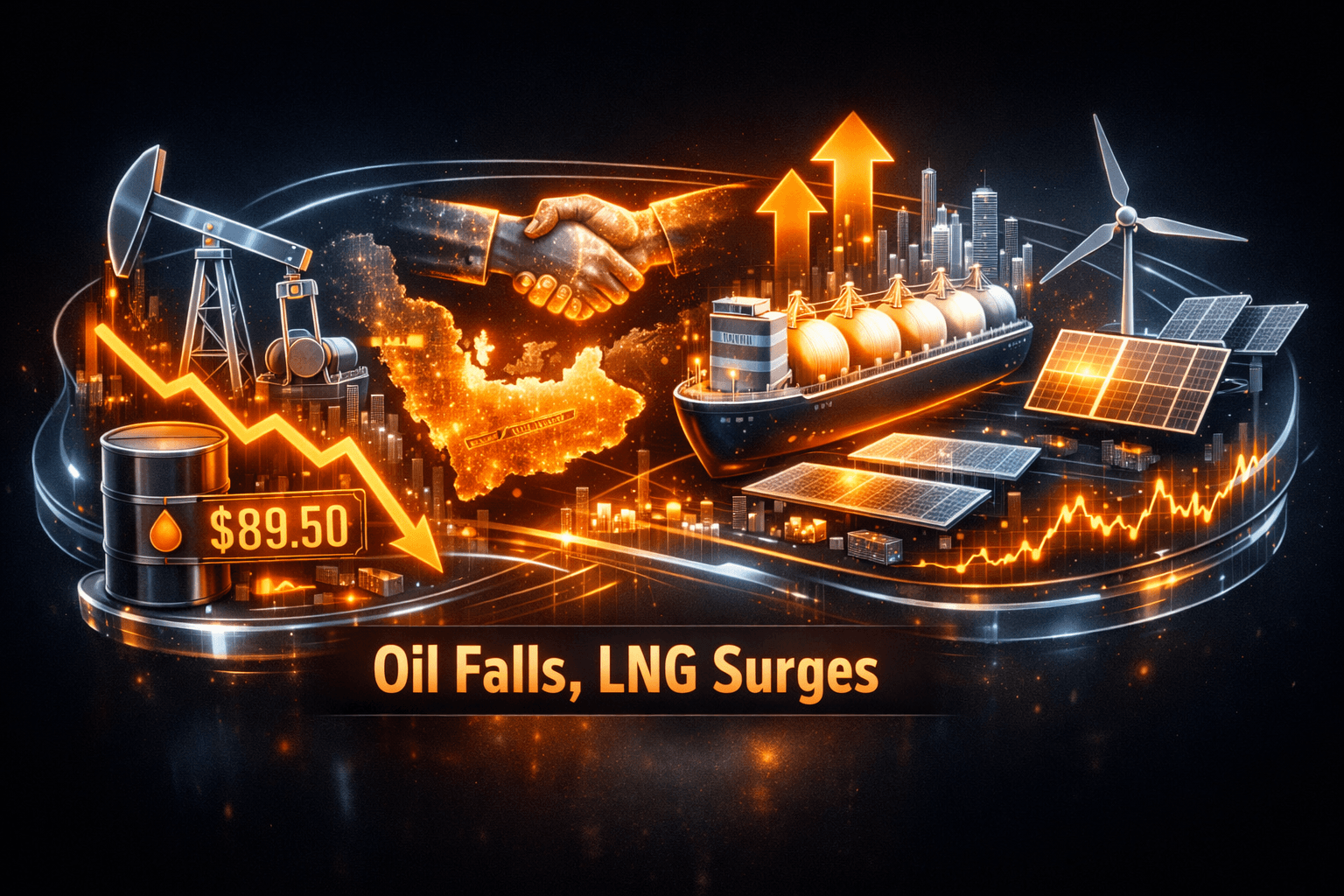
Brent crude fell below $90 a barrel Tuesday as U.S. signals of de-escalation in the Middle East eased immediate supply fears. That move put pressure on oil-linked names even as gas and LNG flows showed resilience, and renewables reported both innovation and competitive stress.
This mixed backdrop matters because you have to weigh lower crude prices against improving fundamentals for LNG exporters and a renewables sector where technology gains coexist with margin-squeezing price wars. What should you watch as markets digest these contrasts?
Market Highlights
Quick facts and price moves from overnight and pre-market trading.
- Brent Crude: front-month futures fell to about $89.70 per barrel early Tuesday, the first print below $90 since August.
- WTI Crude: U.S. benchmark traded below $85 per barrel, down more than 2% on the session.
- ADNOC Gas: net income doubled sequentially to $1.34 billion in Q3, with core EBITDA up about 70% to $2.03 billion.
- Qatar LNG: loadings rose to 31 tankers last month from 27 in September, the highest LNG traffic through the Strait of Hormuz since the Iran war began.
- Solar tech: DMEGC launched n-type bifacial modules rated 640 to 665 W with a bifaciality factor up to 85% and a new steel frame that reportedly cuts rear-side shading by 76%.
- Solar market pressure: Philippines installers report aggressive price competition and rising sales fall-throughs on cheaper quotes or payment issues.
Key Developments
Crude eases as diplomacy reduces immediate risk
Reports that U.S. President Donald Trump signaled a willingness to pursue diplomacy with Iran and held off strikes pushed Brent below $90. Oil prices dropped more than 2% in early sessions, reflecting reduced near-term risk premia. For oil-focused companies such as Exxon Mobil (XOM) and Chevron (CVX) the price move could weigh on revenues if sustained, while lower fuel costs reduce input pressure elsewhere in the economy.
LNG and gas show strength despite regional disruption
Qatar stepped up LNG loadings to 31 tankers, and Kpler data shows traffic through the Strait of Hormuz rose to a multi-month high. That activity coincided with ADNOC Gas reporting a sharp quarter-on-quarter recovery, with net income jumping to $1.34 billion and EBITDA to $2.03 billion. These reports suggest gas exporters are managing logistics and demand well despite regional constraints, and they highlight divergence between oil and gas market dynamics.
Renewables: technology gains meet price competition
DMEGC unveiled a new steel-framed n-type bifacial module series delivering 640 to 665 W and a high bifaciality factor. At the same time, solar installers in the Philippines warn that price wars at point of sale are increasing cancellations and squeezing margins. You can see both forces at work, innovation pushing efficiency and manufacturer economics, while local installers grapple with demand elasticity and payment challenges.
What to Watch
Stay alert to these near-term catalysts and risks that could reshape market moves you care about.
- Geopolitical signals: any reversal in U.S. diplomatic tone or new incidents in the Strait of Hormuz could quickly lift oil and LNG risk premia. Will diplomacy hold?
- LNG flows and pricing: monitor Qatar loadings and spot LNG freight; persistent high loadings could ease tightness, while force majeure statuses remain relevant.
- ADNOC and regional earnings: ADNOC Gas' rebound sets a baseline for other Gulf gas players. Watch next quarterly releases for confirmation of sustained margins.
- Solar demand and margins: keep an eye on end-market price competition in Southeast Asia and module price trajectories. How will installers protect margins as modules become more powerful but competition intensifies?
- Refiners and integrated majors: lower crude benefits refiners and downstream consumers but could pressure upstream earnings. Track releases from $XOM, $CVX and regional peers for guidance updates.
Bottom Line
- Energy markets are sending mixed signals today, with crude falling on diplomacy while LNG and gas fundamentals look stronger.
- ADNOC Gas' strong Q3 performance highlights resilience in gas and LNG exports despite regional disruptions.
- Qatar's rising LNG loadings and higher transit through Hormuz show exporters are finding ways to maintain flows.
- In renewables you'll see divergent forces: module technology is improving efficiency while price wars at point of sale threaten installer margins.
- Keep watching geopolitical headlines, LNG cargo data, and regional earnings for the next directional clues. Analysts note these items will shape near-term sector momentum.
FAQ Section
Q: How did diplomatic signals affect oil prices today? A: Reports of U.S. diplomatic efforts and a decision to hold off strikes reduced risk premia, pushing Brent under $90 and WTI below $85.
Q: Does stronger LNG loading mean lower LNG prices ahead? A: Increased loadings can ease near-term tightness, but prices will still depend on demand, freight, and regional bottlenecks.
Q: Should solar installers be worried about new high-power modules? A: New modules improve output and system economics, but installers face margin pressure from aggressive pricing, so you'll want to watch local demand and payment trends.