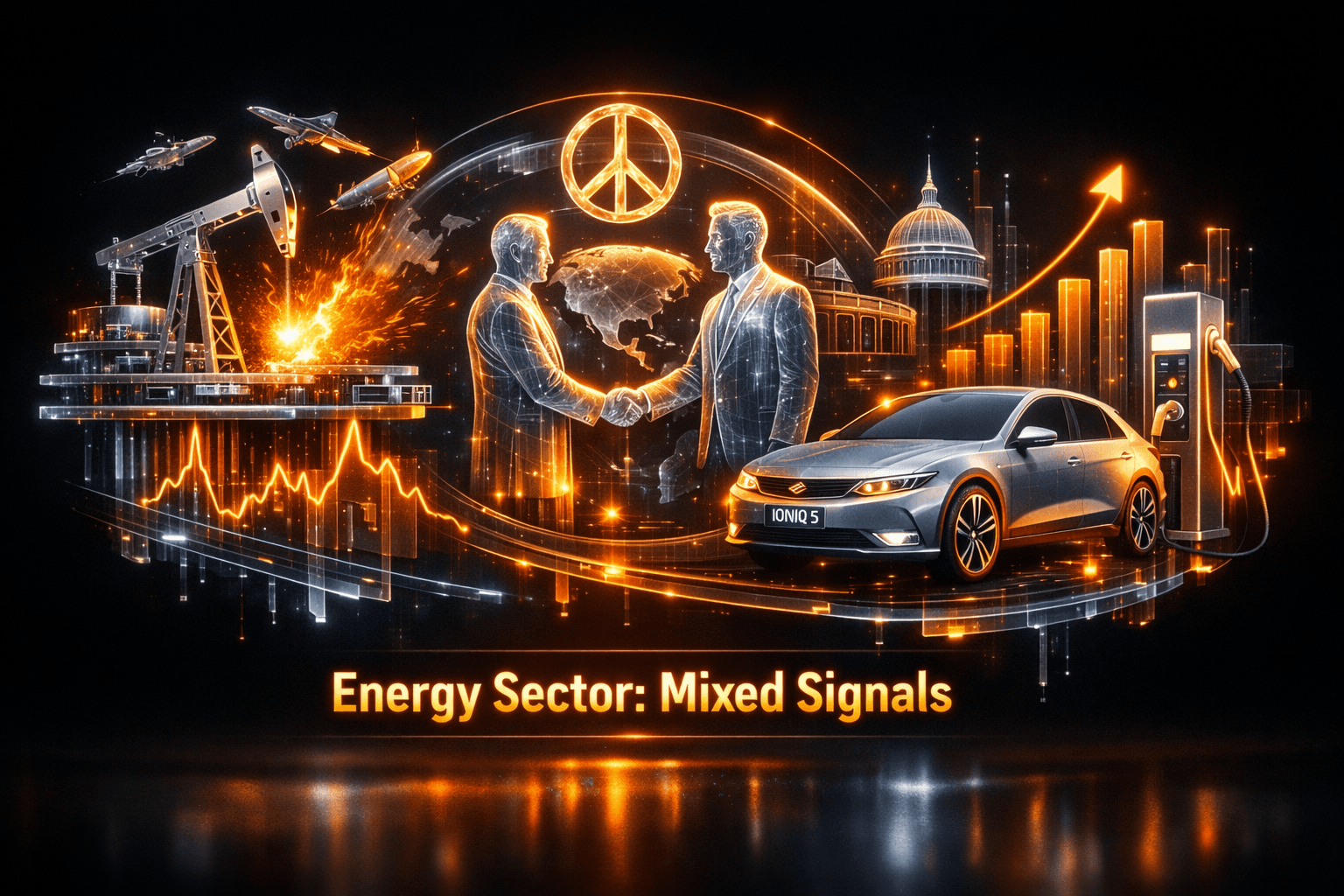
The Big Picture
Oil-market jitters and diplomatic moves shared the spotlight today, leaving energy investors with mixed signals you need to weigh. Fresh reports of Houthi ground incursions into Saudi Arabia stoked regional risk, but parallel reporting shows U.S. and Iran exploring renewed diplomacy that could calm markets.
At the same time, policy and demand trends in renewables and EV infrastructure advanced, with Pennsylvania getting another $37 million for NEVI charging and Hyundai reporting stronger EV sales. That means your portfolio faces near-term volatility from geopolitics and longer-term structural shifts from electrification.
Market Highlights
Quick facts and price drivers from today's headlines to help you scan the tape.
- Saudi Aramco reported Q3 net income of $36.25 billion, up 34.5% year on year, highlighting strong earnings but raising questions about underlying production resilience, $2222.SR.
- Oil markets were volatile as traders weighed conflicting Iran signals and fresh Houthi activity. Price swings were reported intraday as risk and supply views shifted.
- Pennsylvania will deploy $37 million in NEVI funds for an estimated 515 new public EV charging ports in the Philadelphia region, including curbside chargers.
- Hyundai's IONIQ 5 sales topped 33,000 units in 2026, with October sales up 21%, a sign EV demand outside Tesla remains solid, $HYMTF.
- Hanwha Q Cells is shifting its European focus to research and development and cutting sales roles, signaling a structural pivot in solar operations.
- New Jersey's governor barred entry of Russian diesel shipments authorized by the federal government, introducing a regional policy constraint on fuel flows.
- Consumer and residential energy deals showed up in the headlines as EcoFlow launched a TITAN backup ecosystem with advertised savings up to $2,199, reflecting continued retail demand for backup power and home electrification products.
Key Developments
Geopolitics and oil volatility
Reports that Houthi militants have expanded operations to include ground incursions in Saudi Arabia intensified risk perceptions across oil markets. Traders reacted to these reports and to conflicting Iranian signals, producing swings in crude pricing during the day.
At the same time, diplomats say the U.S. and Iran are reviewing mediator proposals aimed at avoiding large-scale conflict. So what should you make of this? The dual reality means near-term price moves are likely to remain reactive to headlines, while negotiated outcomes could quickly reduce risk premia.
LNG and Europe strategy
Analysis on LNG exports to Europe noted a "best-before date" for many suppliers, reflecting shifting geopolitical alignments and the EU's long-term decarbonization plans. Supply contracts and investment timelines matter for exporters and pipeline projects, and this narrative can cut both ways for companies focused on merchant LNG sales.
For investors, that means you should watch contract durations and counterparties closely, since demand patterns in Europe will influence margins and capital allocation decisions across the LNG value chain.
Clean energy and electrification progress
On the transition front, Pennsylvania's $37 million NEVI deployment for 515 ports and Hyundai's stronger IONIQ 5 sales underscore continuing momentum in EV adoption and charging infrastructure. Those moves support downstream demand for grid upgrades, batteries, and charging networks.
Hanwha Q Cells' shift toward R&D in Europe with job cuts in sales suggests industry consolidation and a focus on technology differentiation. That has implications for suppliers and investors tracking competitive positioning across solar manufacturing and modules.
What to Watch
Tomorrow and the near term you should focus on catalysts that can swing sentiment and prices. Watch official statements from Saudi and regional security sources for confirmation on Houthi incursions.
Follow any developments in U.S. and Iran diplomacy closely. A sustained diplomatic track would likely calm crude futures, while breakdowns would increase risk premia and volatility.
On the transition side, track NEVI deployment timelines and state-level implementation plans that will determine how quickly public chargers hit the ground. Also monitor quarterly updates from major oil producers for capex and production guidance that speak to post-peak-era strategy.
Bottom Line
- Market signals are mixed today, with geopolitics driving short-term oil volatility while electrification and policy support underpin longer-term demand shifts.
- Company earnings can mask operating stress, as shown by Saudi Aramco's strong headline profit amid questions about physical output and resilience.
- Policy moves at state and regional levels matter for you, because funding decisions like Pennsylvania's NEVI award will shape infrastructure demand and related supply chains.
- Diplomacy could ease market strains rapidly, so be prepared for swift changes in risk pricing tied to geopolitical headlines.
- Stay selective, focus on fundamentals and contract exposure, and monitor near-term news flow rather than reacting to a single report.
FAQ Section
Q: How should I interpret oil-price swings tied to Middle East headlines? A: Short-term swings reflect headline risk and trader positioning. Look to confirmations from reliable state sources and broader supply data before assuming a sustained trend.
Q: Will more EV chargers mean lower demand for oil? A: EV charging rollout reduces long-term liquid-fuel demand growth, but the transition is gradual and regional. You should watch deployment speed and vehicle adoption rates to assess timing.
Q: Does Aramco's profit rise mean the company is out of risk? A: Analysts note higher earnings can coexist with operational challenges. Profit gains may not eliminate production or geopolitical risks that affect long-term fundamentals.