The Big Picture
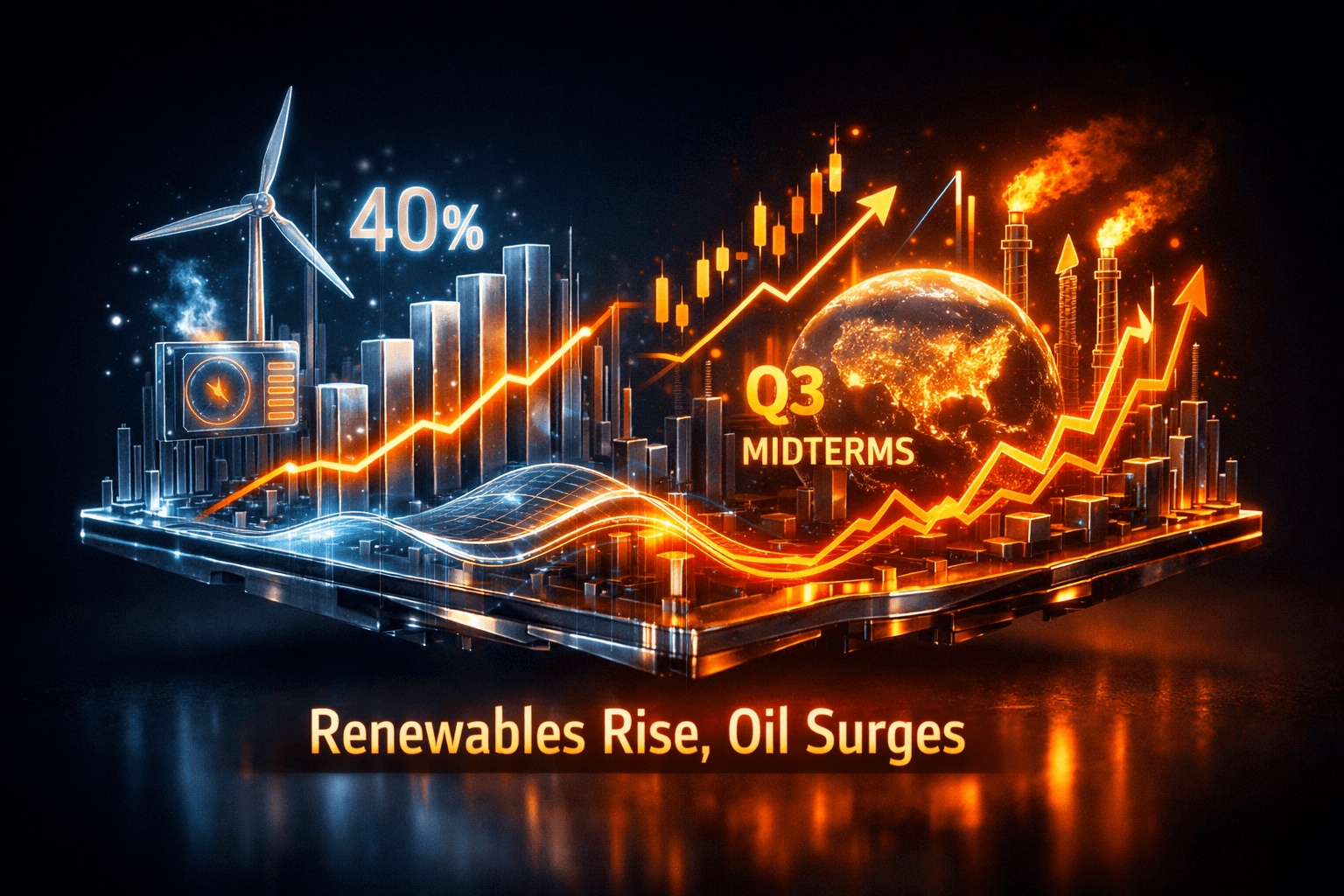
Renewables are reaching a structural milestone, with the U.S. Energy Information Administration projecting renewable generating capacity will climb from 37.7 percent to 40.4 percent within a year. That shift matters because it reshapes demand for solar technology, grid services, and the supply chains that support them.
At the same time, conventional energy is showing strength. $EQNR reported a third quarter adjusted net income of $2.86 billion, triple the year earlier figure, signaling robust oil and gas margins. So you have technology-driven cost declines on the clean side and strong commodity-driven cash flows on the fossil side, both supporting sectorwide momentum.
Market Highlights
- EIA projection: renewables share of U.S. generating capacity rising from 37.7% to 40.4% over the next year, poised to overtake natural gas capacity.
- Equinor ($EQNR), adjusted Q3 net income of $2.86 billion, up from $932 million a year ago; production rose 2% to 2.166 million boepd.
- Exxosqel coating tech could cut PV glass weight by up to 40% and module weight by roughly 30%, potentially lowering installation and BOS costs.
- Sunkean rolled out copper-to-aluminum DC jumpers to improve field install speed and reduce conductor cost pressure in utility-scale PV projects.
- Qvantum launched the QA50 propane heat pump, 50 kW capacity, COP up to 3.12, operable from -25 C to 43 C, aimed at residential and low-temperature district networks.
- Geopolitical risk is elevated, with oil traders bracing for potential escalation with Iran around the U.S. midterms, while sanction-era tankers are reentering Persian Gulf trade routes, altering flows.
- Bosch updated its Active Line Plus e-bike motor with more power and lower weight, a small but notable development for urban electrified transport demand.
Key Developments
Renewables capacity crosses a threshold
The EIA's data shows a fast approaching inflection point, where renewables will account for roughly 40.4 percent of U.S. generating capacity. That milestone is significant for you if you're following utility procurement, storage demand, or module suppliers, because it increases pressure on grid integration and creates new opportunities for system-level products.
PV hardware innovations aim at lower system cost
Two PV-related technology stories underscore cost reduction efforts. Exxosqel's coating, developed with Fraunhofer research partners, could let module makers use up to 40 percent less glass and cut overall module weight by about 30 percent. Meanwhile Sunkean's copper-to-aluminum DC jumpers address conductor cost and field reliability for utility projects. Together, these steps could trim balance-of-system and logistics costs, improving project economics.
Oil strength, geopolitics, and tanker reflows
Equinor's Q3 results show elevated refining margins and strong hydrocarbon prices have translated to material cash generation. Oil markets are also pricing in event risk ahead of the U.S. midterms, with ING strategists noting traders are bracing for possible escalation with Iran. At the same time, previously sanctioned tankers are being relisted and repurposed in Persian Gulf trade, which could alter supply flows and regional pricing. How will these factors net out for you in the near term, higher volatility or sustained price support?
What to Watch
Look for readings that will move the sector in the next 1-3 months. First, watch geopolitical headlines around the U.S. midterms and any official statements on Iran, because heightened tensions could push oil prices higher and increase market volatility. Second, follow announcements from module manufacturers and utility procurement teams for pilot projects using lighter glass or copper-to-aluminum connectors, which would validate cost savings in real projects.
Third, track adoption of higher-capacity heat pumps like Qvantum's QA50 in commercial and district heating tenders, because wider use of propane refrigerant solutions may change heating electrification economics. Finally, monitor EIA monthly updates and industry analyst notes for revisions to capacity forecasts and generation mixes, since those numbers influence policy talks and long-term investment flows.
Bottom Line
- Renewables momentum is tangible, with EIA projecting capacity share to top 40 percent, a structural positive for solar and storage demand.
- PV component innovations from Exxosqel and Sunkean could lower module and BOS costs, improving project returns if scaled.
- Conventional energy remains profitable, as $EQNR's $2.86 billion adjusted Q3 profit shows, keeping capital flowing into upstream and refining sectors.
- Geopolitical risk and shifting tanker movements create price volatility, so you should expect sharper near-term swings in oil markets.
- Keep an eye on technology pilots and EIA data for signals that will clarify which subsectors will capture most of the coming investment.
FAQ
Q: How will renewables reaching 40% of capacity affect electricity prices? A: It can lower marginal generation costs when wind and solar are abundant, but price effects depend on storage deployment, transmission constraints, and regional demand profiles.
Q: Do PV glass and connector innovations change project economics now? A: Data suggests potential for meaningful BOS and logistics savings, but widespread impact depends on manufacturing scale up and field validation in utility projects.
Q: Should I expect sustained oil strength after Equinor's results? A: Equinor's strong quarter reflects current margins and production trends, but oil prices will remain sensitive to geopolitical events and changes in shipping flows, so analysts note volatility is likely.