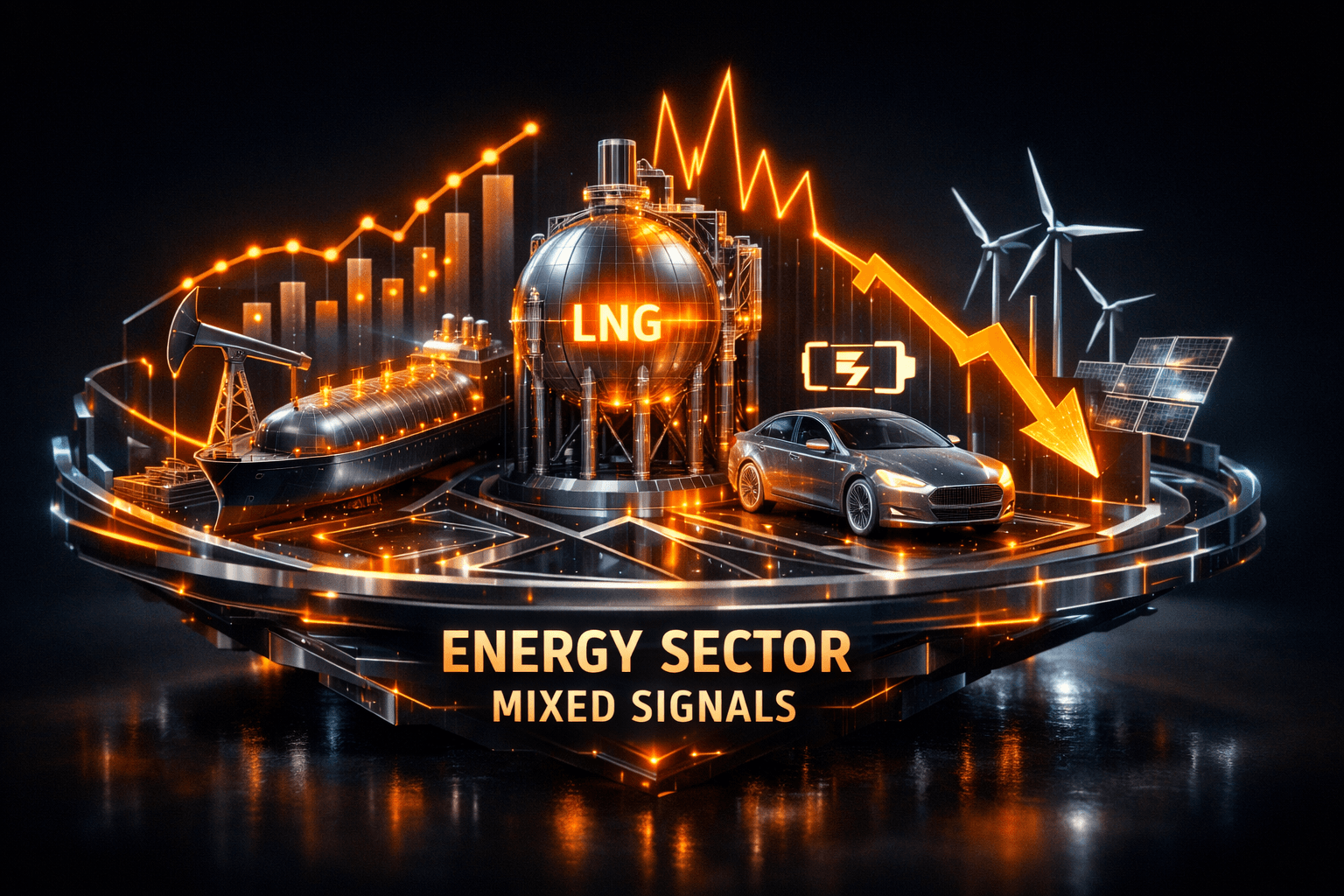
The Big Picture
Global energy markets showed a mixed tone today, with resilience in oil flows and service-sector earnings offset by surging LNG prices and fresh EV headwinds. You were reminded that demand and supply shifts are creating winners and losers across subsectors, and that volatility can persist as geopolitical and technological trends play out.
For investors you should note that the day's headlines do not point in one clear direction. Some companies are reporting stronger profits and capacity, while others face product or policy uncertainty that could slow growth.
Market Highlights
Quick facts and price moves that mattered today.
- Baker Hughes, Baker Hughes (BKR), reported a profit beat after its Chart acquisition helped lift volumes and pricing, supporting sentiment in oilfield services.
- Saudi oil exports stayed near wartime highs despite attacks, according to ship tracking, a sign of operational resilience for major exporters and supply stability in crude flows.
- Global LNG dynamics tightened, with India moving toward record October imports after spending years expanding gas networks, while spot prices have roughly tripled year over year.
- Russia gave China a steep discount on pipeline gas, around $248 per 1,000 cubic meters versus $562 for other foreign buyers, a roughly 56 percent gap, which could reshape regional pricing.
- Volkswagen's recall expanded to Audi, lifting the total to over 85,000 EVs recalled, and owners were instructed to limit charging to 80 percent, pressuring new EV adoption confidence.
Key Developments
Record LNG Demand Meets Record-High Prices
India is importing more LNG as domestic gas output declines and network adoption grows, moving toward a record October in volumes after importing 24.9 million tonnes in 2025. Prices have roughly tripled over the past year, raising costs for buyers and creating upside for sellers, although the sustainability of elevated spot prices is uncertain.
For you that means natural gas exposures may show stronger near-term cash flows, but consumers and industrial buyers could face margin pressure if prices stay elevated.
Russia-China Gas Deal and Global Price Distortion
New data shows China will pay about $248 per 1,000 cubic meters for Russian pipeline gas in 2026, a steep discount versus the $562 price cited for Gazprom's other foreign customers. That 56 percent gap signals Moscow's growing fiscal dependence on Beijing and could redirect volumes away from global markets.
What does that mean for market structure? Discounted bilateral deals can mute global price signals and affect the economics of alternative suppliers and LNG flows.
Oil Flow Resilience and Service-Industry Strength
Despite security incidents, Saudi exports remain near wartime highs based on ship-tracking data, which helped calm supply concerns in crude markets. At the same time Baker Hughes, $BKR, beat profit estimates and credited its Chart acquisition plus stronger volumes and pricing.
Those developments suggest operational continuity in oil markets and improving margins for some service providers, though geopolitical risk remains a wild card.
What to Watch
Focus on catalysts that could tilt the sector in the next days and weeks. You should track these items closely to understand potential market moves.
- LNG prices and flows: Watch monthly cargo and spot price updates, and India import data, to see if record buying and high prices persist or whether supply responses ease the squeeze.
- Russia-China gas implementation: Monitor any transport or contractual notices that could shift volumes away from Europe and affect Gazprom, $GAZP, revenues and European gas hubs.
- EV policy and product issues: Keep an eye on federal tax credit debates and automaker recall developments, since policy signals and safety recalls can affect EV sales cycles and battery suppliers.
- Renewables retrofits and storage rollouts: Australian BESS retrofits and other storage news will signal the pace of grid modernization and could influence developers and equipment suppliers.
- Industry tech adoption: The Energy Institute's AI program may speed deployment of efficiency and safety tools, a subtle catalyst for tech investment and operational savings across energy firms.
Which names might move first? Earnings and operational updates from major producers and service firms tend to drive near-term moves, so watch company-specific releases and ship movement data for early signs.
Bottom Line
- Mixed technical and fundamental signals leave the sector neutral today, with both upside from oil and services and downside from elevated gas costs and EV setbacks.
- Record LNG demand in India supports gas suppliers, but tripled prices risk demand destruction and higher costs for industrial users.
- Russia's discounted gas to China could reshape regional flows and global pricing dynamics, creating winners and losers across pipeline and LNG markets.
- Operational resilience in Saudi exports and a Baker Hughes profit beat provide some stability for energy equities despite geopolitical risk.
- Monitor policy, recalls, and storage rollout updates—these are the actionable catalysts that will steer sentiment into next week.
FAQ Section
Q: How will high LNG prices affect energy company profits? A: High spot LNG prices typically boost revenues for exporters and liquefaction operators, while increasing costs for importers and end users, so effects vary by asset exposure.
Q: Should I worry about EV recalls and stalled federal incentives? A: Recalls and uncertain policy can slow EV purchase momentum and ripple into battery suppliers, but longer term demand drivers like fleet electrification remain in play.
Q: Will Russian discounts to China depress global gas prices? A: Discounts can redirect volumes and lower regional costs, but global prices will also depend on LNG flexibility, European demand, and geopolitical developments.