The Big Picture
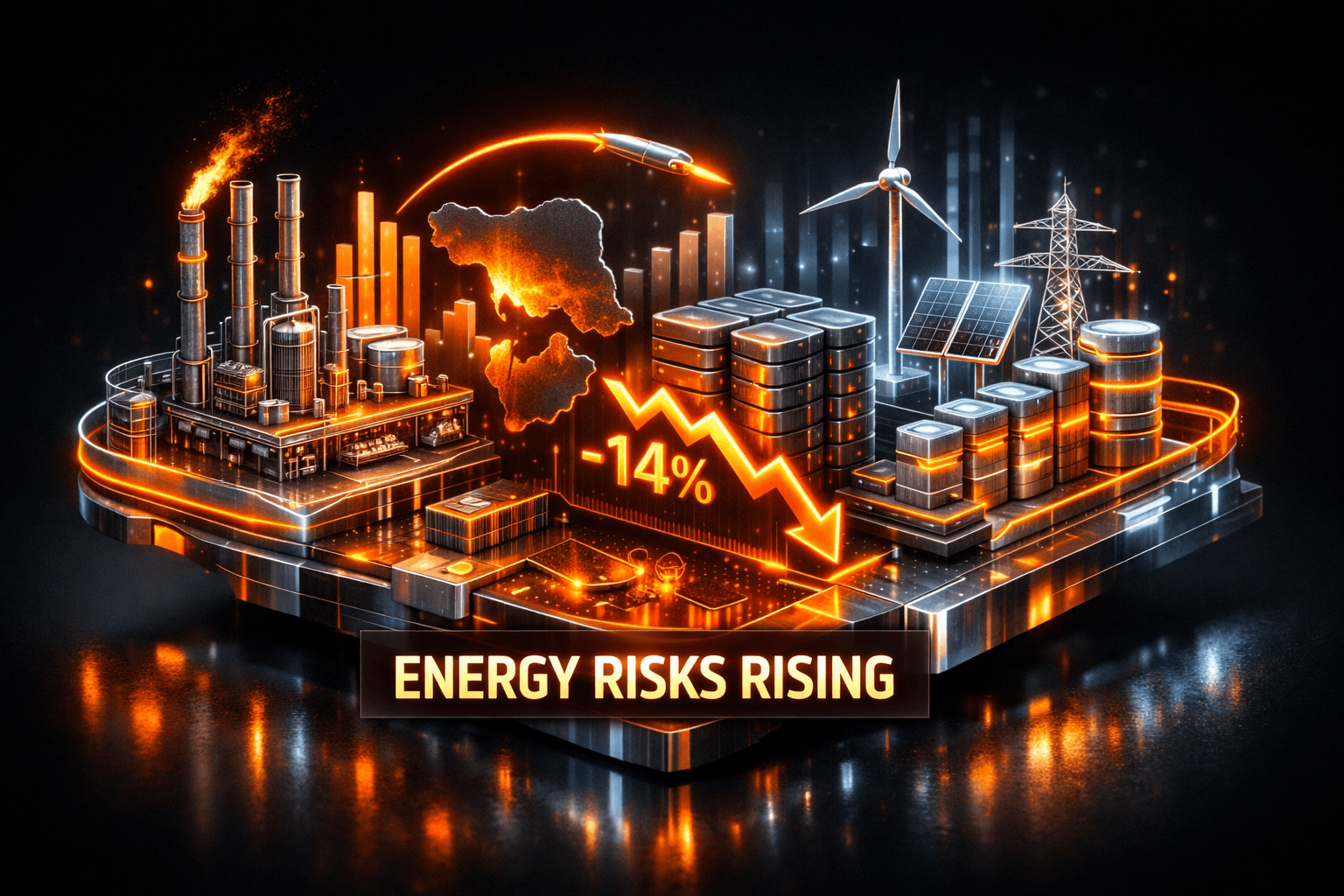
Energy markets woke to heightened risk as geopolitical tensions and targeted attacks reassert supply uncertainty. Ukraine said it will resume strikes on Russian refineries after a short pause, and the IMF warned that escalating attacks on Saudi infrastructure could spill into the global economy.
At the same time you saw mixed signals from the clean energy side, with policy and product advances in Europe and new residential battery hardware, but a sharp 14 percent drop in lithium futures undercutting battery-related equities. What should you watch first as markets open today?
Market Highlights
Key overnight and pre-market moves you need to know.
- Geopolitics: Ukraine will resume strikes on Russian refineries after a three day pause requested by the U.S., raising regional supply risk.
- Shipping: A Singapore flagged container ship sank in the Strait of Hormuz after all 21 crew were evacuated, adding short term navigational concern in a critical oil transit chokepoint.
- Commodities: China’s most actively traded lithium futures fell about 14 percent this week after an EU China trade deal reduced expected Chinese hybrid car exports to the bloc.
- Policy and tech: Finland’s grid operator Fingrid will require new wind and solar in weak-grid areas to provide grid forming capability, allowing co located batteries up to 30 percent of plant output.
- Products: Mova launched the LumeGret S5000 residential storage system with up to 4.8 kilowatts of solar input and pairing support for a 7 kilowatt EV charger. Apple $AAPL and Schneider Electric $SU unveiled a smart thermostat aiming to shift load to cleaner or cheaper hours.
Key Developments
Middle East and Eastern Europe Conflict Raises Supply Risk
Ukraine told the Financial Times it paused refinery strikes for three days at U.S. request, but resumed them after continuing Russian attacks on Ukrainian energy infrastructure. Coupled with the IMF warning about escalating strikes on Saudi facilities by the Houthis, these developments increase the chance of episodic supply disruption.
That matters for you because tighter supply expectations can drive price volatility, and shipping disruptions in the Strait of Hormuz add another layer of risk to physical flows.
Battery Chain Sees Sudden Demand Shock, Prices Drop
Lithium futures have plunged roughly 14 percent since the start of the week after an EU China trade arrangement is expected to curb Chinese hybrid car exports to Europe. The move suggests near term demand anxiety for battery materials and pressure for miners and chemical suppliers.
Lower lithium costs may eventually improve EV affordability, but in the short run the pricing shock can compress margins for battery makers and hit related equities.
Grid Rules and Distributed Energy Tech Push Resilience
On the policy and technology front you saw practical steps to strengthen grids and accelerate distributed energy adoption. Finland will require grid forming capability from new wind and solar in weak areas, letting developers meet that need with co located batteries sized up to 30 percent of plant output.
At the same time Mova’s LumeGret S5000 and a new Apple $AAPL and Schneider $SU smart thermostat show how residential storage and smart controls can better align demand with cleaner supply. These are steady, constructive developments even if they won’t offset immediate geopolitical risk.
What to Watch
Focus on near term catalysts and risk triggers that could move prices and stocks today.
- Geopolitical headlines: Any additional strikes on Saudi facilities or expanded refinery targeting in Russia or Ukraine could push prices higher and lift energy names tied to oil and shipping.
- Shipping disruptions: Monitor traffic and insurance notices for the Strait of Hormuz after the container ship sinking. Could rerouting raise tanker rates and freight costs?
- Lithium markets: Watch lithium futures and earnings commentary from battery and miner names for signs of margin stress or inventory revaluation. How low will prices go before production or investment decisions change?
- Policy signals: Look for clarifications from Finland and other European grid operators on grid forming rules, which could affect project cost assumptions for developers and contractors.
- Product rollouts and demand response: Track early customer uptake and pilot announcements for the Apple $AAPL and Schneider $SU thermostat and Mova storage systems, since distributed flexibility can reduce system costs over time.
Be prepared for headline driven moves today. If you rely on fund flows or trade single stocks you may want to watch volatility and liquidity carefully.
Bottom Line
- Geopolitical risk is elevated after Ukraine resumed refinery strikes and the IMF warned about rising attacks on Saudi infrastructure.
- Physical transport risk rose when a container ship sank in the Strait of Hormuz, though all 21 crew were safely evacuated.
- Lithium futures dropped roughly 14 percent this week, signaling demand worries that could pressure battery and miner margins in the near term.
- Grid and distributed energy advances in Europe, and new residential storage and smart thermostat products, support longer term resilience and demand response adoption.
- Analysts note near term downside from conflict and commodity moves, while data suggests structural clean energy trends remain intact, so a selective approach is warranted.
FAQ Section
Q: How will renewed strikes impact oil prices today? A: Price reaction will depend on the scale and targets of strikes; market participants often react quickly to supply risk but the IMF and industry updates will shape sustained moves.
Q: Does the lithium drop mean EV adoption will slow? A: Lower lithium prices can ease cost pressures for batteries and could support EV adoption over time, but the immediate fall reflects trade policy shifts and demand forecasts which may rebound or stabilize.
Q: Should I expect grid rules to raise renewable project costs? A: New requirements like Finland’s grid forming mandate can raise upfront costs for projects in weak grids, but co located batteries and updated designs also improve reliability and may unlock new deployment zones.