The Big Picture
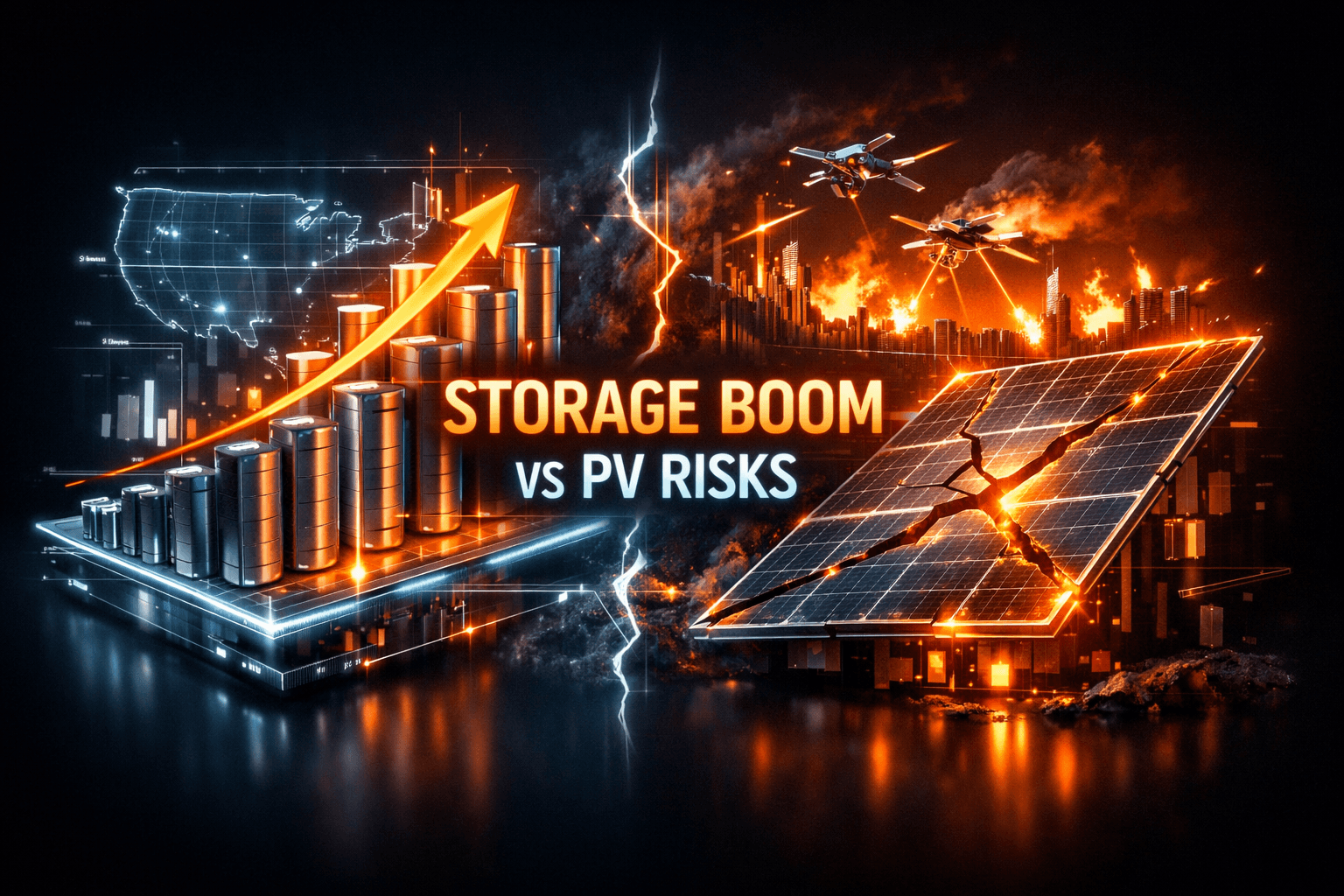
Global energy markets opened Monday with a clear growth theme, led by explosive forecasts for battery storage and fresh product launches in solar technology. Data and policy moves suggest accelerating demand for grid-scale batteries and next-generation modules, which could reshape capacity planning and project economics over the next decade.
At the same time, fresh research into medium-voltage PV degradation and heightened geopolitical talk about oil stockpiles keep risk front and center, so you should balance growth optimism with operational and supply-chain vigilance.
Market Highlights
Here are the quick facts that matter in pre-market and overnight headlines.
- India BESS forecast: Nuvama projects annual battery energy storage installations to rise to 302 GWh by FY2032, from 6.3 GWh today, implying a roughly 91% compound annual growth rate.
- Solar hardware: Risen Energy announced a 23.5% efficient heterojunction module rated up to 730 W, earning Class AAA anti-glare certification from TÜV Rheinland.
- PV reliability alarm: French researchers identified a new potential-induced degradation mechanism in medium-voltage modules linked to partial discharges and electrical treeing, with encapsulant conductivity a key factor.
- Policy shift: South Korea published draft rules for a renewables auction market with monthly difference payments from Korea Electric Power Corp and a separate track for projects up to 500 kW.
- Oil and shipping: Supertanker charter rates eased slightly from record highs, at about $634,974 per day versus a peak of more than $637,000 on October 8. Japan urged Asian countries to bolster oil reserves amid Middle East risks, while Saudi Arabia said its export capability remains intact despite attacks.
Key Developments
India’s battery storage surge changes capacity math
The Nuvama forecast that India could reach 302 GWh of annual BESS installations by 2032 is a game changer for developers and equipment suppliers. If the sector grows at the indicated 91% CAGR, manufacturers, cell suppliers and EPC contractors will face a massive demand ramp, which could support pricing power and long-term margins for firms positioned in the supply chain.
For you this means more companies tied to cell manufacturing, inverters and project development will be in focus over the coming months as policy and financing align with capacity build-out.
PV technology advances, but reliability questions emerge
Risen Energy’s new 23.5% heterojunction module with anti-glare certification highlights ongoing efficiency gains that improve project yields and site acceptance in populated areas. Higher-efficiency, high-power modules help lower balance-of-system costs and can extend returns for solar projects.
However, the French study on a new PID mechanism in medium-voltage PV modules raises reliability concerns. The identified role of encapsulant conductivity and the risk of partial discharges and electrical treeing point to additional O&M and warranty considerations for large-scale, higher-voltage arrays. How will manufacturers and asset owners respond to this trade-off between higher voltage and long-term durability?
Policy and geopolitics tighten the picture for oil and renewables
South Korea’s draft auction rules and monthly difference payments provide clearer revenue streams for renewables developers, which should encourage investment across project sizes including small distributed assets. These rules could accelerate deployment in a major Asian market and create overseas demand for module and inverter suppliers.
On the fossil fuel side, Japan’s call for larger Asian oil stockpiles and Saudi assurances of export capability signal that energy security is being prioritized. High tanker rates and recent disruptions have kept shipping costs elevated and influenced flows of crude to Asia. These supply-side dynamics support near-term oil price resilience even as renewables gain momentum.
What to Watch
Here are the catalysts and risks you should monitor through the week and beyond.
- Policy rollouts and auctions: Track final rules and tender schedules from South Korea and other Asian markets, since auction design will affect contract length and pricing for developers.
- Battery supply chain moves: Watch announcements from cell makers, inverter manufacturers and major developers in India, plus any large-scale procurement deals that validate the 302 GWh thesis.
- PV reliability responses: Look for manufacturer statements, revised warranties or product recalls after the PID study. Module design or encapsulant changes would be material for asset performance models.
- Geopolitical headlines: Any escalation in the Middle East could push oil prices and shipping costs higher, so follow diplomatic developments and Saudi production statements closely.
- Commercial uptake of electrified equipment: Case studies showing cost savings from battery-powered heavy equipment could shift CAPEX planning in construction and industrial fleets, a secondary but growing market for batteries.
Bottom Line
- Battery storage demand is the dominant growth story, with India projections painting a multi-decade expansion that should benefit suppliers and project developers.
- Solar module efficiency gains, like Risen’s 23.5% panel, improve project economics, but the new medium-voltage PID findings add an operational risk that investors and owners need to price in.
- Policy clarity in markets such as South Korea will accelerate renewable procurement, while oil-security moves in Asia and resilient Saudi output keep near-term fossil fuel risks elevated.
- Shipping costs and tanker rates remain a wild card for crude flows and refining margins, even as rates move slightly off recent records.
- Keep a balanced view: growth momentum suggests upside, but technical and geopolitical headwinds mean you should monitor execution and reliability metrics closely.
FAQ Section
Q: What does India’s 302 GWh forecast mean for battery demand? A: It implies a rapid scale-up in cell manufacturing, BESS project volume and associated services, increasing demand for lithium, inverters and system integration over the next decade.
Q: Should you be worried about the PV PID study? A: The findings raise legitimate concerns for medium-voltage projects, especially around encapsulant materials and long-term O&M. Analysts note this may drive design changes and closer field testing.
Q: How will oil security talk affect renewables investment? A: Short-term focus on stockpiles can lift oil prices and shipping costs, but long-term policy moves in Asia that encourage renewables and storage could accelerate transition-related investment.