The Big Picture
Clean-energy innovation and policy action dominated overnight headlines, with several tech pilots and government plans signaling faster deployment of renewables and storage. Thailand's announcement to accelerate renewables and adopt nuclear power to cut LNG reliance is the most consequential policy move for regional energy markets today.
That shift matters because it reflects a broader push to diversify away from gas and diesel, while developers and equipment makers announce products that make distributed and offshore renewables more practical. As you read on, watch how these trends interact with improving oil flows through the Strait of Hormuz and persistent grid resilience concerns at home.
Market Highlights
Quick facts and price moves to know this morning.
- Oil prices eased for a fourth day, Brent at $87.46 per barrel and WTI at $81.83, after Qatar said its prime minister will visit Tehran to discuss reopening the Strait of Hormuz.
- Kuwait and Qatar have restored about 70% of pre-conflict oil exports, up from steep droughts in transit, traders say, showing supply pathways are recovering.
- Thailand plans to cut LNG dependence, noting natural gas accounted for more than 60% of its power mix, and will accelerate renewables and introduce nuclear power.
- CIMC Raffles completed a 100 kW bamboo-based offshore floating PV pilot in Yantai and is targeting megawatt-scale projects.
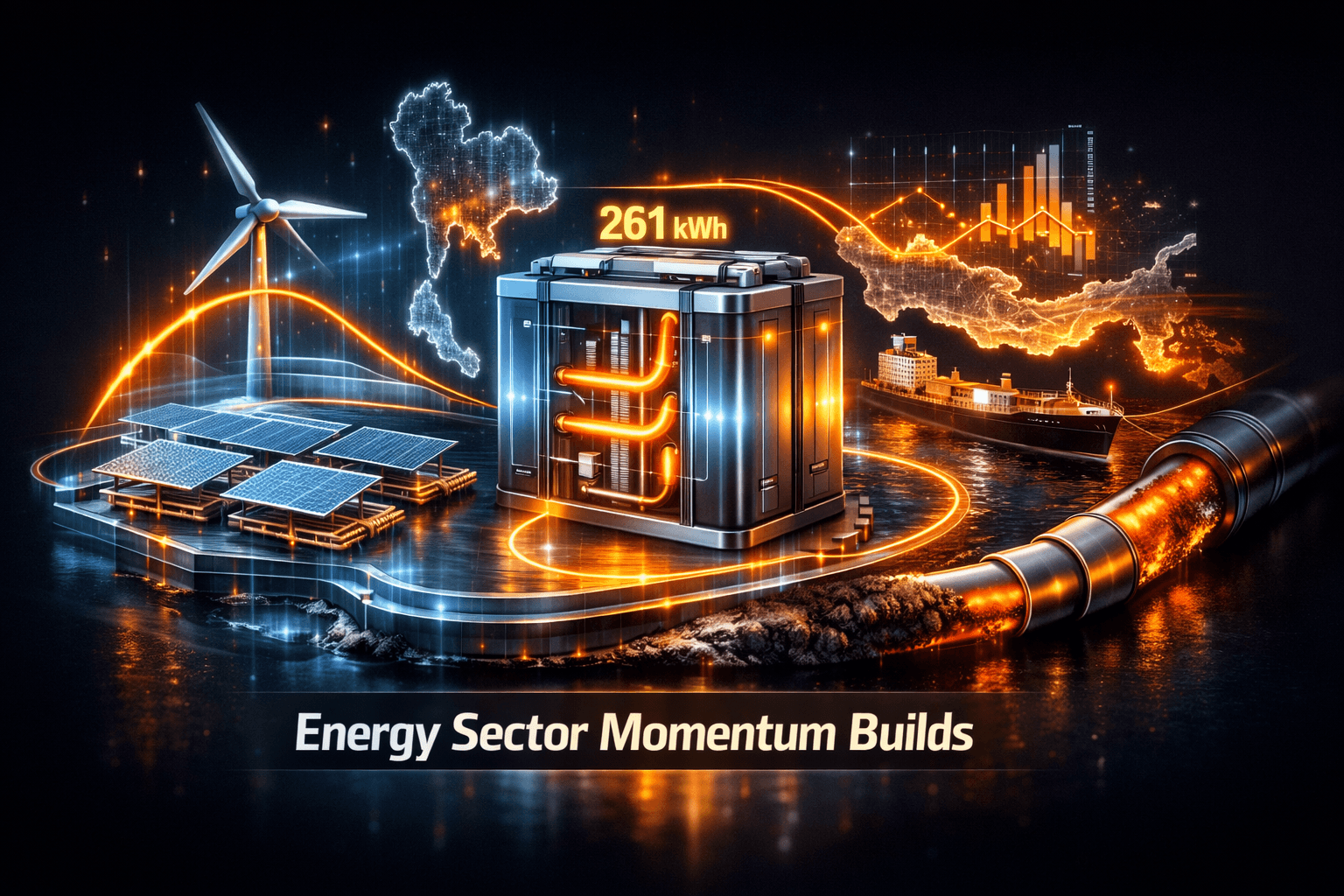
- VSL PowerHive launched the P261 BESS, a 125 kW / 261 kWh liquid-cooled LFP system aimed at commercial and industrial customers.
- Spirit Energy wrapped a UK North Sea decommissioning campaign valued at $54 million, removing 200 tonnes of offshore kit.
Key Developments
Thailand Accelerates Clean Energy and Embraces Nuclear
Thailand's energy minister said the country will speed up renewable rollouts and add nuclear power to reduce reliance on imported LNG. With over 60% of electricity currently from natural gas, the move is aimed at bolstering energy security after disruptions to shipping routes.
For you, that means regional demand for LNG could moderate over the medium term, while developers of solar, wind, and firming technologies should see clearer policy support and potential project pipelines.
Innovation: Bamboo Floating PV and Residential Carnot Batteries
CIMC Raffles completed a 100 kW engineered bamboo composite floating PV platform and plans to scale to megawatt projects while writing standards for marine deployment. The use of engineered bamboo suggests lower embodied carbon for floaters and potential cost advantages in some markets.
Italian researchers described a reversible heat pump-Carnot battery concept for residential PV storage with simulated round-trip efficiency near 35% when optimized. These developments push storage options beyond conventional lithium systems, giving you more paths to pair renewables with demand.
Distributed Storage and C&I Systems Reach Commercial Specs
VSL PowerHive unveiled the P261, a liquid-cooled 125 kW / 261 kWh LFP battery aimed at commercial and industrial customers in India and abroad. The product addresses peak shaving, backup power, and EV charging integration for businesses looking to lower diesel dependence and demand charges.
That makes it easier for campuses, factories, and C&I customers to adopt solar plus storage at commercial scale, and it may accelerate procurement cycles in markets where grid reliability or high power costs make storage economics favorable.
What to Watch
Several forward-looking catalysts and risk factors will shape sentiment and prices over the coming days and weeks. You should track these closely.
- Diplomacy in the Gulf, especially Qatar's visit to Tehran. If talks advance reopening the Strait of Hormuz, oil could see further downside pressure from easing supply concerns.
- Thailand's policy rollout, draft procurement timelines, and any announced nuclear program partners. Those will determine the speed and scale of LNG demand reduction.
- Commercial scale-up plans from CIMC Raffles for bamboo floaters and certification work for marine standards, which will tell you whether the pilot is a niche proof point or a deployable product.
- Adoption metrics for the VSL P261 system, including order flow in India and export markets, which will indicate demand for liquid-cooled LFP systems in C&I segments.
- Grid resilience stories at home, like the prolonged outages in Gary, Indiana, which highlight the economic cost of outages and may accelerate municipal and commercial procurement of resilient distributed energy resources.
How fast will these technologies scale, and will policy follow? Those are the questions that will determine winners and losers in the months ahead.
Bottom Line
- Policy and technology point to accelerating renewable and storage deployment, especially in markets seeking energy security after supply shocks.
- Oil supply lines through Hormuz are recovering, pressuring crude prices in the near term, but geopolitical risk remains a wildcard.
- Technology pilots like bamboo floaters and Carnot battery concepts broaden the options for pairing renewables with firming solutions.
- Commercial storage products such as the 125 kW / 261 kWh P261 make C&I adoption more practical, which could reduce diesel and peak-load exposure for businesses.
- Grid reliability incidents at home keep resilience a top priority, and that will support demand for distributed generation and storage solutions.
FAQ Section
Q: How will Thailand's push affect global LNG demand? A: Thailand's shift to more renewables and potential nuclear capacity should reduce its LNG import growth trajectory, though global LNG demand will still depend on broader regional policies and seasonal needs.
Q: Are bamboo-based floating PV systems commercially viable yet? A: The 100 kW pilot shows technical feasibility, but commercial viability will depend on scale-up to megawatt projects, certification for marine conditions, and local cost factors.
Q: What should you watch about oil prices this week? A: Monitor diplomatic progress on reopening the Strait of Hormuz, cargo volumes from Kuwait and Qatar, and any new supply disruptions, since these drive short-term crude price swings.