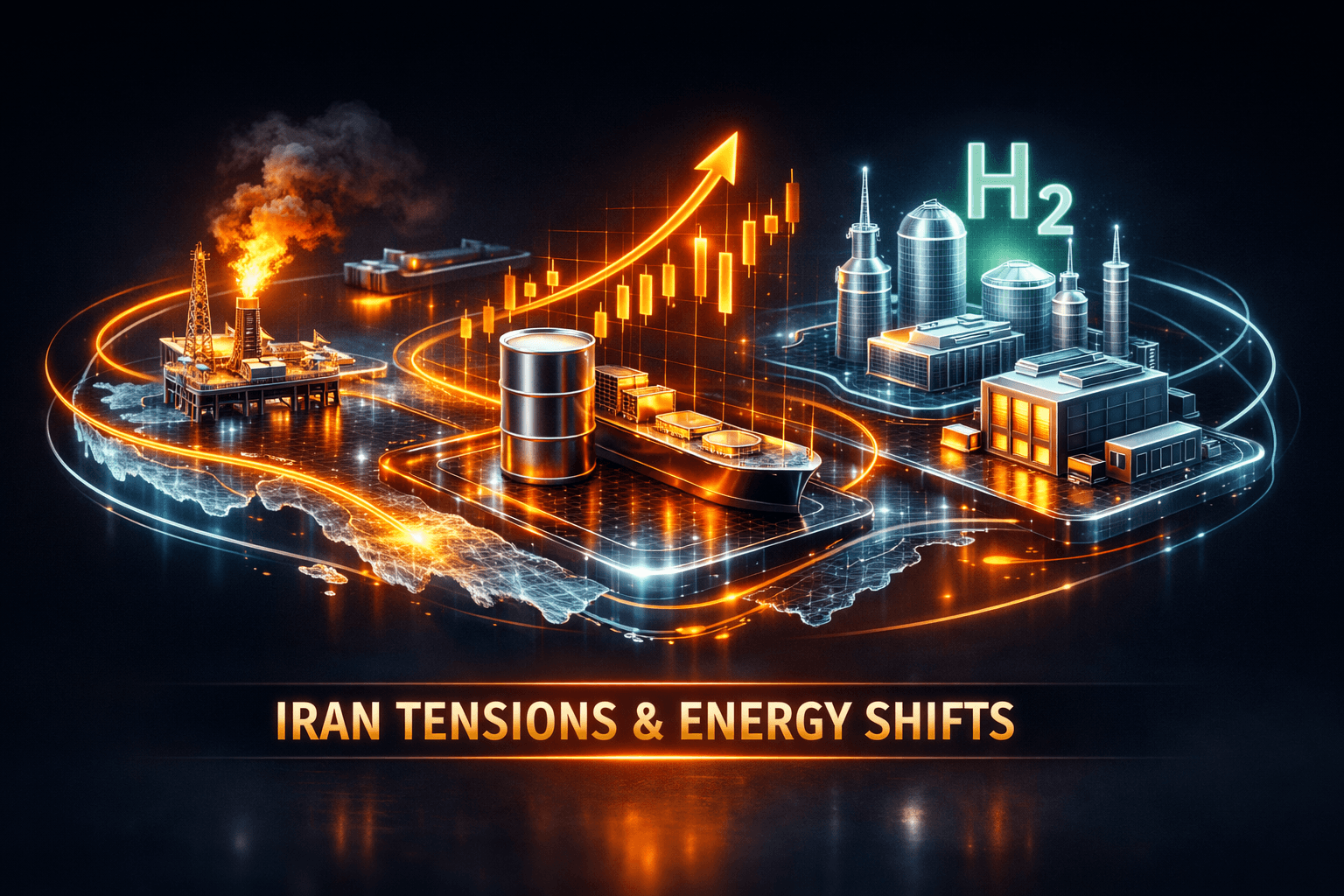
The Big Picture
Oil markets led the day's headlines as Iran-related tensions and tanker routing pushed crude to a multi-week high, underscoring how geopolitics still drives near-term energy prices. At the same time, the clean-energy transition showed mixed momentum, with high-profile delays in green hydrogen projects offset by corporate moves into firm gas capacity and battery storage ambitions in Europe.
Why should you care? The competing forces of supply-side stress in oil markets and uneven progress on low-carbon technologies mean the sector could deliver divergent returns across subsectors in the weeks ahead. You’ll want to watch which themes gain traction tomorrow and beyond.
Market Highlights
Quick facts and market moves from today’s flow of headlines.
- Crude prices climbed to a three-week high on Iran standoff and tanker threats, supporting oil-sector sentiment.
- Shadow exports through routes outside the Persian Gulf are moving more than 4 million barrels per day, according to reporting, reshaping flow dynamics.
- Saudi Aramco restarted VLCC loadings from Ras Tanura and Juaymah, with three VLCCs loading roughly 2 million barrels between Aug 12 and Aug 16.
- North America added eight rigs week over week, per Baker Hughes' latest rotary rig count, signaling a pickup in upstream activity.
- $EQNR agreed to buy a majority stake in a 1.48 GW combined-cycle gas turbine (CCGT) plant in Pennsylvania, highlighting moves into firm power assets.
- Green hydrogen projects lagged expectations, with only 7% of planned global green hydrogen capacity completed on schedule, according to industry reporting.
- Portugal is targeting 3 GW of battery storage by 2030, up from about 20 MW commissioned by the end of last year, if licensing and revenue streams align.
- Consumer EV deals and Tesla headlines kept attention on vehicle electrification, with $TSLA in the news after a DIY hardware upgrade story and a Robotaxi incident.
Key Developments
Iran Tensions and Oil Flow Shifts
Escalation around the Strait of Hormuz and related tanker threats lifted crude to a three-week high today, as traders priced in supply risk. Reporting shows Gulf producers are already moving more than 4 million barrels per day through a shadow export network of AIS-dark shuttles and ship-to-ship transfers, and Saudi Aramco has resumed VLCC loadings inside Hormuz after a three-week pause, loading roughly 2 million barrels across three VLCCs between Aug 12 and Aug 16.
Implication for you: disruption risk remains elevated and can tighten markets quickly, supporting oil-price volatility. Who benefits and who’s exposed may depend on the routes and logistics your holdings rely on.
Upstream Activity and Rig Count
North America added eight rigs week on week in Baker Hughes’ rotary rig count, reversing a recent slowdown. That uptick suggests producers may be responding to higher prices or improved short-term economics for certain plays.
Implication for you: a rising rig count can signal higher near-term production and capex, yet production growth often lags drilling activity. If you follow exploration and services names, you’ll want to track subsequent production and cash flow updates.
Clean Energy: Hydrogen Delay, Firm Power and Storage Moves
Green hydrogen development hit a setback, with only 7% of global green hydrogen capacity finished on schedule, according to industry reporting. That shortfall highlights technology, cost, and permitting challenges that have slowed deployment in hard-to-abate sectors.
Meanwhile, $EQNR’s move to buy a majority stake in a 1.48 GW CCGT plant in Pennsylvania and Portugal’s plan to scale battery storage from roughly 20 MW to a 3 GW target by 2030 show investors and policymakers prioritizing firm capacity and grid flexibility. Those are practical responses to intermittent renewables and the current limits in hydrogen rollouts.
Implication for you: the energy transition is multi-speed. While electrolyzer projects struggle, demand for reliable, dispatchable generation and storage is rising, so consider how that mix affects sector exposures you follow.
What to Watch
Look to these catalysts and risks that could move markets tomorrow and over the coming weeks.
- Oil and shipping headlines: any new developments around the Strait of Hormuz or tanker security could extend price moves. Will the shadow export corridors expand or contract?
- Rig count and production data: track weekly Baker Hughes counts and monthly production reports, they’ll signal whether the recent uptick turns into higher volumes.
- Equinor ($EQNR) integration and PJM market signals: watch operating updates on the 1.48 GW CCGT stake and any PJM capacity market signals that affect revenue stability.
- Hydrogen project announcements and timelines: monitor funding, permitting, and off-take agreements, since many projects are slipping versus original schedules.
- Battery storage permitting and revenue rules in Portugal and EU markets, because policy and stable revenue streams will determine how quickly the 3 GW target can be reached.
- $TSLA headlines and regulatory reviews tied to Robotaxi safety, which could influence sentiment around EV scale-up and autonomous deployment.
Bottom Line
- Geopolitical risk around Hormuz is the dominant near-term driver, lifting crude and complicating logistics. Analysts note shadow export routes are already moving millions of barrels daily.
- Upstream activity is picking up in North America, with eight rigs added week over week, a sign explorers may step up activity if prices persist.
- Clean-energy progress is uneven: green hydrogen projects are behind schedule, but firms and governments are pivoting to firm gas capacity and battery storage to shore up grids.
- Expect volatility across subsectors, so you’ll want to track shipping, logistics, permitting, and policy updates for clearer signals on winners and laggards.
- Data suggests a multi-speed transition, so stay selective and follow short-term catalysts rather than broad assumptions about the timeline.
FAQ Section
Q: What pushed oil to a three-week high today? A: Geopolitical tensions around the Strait of Hormuz, tanker threats, and tight fuel markets supported crude prices.
Q: How big is the shadow export network bypassing Hormuz? A: Reporting indicates more than 4 million barrels per day are moving via AIS-dark shuttles and ship-to-ship transfers outside the Persian Gulf.
Q: Does the green hydrogen delay mean the transition is failing? A: Not necessarily, it means timelines are slipping; investments and policy will likely shift resources toward firm power and storage until hydrogen costs and supply chains improve.