The Big Picture
Renewable energy is showing clear momentum on the supply side today, while geopolitics is keeping oil market volatility front and center. You should note that manufacturing capacity and planning software advances are lowering costs and lead times for solar and utility-scale battery projects, even as tensions around Iran and shifts in global crude flows keep upside risk to oil prices.
This mix means the Energy sector is sending mixed signals. You may see selective strength in solar and storage stocks, while oil and shipping-related names could react to headline risk and policy moves today.
Market Highlights
Quick facts and figures from overnight and pre-market headlines to help you scan the tape.
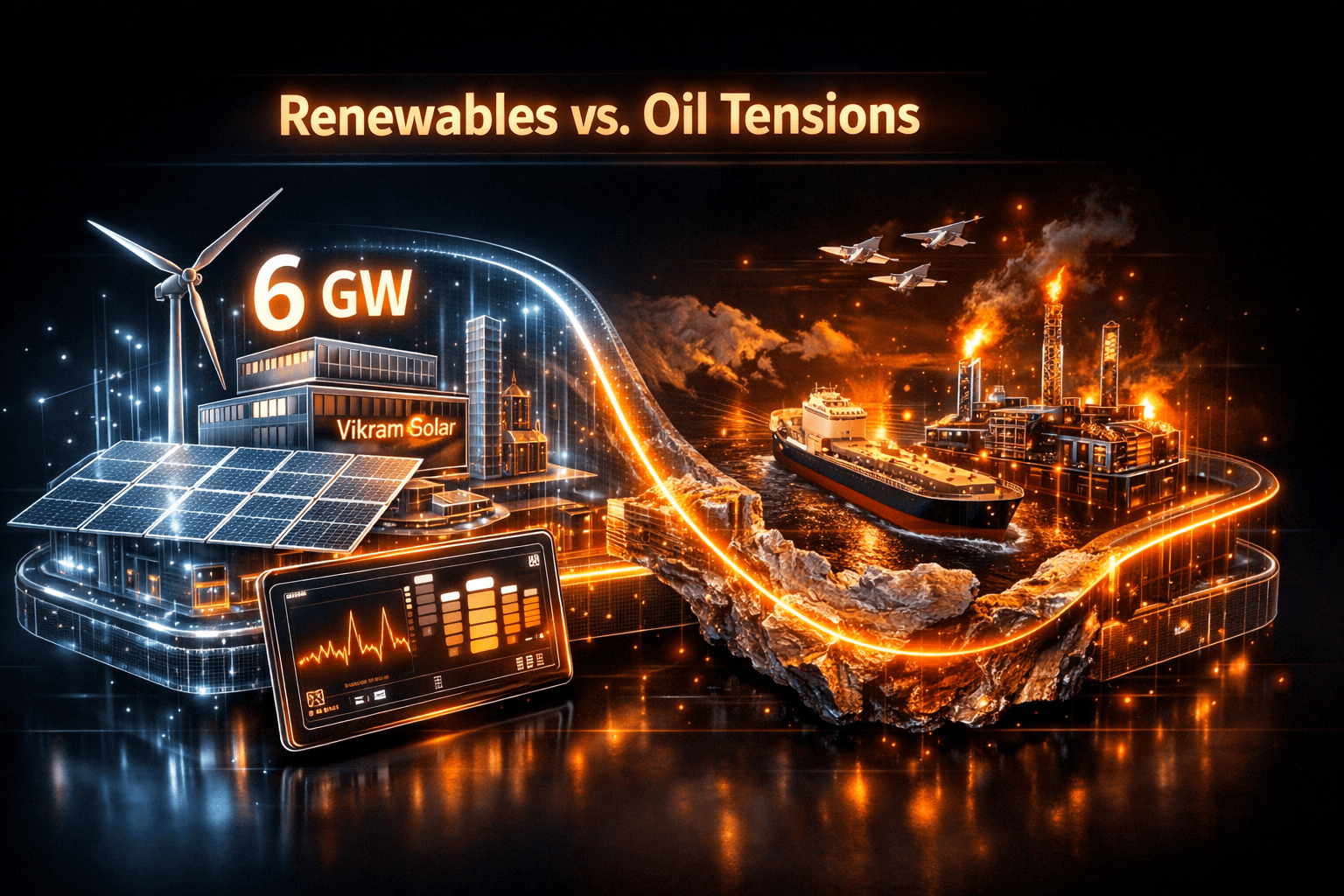
- Vikram Solar inaugurated a new 6 GW PV module factory in Tamil Nadu, taking its total module manufacturing capacity to 15.5 GW per year.
- PVFarm launched RE STACK, a software tool designed to speed utility-scale battery energy storage system planning across geographies and manufacturers.
- Solcast, a DNV company, reported that the Aug. 12 partial U.S. eclipse produced daily solar energy losses comparable to higher-obscuration European locations, underscoring variable grid impacts.
- Kpler data show Strait of Hormuz tanker crossings dropped to five on Wednesday and nine on Thursday, below a monthly average of 12 crossings, signaling reduced transit activity.
- Russia’s crude exports to India surged 62.4% year over year last month and accounted for 50.83% of India’s import volumes, a record share that continues to reshape global flows.
Key Developments
Solar manufacturing jumps, supply chain tightness eases
Vikram Solar’s new 6 GW line increases national and regional module supply and pushes the company to 15.5 GW annual capacity. That expansion should help lower lead times for large-scale projects in India and neighboring markets where you might see more procurement activity this year.
For developers and EPC firms, more local capacity means less exposure to long cross-border shipping cycles and tariff uncertainty. You’ll want to watch module pricing announcements and procurement tenders for early signs of margin relief.
Battery planning goes digital with PVFarm’s RE STACK
PVFarm released RE STACK, a utility-scale BESS planning platform that works across manufacturers and sites. The tool aims to compress design timelines and produce more comprehensive site studies.
If adoption accelerates, you could see faster project execution for grid-scale storage, which matters to renewables integration and capacity markets. The productivity gains may also pressure EPC margins to become more competitive.
Geopolitics and shipping keep crude risks elevated
The U.S.-Iran standoff is generating new policy moves, with Treasury and the White House signaling tougher sanctions and an indefinite blockade of Iranian ports. Vice President JD Vance emphasized a U.S. priority to keep oil and gasoline prices low, adding a political layer aimed at dampening consumer pain.
At the same time, physical flows are shifting. Tanker traffic through the Strait of Hormuz has slumped well below its monthly average and Russian crude exports to India jumped 62.4% last month, taking a record 50.83% share of India’s imports. So supply risk is uneven and will likely show up in regional price spreads rather than a uniform global shock.
What to Watch
Here are the catalysts and risk factors that could move energy names and broader market sentiment today and into next week.
- Sanctions timeline and details, including any designation lists from the U.S. Treasury. Those specifics will matter to shipping insurers and trading desks.
- Daily Strait of Hormuz and Bab el-Mandeb transit tallies from Kpler or similar providers. A continued drop in crossings could tighten tanker availability and push freight rates higher.
- Solar tender outcomes and module price updates in India and Southeast Asia. You’ll want to track procurement notices that reflect the new 15.5 GW capacity pool.
- Adoption announcements for PVFarm’s RE STACK from large developers or utilities. Early wins could indicate faster BESS deployment schedules.
- Retail gasoline data and U.S. administration statements on fuel policy. If political pressure intensifies to cap prices, that may mute oil upside even amid supply frictions.
Which of these matters most to you depends on your exposure. Do you own names tied to module manufacturing or to tanker logistics? Keep your exposure aligned with the specific risks you can tolerate.
Bottom Line
- Renewables progress is tangible, with Vikram Solar boosting module capacity to 15.5 GW and software tools like RE STACK improving BESS planning efficiency.
- Solar generation faced short-term variability during the Aug. 12 eclipse, highlighting the need for flexible dispatch and storage solutions.
- Geopolitical developments around Iran, including pending sanctions and a sustained blockade, are creating uneven crude flows and shipping disruptions.
- Russia’s surge in exports to India is reshaping trade patterns, which may pressure regional pricing dynamics and freight markets.
- Given the mixed signals, a selective approach is warranted, watching tenders, freight data, and policy announcements for the next directional cues.
FAQ Section
Q: How will Vikram Solar’s new plant affect module prices? A: The additional 6 GW raises supply and could ease lead times in regional markets, but final price effects depend on demand, shipping costs, and local tariffs.
Q: Should the Strait of Hormuz traffic drop worry you about immediate oil shortages? A: A single-week drop amplifies downside supply risk regionally, but global availability is influenced by diverted routes, inventories, and refiners’ flexibility.
Q: What role will PVFarm’s RE STACK play for grid-scale batteries? A: RE STACK aims to speed and standardize planning across sites and manufacturers, which could shorten project timelines and improve project bankability if widely adopted.