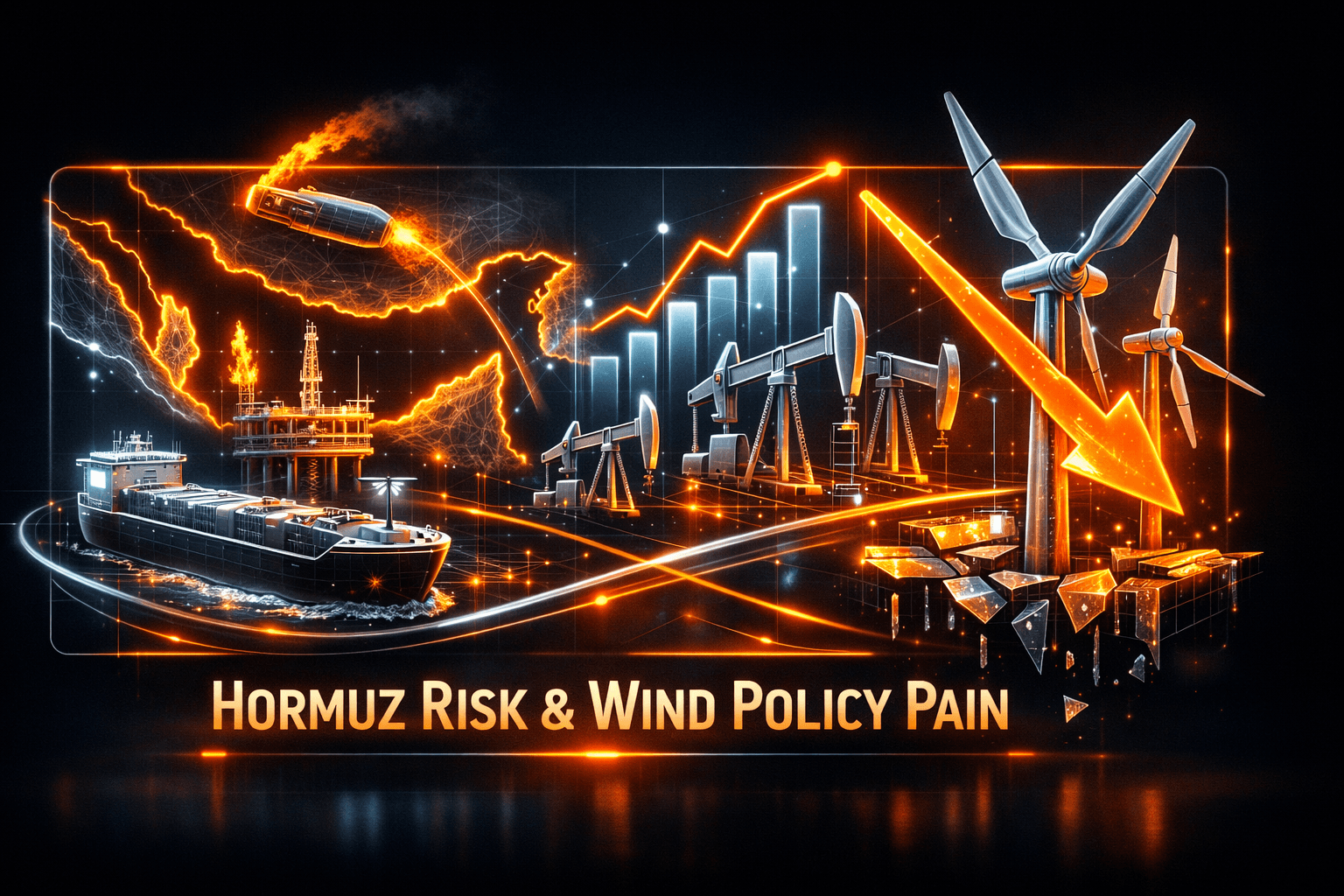
The Big Picture
The most consequential theme this weekend is clear, supply risk and policy uncertainty are shaping energy markets even while U.S. production cushions the blow. The months-long closure of the Strait of Hormuz has produced acute shortages for crude, LNG and aviation fuel, but analyses show large U.S. output and recent LNG expansion have softened the global shock.
At the same time you should note growing policy and industry moves that cut both ways. The U.S. administration has agreed to roughly $4 billion in refunds tied to cancelled offshore wind projects, a development that raises political risk for that subsector. Meanwhile, corporate and industrial actions, from polysilicon pricing discipline in China to Petrobras reporting a profit beat, are creating selective pockets of strength. Markets were closed on Sunday, Aug 9, so these developments will be digested when trading resumes on Monday, Aug 10.
Market Highlights
Quick facts and numbers to help you prioritize what to follow as markets reopen.
- Strait of Hormuz disruption: closure has pressured global crude and LNG flows, affecting refiners and aviation fuel supply chains.
- U.S. production role: the American Petroleum Institute notes record U.S. crude and natural gas output and rising LNG exports have helped cushion global shortages.
- Offshore wind refunds: the U.S. administration has agreed to roughly $4 billion in settlements tied to cancelled offshore wind projects, a major policy hit to that segment.
- $PBR: Petrobras reported profits that topped estimates as of Friday, Aug 7, reinforcing resilience among major oil producers.
- Polysilicon supply discipline: China's top eight producers, controlling more than 90% of effective capacity, pledged to end loss-making sales, a move that could support prices for solar feedstocks.
Key Developments
Hormuz Disruption and Aviation Fuel Shortages
The prolonged closure of the Strait of Hormuz has forced refiners and airlines into scramble mode for jet fuel and crude alternatives. Reports note airlines are struggling to secure enough jet fuel to maintain schedules, and OilPrice articles this week highlighted how localized shortages are rippling through global logistics.
What does this mean for you? If you have exposure to energy infrastructure or integrated oil majors, be ready for volatile refining margins and shipping cost pressures that could show up in earnings reports and fuel retail pricing when markets reopen.
U.S. Production and LNG Exports: A Backstop
Analysts point to U.S. oil and gas output as a stabilizing factor. The American Petroleum Institute emphasized years of investment that boosted crude and natural gas supply, and rising LNG exports have offered alternatives for markets cut off from Persian Gulf flows.
This isn’t a clean sweep for the sector. U.S. capacity has helped limit an outright crisis, but it may not fully offset regional shortages that keep prices elevated and volatility elevated for commodity-linked names.
Policy Headwinds for Offshore Wind; Industry Discipline in Solar
Policy has intervened directly. The U.S. administration's refunds to cancel offshore wind projects total about $4 billion so far this year, according to reporting. That's a meaningful headwind for developers and supply-chain firms focused on U.S. offshore builds.
On the flip side, China’s eight major polysilicon producers pledged to stop loss-making sales and exercise capacity discipline. That move could support feedstock pricing and improve margins for upstream solar manufacturers, representing a potential silver lining for the renewables supply chain.
What to Watch
Here are the catalysts and risks you should track leading into the next trading session on Monday, Aug 10.
- Oil and LNG flows through the Strait of Hormuz, and any diplomatic or military developments that signal reopening or further disruption. Can U.S. production fully offset tighter Middle East supply?
- Refining and airline updates. Watch operational commentary from major carriers and refiners about jet fuel inventories and routing costs.
- Offshore wind settlements and policy signals. Additional refunds or legal outcomes could change the risk profile for companies tied to U.S. offshore builds.
- Polysilicon pricing and solar module order books. If Chinese producers strictly enforce pricing discipline, costs and margins across the solar value chain could shift meaningfully over the coming quarters.
- Quarterly results and guidance from large integrated oil producers. Firms like $PBR that reported upside will be watched for resilience in cash flow and capex plans.
If you follow energy ETFs or individual names, consider how these idiosyncratic news items fit your exposure. Do you own stocks sensitive to policy risk, or are you positioned for commodity-driven moves? Keep an eye on liquidity and volatility when markets reopen.
Bottom Line
- Global supply shocks from Hormuz are real and are elevating short-term price and operational risks for oil, LNG and jet fuel.
- U.S. oil and gas production plus LNG exports provide a partial cushion, but regional shortages and logistical disruptions can still create volatility.
- Policy actions are reshaping the renewables landscape, with $4 billion in offshore wind refunds raising political risk while Chinese polysilicon producers seek to stabilize pricing.
- Corporate fundamentals show mixed resilience, illustrated by Petrobras’ profit beat and new commercial incentives in EV niches abroad.
- As markets reopen on Aug 10, stay selective and monitor inventory and policy headlines closely as they will drive near-term moves.
FAQ Section
Q: How will the Strait of Hormuz closure affect oil prices? A: The closure increases upside pressure on oil and refined fuel prices by tightening supply routes, but U.S. production and alternative export routes can moderate the impact over time.
Q: What does the $4 billion in offshore wind refunds mean for developers? A: The refunds reflect higher policy and execution risk for U.S. offshore projects, potentially delaying builds and increasing financing uncertainty for developers and suppliers.
Q: Should I expect solar costs to rise after China’s polysilicon pledge? A: The pricing discipline could support polysilicon prices and improve upstream margins, but final module prices will also depend on demand, logistics and downstream inventory levels.