The Big Picture
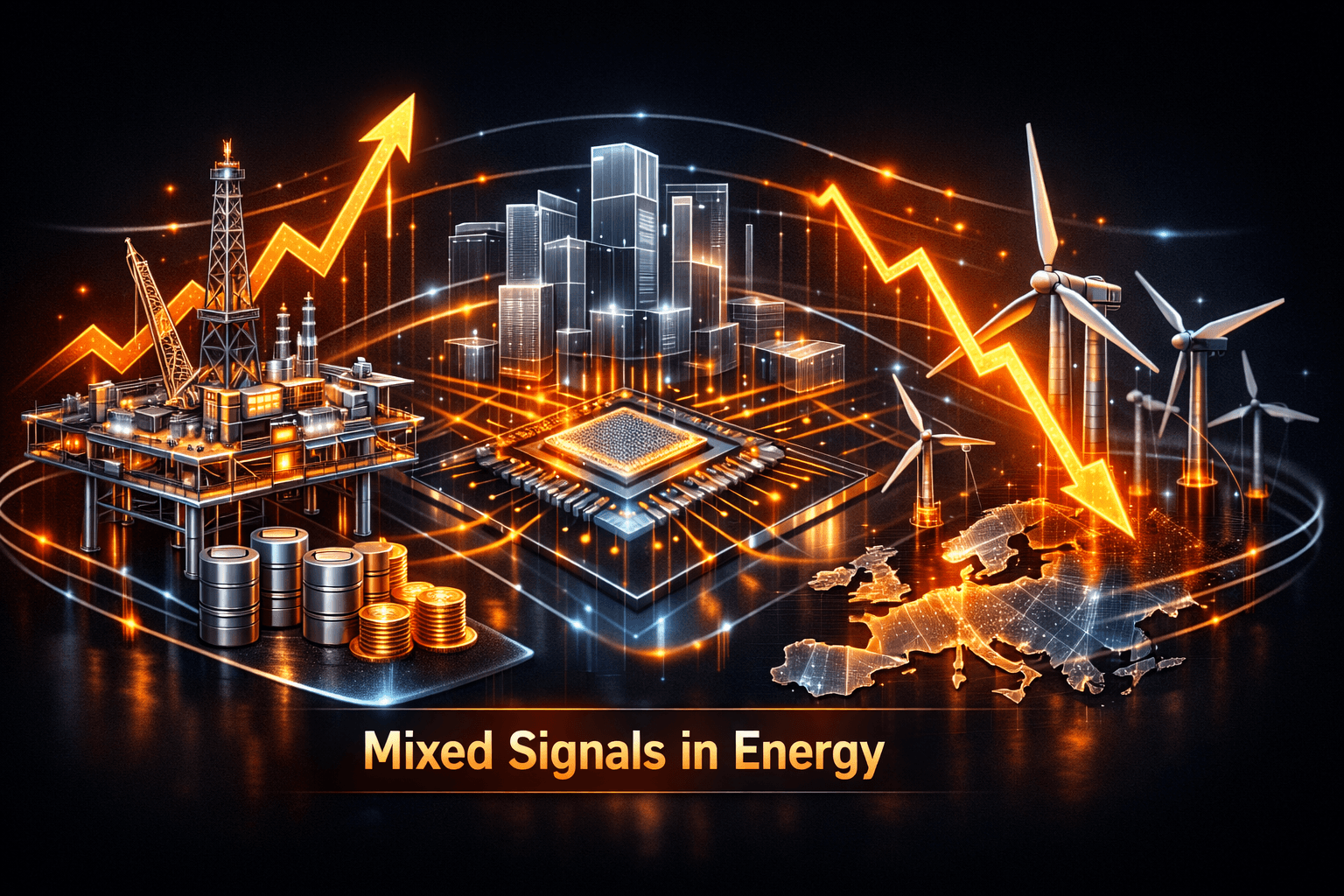
Energy news on Sunday, Aug 9 paints a mixed picture for you as a retail investor. Operational upside in oil earnings and bold plans for electric and autonomous fleets are being offset by policy-driven setbacks for offshore wind and fresh warnings about Europe’s long-term oil supply.
US markets were closed Sunday, so market pricing reflects conditions as of Friday, Aug 7, and the full market reaction will be visible when trading resumes on Monday, Aug 10. You should treat today's headlines as catalysts to monitor, not immediate market moves.
Market Highlights
Key facts and numbers to know heading into the long weekend.
- Murphy Oil, $MUR, reported adjusted second-quarter net income of $225.8 million, roughly six times the year-ago period, as higher oil prices offset lower production and weak gas prices.
- The Trump administration agreed to about $4 billion in refunds this year to cancel planned offshore wind projects, a major policy setback for that segment of renewables.
- Electrek's EV survey drew more than 3,000 responses on how Chinese electric cars might reach US roads, reflecting strong retail interest in cross-border EV dynamics.
- Pony.ai plans 1,000 autonomous electric trucks by 2027 and aims for 100,000 by 2030, signaling rapid scale ambitions in freight electrification and autonomy.
- Oil markets steadied as of Aug 7 amid renewed Hormuz tensions, underscoring persistent geopolitical upside risk for crude prices.
- Industry forecasts cited in coverage expect global wind additions near 160 GW in the near term as turbine design and durability improve.
Key Developments
Offshore Wind: $4B in Refunds and a Policy Reset
The administration’s settlements totaling about $4 billion to cancel offshore wind projects represent a clear policy pivot, and the refunds are already being tallied. For developers and supply-chain firms, this increases policy risk and creates near-term revenue uncertainty, while utilities and planners may need to revisit regional capacity assumptions.
What does that mean for you? If you follow clean-energy names, expect heightened sensitivity to federal energy policy and to any legal or legislative developments that could restore or further constrain project pipelines.
Oil Firms Gain as Geopolitics Stays Tense
Murphy Oil’s $225.8 million adjusted profit shows how higher oil prices can restore cash flow even when production is soft. Oil steadied heading into the weekend as traders weighed possible Hormuz arrangements against ongoing shipping threats, and that backdrop keeps crude-linked company earnings more resilient for now.
Analysts note this is a double-edged sword, you might say a silver lining for oil producers, but it also keeps fuel cost and inflation risks active for broader markets and for countries dependent on imports.
Electrification and Tech: Momentum, but Questions Remain
Electrek’s reader survey and Pony.ai’s ambitious truck plan highlight the steady march of electrification and autonomy. Pony.ai’s goal of 100,000 autonomous electric trucks by 2030 is bold, and its near-term target of 1,000 trucks by 2027 is more immediately testable.
Meanwhile, engineers are redesigning wind turbines to be bigger and more durable, which could improve capacity additions over time. At the same time, Paris tightening e-scooter rules shows regulators are still wrestling with new modes of transport, which can add friction for urban mobility players.
What to Watch
Focus on catalysts and risks that could drive the sector when markets reopen Monday, Aug 10.
- Policy and legal updates on offshore wind cancellations, including whether any projects are revived or face further litigation, will affect renewable developers and steel and turbine suppliers.
- Oil price drivers: any escalation or de-escalation in Hormuz-related shipping risks will influence crude volatility and producer earnings, so watch geopolitical headlines closely.
- Corporate updates: expect investor attention on producers reporting mid‑year results, and check whether companies revise guidance after recent price moves.
- Tech rollouts: look for progress reports from autonomous logistics pilots like Pony.ai, and for vendor announcements tied to the next-generation turbine deployments that could signal capex cycles.
- Nuclear policy: plans to restart or build reactors face long permitting and safety processes, so track regulatory steps rather than expecting quick capacity additions.
How should you read this mix? Be selective, and match your attention to the specific subsegment you follow, whether that's upstream oil, offshore and onshore renewables, or energy tech and mobility. Are you prepared for policy-driven volatility in renewables, or for commodity-driven swings in oil? Those are the questions to keep in mind.
Bottom Line
- Mixed drivers: strong oil earnings and tech ambitions are offset by policy headwinds for offshore wind and structural concerns about Europe’s long-term oil supply.
- Policy risk is front and center for renewables, while geopolitics keeps upside price risk for oil consumers and producers alike.
- Watch near-term catalysts such as legal or legislative updates on wind projects, any escalation in Hormuz tensions, and corporate progress on autonomous and EV fleets.
- Data suggests a selective approach is prudent, you should track company-specific fundamentals and regulatory signals rather than broad sector momentum.
FAQ
Q: How will the $4 billion in wind refunds affect renewable stocks? A: The refunds increase near-term policy risk and may pressure developers and suppliers tied to cancelled projects, analysts note, but impacts will vary by company exposure.
Q: Does Murphy Oil’s profit mean oil prices will keep rising? A: Murphy Oil’s strong quarter reflects higher prices during the period and company-specific factors, but future prices depend on geopolitics, supply dynamics, and demand trends.
Q: Could Chinese EVs or autonomous trucks disrupt US markets soon? A: Surveys and company plans show growing interest and ambition, but cross-border market access, regulations, and scaling challenges mean major disruption will take time.