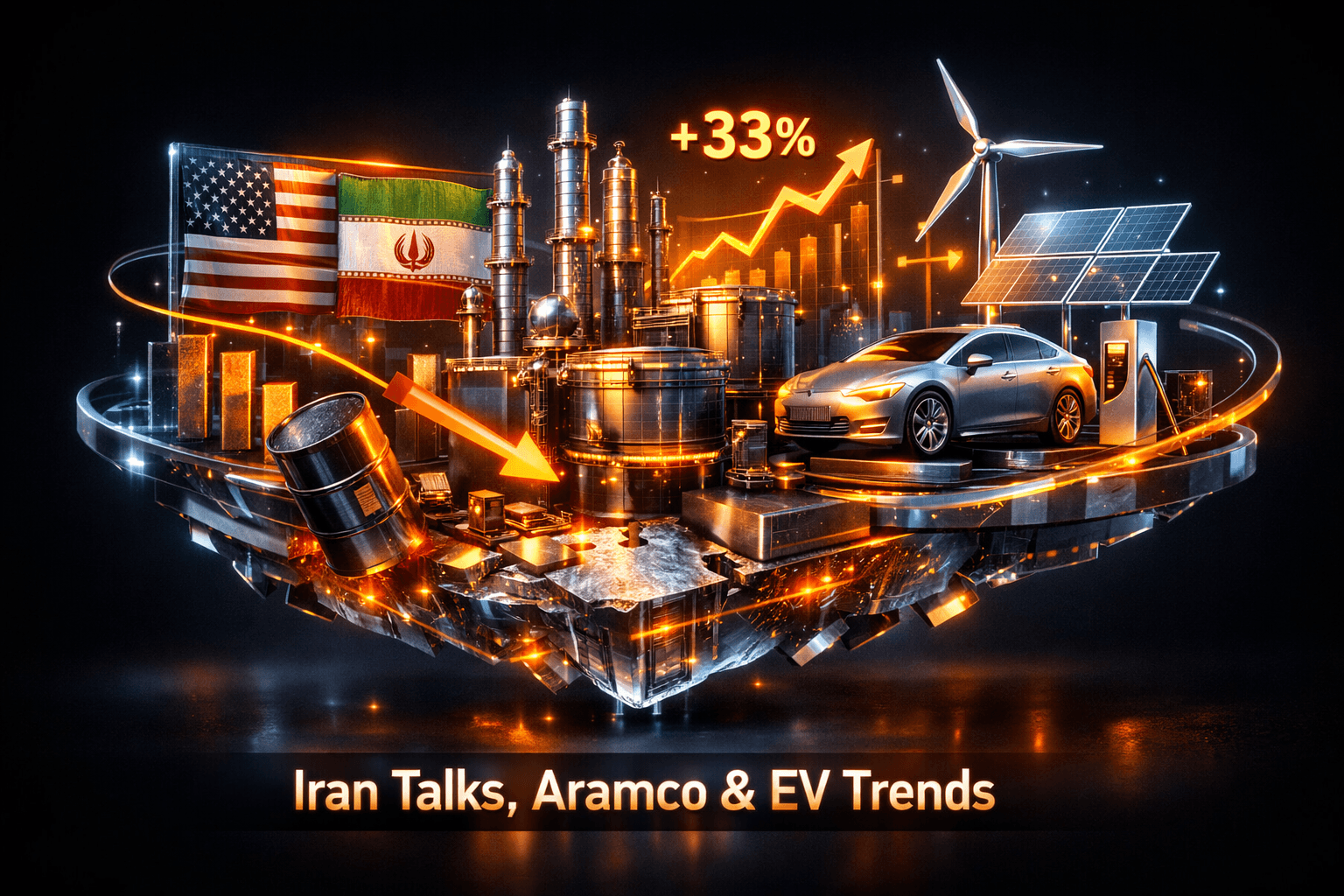
The Big Picture
Oil markets swung sharply today as fresh signs of progress toward a short-term U.S.-Iran understanding sent benchmark crude down, while one of the largest integrated producers reported strong quarterly results and growth plans. You saw traders rush to reprice risk, but structural shifts in demand tied to EV adoption and solar policy still matter to the longer-term story.
That combination leaves you with a market showing near-term volatility and longer-term uncertainty. For investors this matters because it changes how you evaluate cash flows, dividend safety and the pace of energy transition across oil majors and clean-energy suppliers.
Market Highlights
Key market moves and quick facts from today.
- WTI crude tumbled to about $75.64 per barrel, down $4.70 or roughly 5.85% intraday, while Brent fell to $79.16, down $4.61 and touching three-week lows.
- Saudi Aramco reported a 33 percent jump in second-quarter profit and said it is exploring options to boost oil export capacity, quoted under $2222.SR.
- Newsflow reinforced clean-energy momentum: China regulators signaled an end to destructive solar price wars, and auto makers including Porsche and Hyundai reaffirmed EV launches, supporting longer-term demand shifts for electricity over oil.
- Geopolitics drove much of the intraday move, with Treasury Secretary Scott Bessent and other officials signalling progress on a possible U.S.-Iran agreement that could ease tanker route disruptions through the Strait of Hormuz.
Key Developments
Iran-U.S. Talks and Oil Price Repricing
Officials including Treasury Secretary Scott Bessent indicated progress on a short-term U.S.-Iran deal, and Qatar signalled movement in mediation. Markets priced those signals aggressively, pushing WTI and Brent down about 5 to 6 percent on the session. You should note that traders often move ahead of signed agreements, so volatility could persist if diplomatic talks stall or details disappoint.
Aramco Strength and Capacity Plans
Saudi Aramco posted a 33 percent year over year profit increase for Q2, reflecting previous disruption-driven price spikes, and said it is examining ways to boost export capacity to mitigate chokepoint risks. That’s clear evidence that integrated producers can profit even amid geopolitical shocks, but it also suggests investment and operational responses that could influence supply flows and pricing into next year.
EV Momentum and the Longer Demand Question
Several stories reinforced electric mobility and clean-energy momentum. Analysis highlighted China’s EV expansion as a structural force that reduces the leverage of chokepoints like the Strait of Hormuz, noting roughly 45 to 50 percent of Chinese crude imports normally transit that route. Automakers including Porsche and Hyundai confirmed EV model plans, which supports sustained electrification of transport. How quickly that demand substitution happens will shape oil demand growth over the medium term.
What to Watch
Here are the catalysts and risks that will matter to you tomorrow and in the near term.
- Diplomatic updates on U.S.-Iran discussions, and any formal announcement. A signed short-term deal would likely keep downward pressure on oil prices. What happens if talks break down?
- Follow-up commentary from Saudi Aramco on export capacity plans, and any capital allocation signals. Those moves could change shipping patterns and regional price sensitivity.
- China policy on solar pricing and any formal measures to curb below-cost competition. A regulatory backstop could stabilize margins for PV manufacturers and affect equipment suppliers' earnings.
- Automaker launch timelines for EVs and consumer demand indicators in major markets. Sales trends influence oil demand growth and utility load forecasts.
- Macro data such as U.S. inventories, refined product demand, and shipping disruptions in the Red Sea or Hormuz region. Those remain immediate drivers of price volatility.
Bottom Line
- Near-term: Markets are re-pricing geopolitical risk as talks with Iran show progress, driving a sharp drop in benchmark crude prices today.
- Company level: $2222.SR’s profit jump and capacity planning show majors can benefit in volatile cycles, but your focus should include capital spending and dividend coverage metrics.
- Transition dynamics: China’s EV adoption and solar policy developments point to slower oil demand growth over time, creating mixed outcomes across exploration, refining and power segments.
- Volatility risk remains high, so you may want to watch headlines closely and focus on duration and cash flow resilience rather than short-term price moves.
- Data suggests the market is balancing immediate geopolitical relief against structural transition, so a selective approach is prudent while waiting for clarity.
FAQ Section
Q: How did the Iran-U.S. talks move oil prices today? A: Markets priced in progress toward a short-term deal, which reduced premium tied to shipping risk and helped push WTI and Brent down roughly 5 to 6 percent.
Q: What does Aramco’s profit jump mean for the sector? A: A 33 percent rise in second-quarter profit shows majors can generate strong cash flow during periods of higher prices, and Aramco’s capacity plans could affect regional export dynamics.
Q: Should I expect EV and solar news to keep weighing on oil? A: Data suggests EV adoption and stabilizing solar policy in China add structural headwinds to oil demand growth, but the pace of that effect will depend on sales, policy and infrastructure developments.