The Big Picture
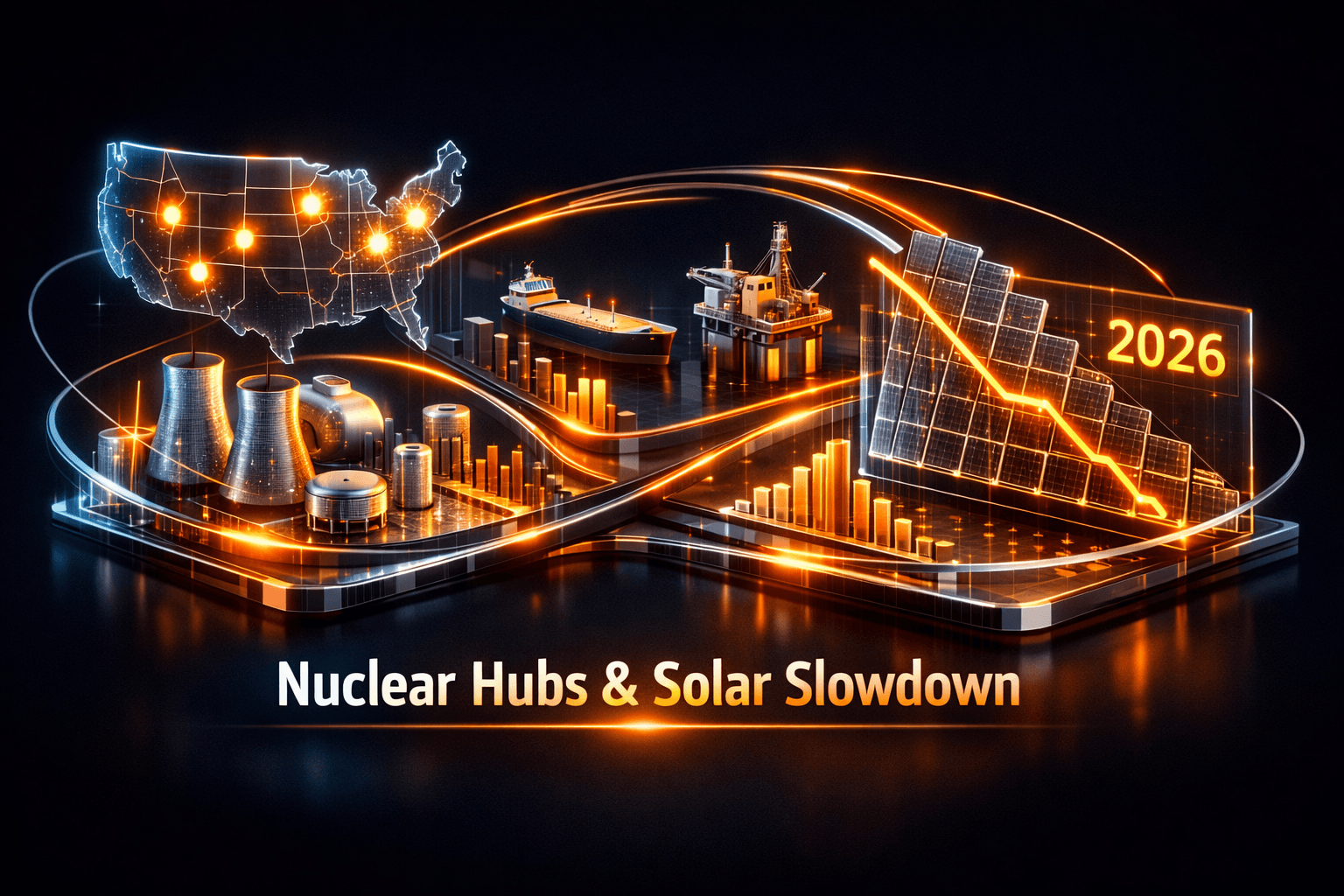
The Trump Administration unveiled plans to site five Nuclear Lifecycle Innovation Campuses, a move that could channel as much as $50 billion into domestic nuclear manufacturing and waste repurposing, and that dominated energy headlines today. At the same time you saw strong wins for oil services and shipping, while solar and parts of the auto sector showed fresh weakness.
Why does this matter to you as an investor? Large federal backing for nuclear changes capital flows across the supply chain, but geopolitical risk, a likely contraction in China solar, and auto sector restructuring mean you should weigh near-term volatility against longer term transition trends.
Market Highlights
Trading today reflected the mixed news flow, with select winners in energy services and headwinds for some clean-tech segments. Here are the quick facts to scan before you dig deeper.
- Nuclear policy: U.S. Department of Energy picked five states for Nuclear Lifecycle Innovation Campuses, with potential to attract up to $50 billion in capital commitments.
- Auto and EVs: Mercedes-Benz launched a new GLA EV with over 400 miles of range, while Cadillac’s 2027 Lyriq gets a key upgrade for about $200 more, highlighting ongoing EV product momentum. References: $MBGYY, $GM.
- Auto headwinds: BMW warned of weaker outlook and will cut roughly 8,000 jobs, with shares down about 36% year to date according to reports, signalling profit pressure across legacy automakers, referenced as $BMWYY.
- Oil services and shipping: Saipem secured more than $3 billion in contracts from Eni this month and Saudi state shipper Bahri reported record profits as freight rates rose, supporting oil-related cashflows. Saipem wins worth over $3.0 billion; Bahri cited higher chartering activity.
- Solar: China’s photovoltaic market is forecast to contract in 2026, the first annual drop since 2019, pointing to softer global PV additions and margin pressure for module makers and contractors.
Key Developments
Nuclear Lifecycles Get a Big Federal Push
The Department of Energy’s selection of five states to host Nuclear Lifecycle Innovation Campuses is the day’s headline. The campuses aim to store and repurpose spent fuel, advance advanced reactors, expand domestic manufacturing, and may even co-host data centers, with organizers pitching up to $50 billion in potential capital.
For you that means new long-dated streams of government procurement and industrial demand for nuclear components, services, and manufacturing capacity. Expect vendors, construction firms, and grid firms to track the procurement timelines closely.
Oil Shipping and EPC Wins Support Traditional Energy Cashflows
Bahri posted record profits driven by higher freight rates and increased vessel chartering activity, evidence that shipping tightness remains a positive for energy logistics. At the same time Saipem reported over $3 billion in Eni awards for July, a strong sign for the offshore and engineering space.
These developments suggest parts of the oil complex are still generating robust margins and backlog, which can support supplier earnings even if upstream capital spending is uneven. Will service and logistics firms sustain pricing power if crude prices fluctuate? That is the key question to watch.
Clean Energy: Mixed Signals from EVs to Solar
EV product updates from Mercedes and Cadillac show automakers still racing on range and features, and discounts and summer EV deals continue to stimulate consumer interest. Yet BMW’s plan to cut about 8,000 roles after a downgraded outlook underscores demand and margin pressures in the auto industry despite EV hype.
On solar, the China Photovoltaic Industry Association expects domestic installations to pull back, producing the first annual contraction since 2019. That points to softer module demand and potential margin pressure for installers and equipment suppliers globally, even as niche hardware suppliers highlight targeted product wins.
What to Watch
Tomorrow and the coming weeks will test which themes dominate. You should track a short list of catalysts and risks that could move energy names and sectors.
- Policy timelines and funding details for the nuclear campus program, including final host state announcements and RFP schedules, which will determine where capital and jobs flow.
- Quarterly results and backlog updates from oil services and shipping firms, including whether higher freight rates translate into sustained earnings improvements.
- China PV data and module pricing updates, because a sustained contraction would pressure global installers and manufacturers and reset earnings expectations.
- Automaker guidance and margin commentary from legacy and EV-focused firms after BMW’s restructuring news, and how that flows through to supplier demand.
- Geopolitical risk from the linked Ukraine and Iran incidents, which could affect shipping routes, insurance costs, and energy commodity volatility.
Bottom Line
- Federal nuclear support is a strategic, long-term development that could reshape manufacturing and supply chains, though benefits will accrue over years rather than weeks.
- Oil shipping and EPC contract wins are giving near-term earnings support to traditional energy service firms.
- China’s expected solar contraction and BMW’s job cuts temper the clean-energy narrative and introduce short-term downside risk for some renewables and auto suppliers.
- Geopolitics remains a wild card that can quickly change commodity and shipping dynamics, so monitor developments closely.
- Overall the day left you with mixed signals, so a selective approach and attention to upcoming policy and earnings catalysts is warranted.
FAQ Section
Q: How quickly could the nuclear campus plan affect company revenues? A: Major program effects will be multi-year, with procurement, construction, and manufacturing ramping over several years, though some suppliers may see earlier contract wins.
Q: Should I treat Saipem and shipping profits as durable? A: Data suggests higher freight rates and large EPC awards are supportive now, but durability depends on market cycles, crude demand, and chartering activity.
Q: What does China’s solar slowdown mean for global module prices? A: Lower Chinese installations typically ease immediate demand and can pressure prices and margins globally, though localized project pipelines and policy incentives will create variation.