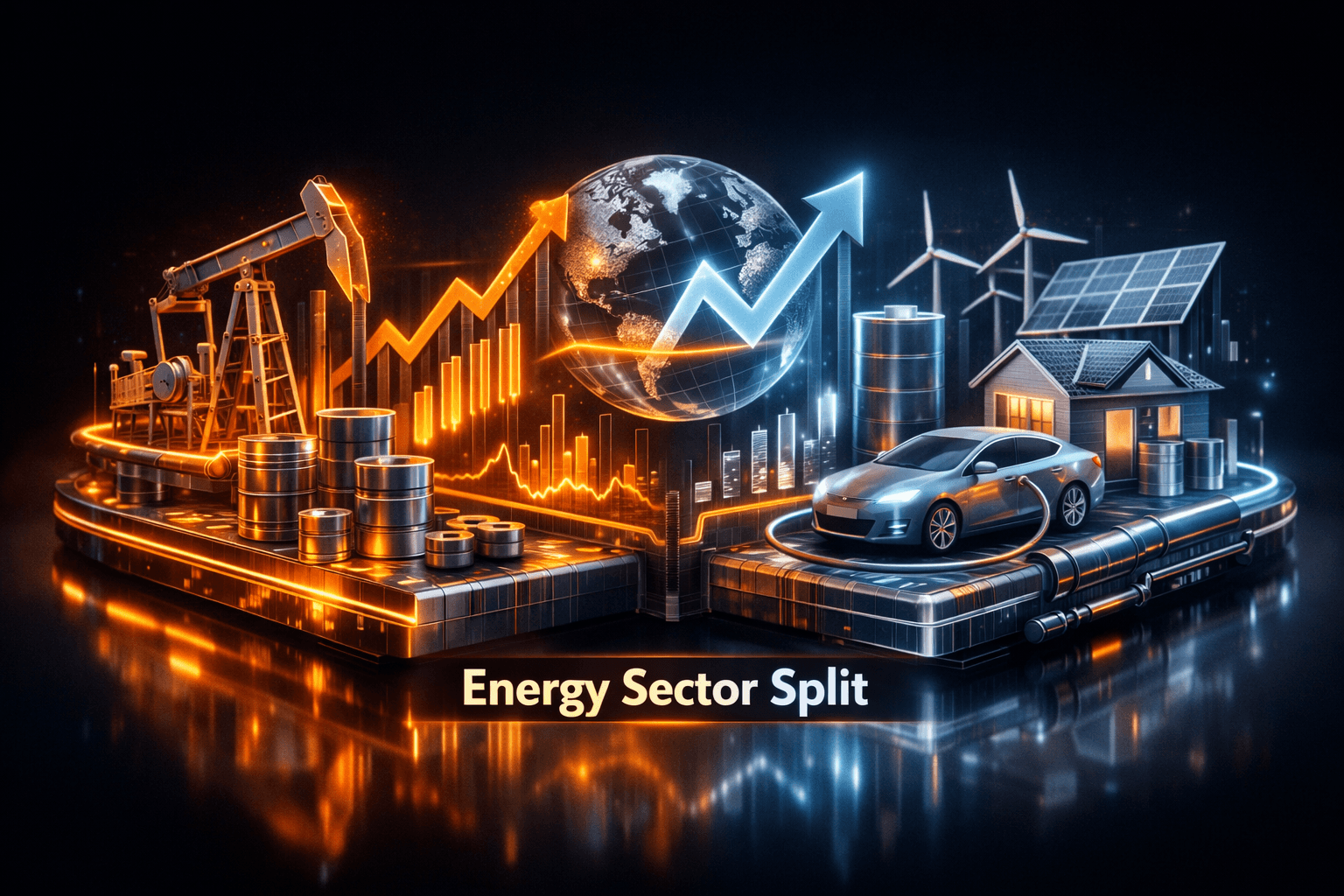
The Big Picture
Oil and clean-energy news pulled the sector in different directions today, leaving investors with mixed signals as second-quarter earnings season approaches. Large oil majors appear poised for a strong quarter on tighter supply and higher trading results, even as concerns about oversupply and regional tolls in the Strait of Hormuz re-emerged.
At the same time you saw tangible progress on the energy transition with EV charging expansion and new home battery product announcements. That split matters because it keeps the sector volatile and selective for your watchlists as companies with very different risk drivers report results and strategic moves this summer.
Market Highlights
Here are the quick facts and price-relevant items from today you should know.
- Big Oil earnings outlook, Reuters and OilPrice reporting: Chevron and Exxon expected to post their best quarter since 2022, driven by tighter oil and gas supply following the conflict involving Iran.
- EV infrastructure expansion: ChargePoint $CHPT is adding more than 200 new public charging ports in the southeastern US through an expanded partnership with Optimus Energy Solutions.
- Shell $SHEL sees stronger gas trading, saying Integrated Gas trading results should be significantly higher in Q2 versus Q1.
- Upstream and rig activity: Baker Hughes weekly North America rig count was flat week over week, marking an end to the recent streak of additions.
- Strategic moves: BP $BP exited the Bay du Nord offshore Canada project as part of portfolio simplification efforts.
- Clean-energy product news: BYD $BYD's electric GT reappeared after its first public sighting, and Octopus Energy announced 2 kWh and 5 kWh plug-in home batteries for rollout from 2027.
- Regional investment: Kazakhstan plans a privately funded terminal at Iran's Bandar Abbas port, occupying roughly 15 hectares.
Key Developments
Big Oil earnings cycle versus political pressure
Reports indicate $XOM and $CVX are on track for their best quarterly results since 2022, reflecting tighter supply tied to geopolitical developments. That windfall is already drawing political attention, with commentary noting potential pressure on fuel prices and renewed talk of price-gouging policies.
For you, that means oil majors may report strong cash flows and dividends, but political risk could amplify headline volatility into earnings season. Analysts note higher earnings may invite scrutiny rather than steady multiple expansion.
Gas trading and trader performance lift integrated majors
$SHEL said gas trading in its Integrated Gas segment should be significantly higher in Q2 than in Q1, signaling strong short-term trading performance. Traders at integrated energy companies are benefiting from market dislocations and volatility in gas markets.
That implies trading desks could be a swing profit driver for integrated players this quarter, but it also increases earnings variability. Will trading beats stick, or will volatility reverse next quarter?
Transition activity: EV charging, batteries and consumer electrics
ChargePoint $CHPT expanding 200+ public ports in the Southeast is a concrete sign of infrastructure scaling. BYD $BYD's electric GT sighting and Octopus Energy's plug-in home batteries show product momentum across the EV and residential storage markets.
If you follow electrification themes, these developments point to steady buildout and consumer product diversification, though adoption rates and utilization will vary regionally. Who captures market share will depend on execution and financing, not just product announcements.
What to Watch
Prepare for a busy stretch of catalysts that will determine near-term direction for both fossil and clean-energy names. You want to monitor these items over the next days and weeks.
- Earnings calendar: Q2 results for major oil names, notably $XOM and $CVX, plus integrated players like $SHEL. Trading beats could drive headline surprises.
- Rig and activity data: Weekly Baker Hughes rig counts and production reports. Flat rig counts suggest producers are pausing additions, which affects supply expectations.
- Geopolitics: U.S. relations with Iran and any changes to shipping through the Strait of Hormuz, including talk of tolls, will remain a price driver for crude and marine freight premiums.
- Infrastructure rollouts: Rollout pace and utilization data from ChargePoint $CHPT and other CPOs. Watch permitting and interconnection timelines that can slow installations.
- Policy and political rhetoric: Any renewed price-gouging legislation or regulatory action aimed at fuel pricing could change cash flow narratives for majors.
Bottom Line
- Sector signals are mixed, with oil fundamentals and trading supporting near-term profits while geopolitical and supply chatter keeps volatility high.
- Clean-energy moves are tangible, with more EV charging and consumer battery products hitting the market, but rollout execution will govern winners and losers.
- BP's $BP divestment and a flat rig count suggest selectivity in upstream capital allocation remains a theme.
- Watch upcoming Q2 earnings from major oil and integrated gas names closely for guidance and trading updates, since they will set tone for the sector.
- Keep your focus on catalysts and risk management, because headlines and policy moves can shift sector momentum quickly.
FAQ Section
Q: How will higher oil earnings affect fuel prices at the pump? A: Higher earnings reflect tighter supply and elevated prices, and political pressure may increase, but pump prices also depend on refining margins and taxes.
Q: Does ChargePoint's 200+ port expansion materially change EV charging availability? A: It's a meaningful regional increase that improves access, though national charging coverage still needs larger and sustained deployment.
Q: Should I expect battery products from Octopus Energy to cut household bills? A: Home batteries can reduce peak charges and improve self-consumption of solar, but savings depend on your tariff, usage pattern and local incentives.