The Big Picture
Overnight headlines left the energy complex in a holding pattern, with oil flows showing signs of recovery while renewable markets wrestle with supply-chain and policy shifts. You should note that batteries and storage are increasingly stealing the spotlight in solar markets, even as some traditional deployment slows.
These developments matter because they point to divergent drivers in energy prices and corporate cash flows, and they could reshape where you look for exposure in the sector this quarter.
Market Highlights
Key moves and facts from today's coverage:
- Political pressure on oil majors: President Trump singled out $XOM, $CVX, $SHEL, and $BP over high pump prices and referenced a federal probe, saying US gasoline should, in his view, be about $2.25 a gallon.
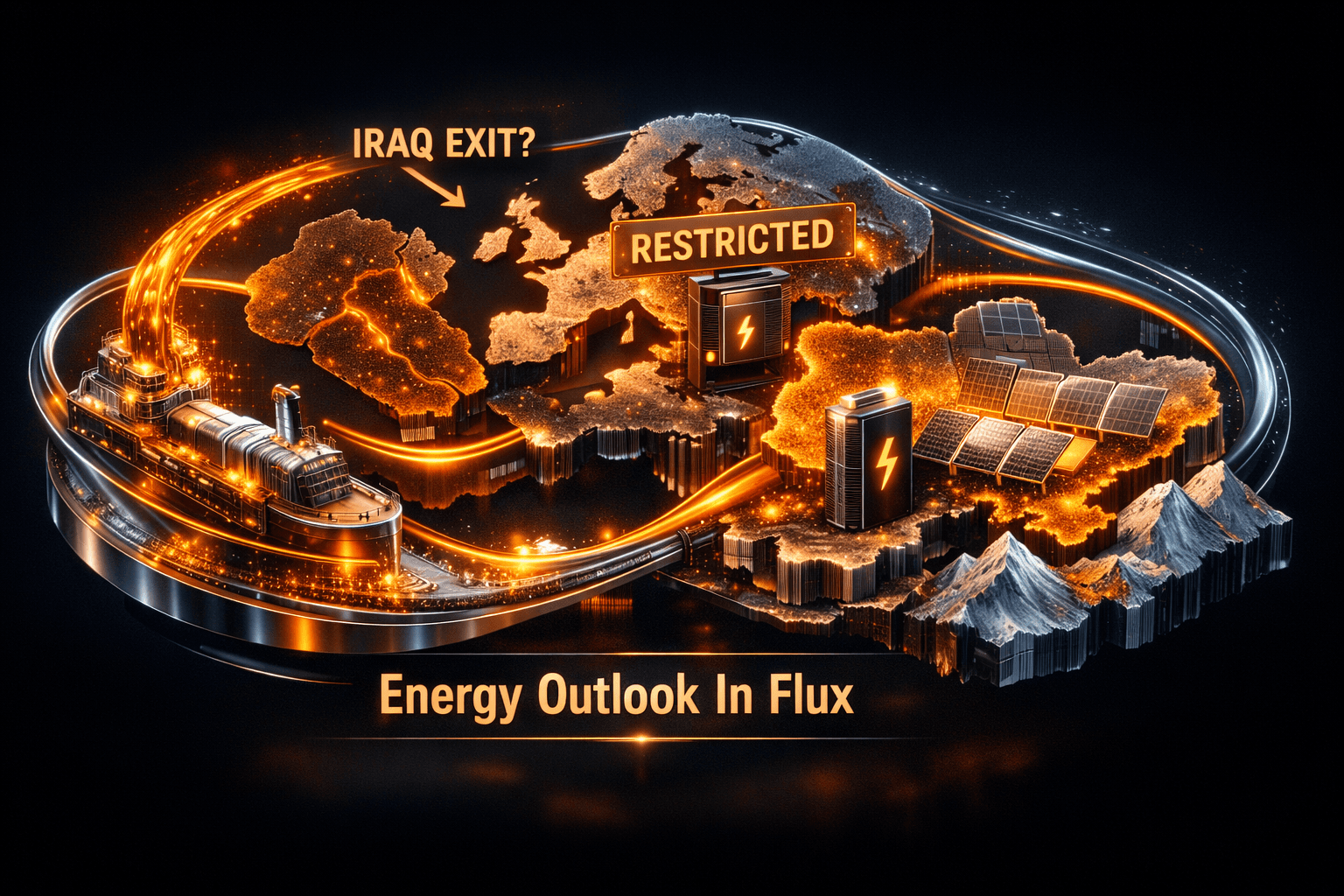
- OPEC tension: Iraq, OPEC's second-largest producer, is reportedly considering quitting the cartel if it can't increase its production quota to recoup wartime losses.
- Gulf flows recover: Qatar signed a crude sale to a Taiwanese refiner, signaling renewed Gulf-to-Asia crude cargo activity.
- Solar and storage split: Norway saw a slowdown in solar deployment in early 2026, while battery installations and utility-scale projects are gaining traction.
- EU policy impact: The European Commission is restricting funding for projects that use Chinese-made inverters, raising questions about readiness among European suppliers.
- Ukraine uptake: Demand for solar, storage, and energy management in Ukraine continues to grow, driven by community prosumers and resilience needs.
Key Developments
Oil supply and geopolitics, watch Iraq and Gulf flows
Iraq is reportedly prepared to leave OPEC if it cannot secure a larger production quota, a move that would have material implications for cartel cohesion and global supply dynamics. At the same time, Qatar is completing shipments to Asian refiners, suggesting Gulf producers are restoring commercial flows.
What does this mean for prices? If Iraq increases output or exits OPEC, that could add supply to markets already seeing renewed shipments from the Gulf, which may weigh on benchmarks, analysts note.
Solar markets diverge: Norway slowdown, Ukraine growth
In Norway, solar deployment stalled in the early months of 2026, according to Multiconsult, but batteries and utility-scale projects are emerging as the next growth vectors. Conversely, Ukraine is reporting steady uptake in distributed solar, storage, and energy management, driven by community prosumer models.
These contrasts show that while headline solar capacity additions can ebb, underlying demand for resilience and storage is building, which could reshape project economics and technology demand.
EU inverter ban raises supply-chain questions
The European Commission will limit EU funding for projects using Chinese-made inverters because of cyber and grid-security concerns. That policy creates a near-term gap: European inverter manufacturers may need to scale up quickly and retool supply chains.
Investors should watch whether European suppliers can ramp and whether the policy leads to project delays or higher equipment costs, because that will affect developers and EPC contractors across the region.
Consumer batteries and e-mobility consolidation
On the demand side, North American e-bike consolidation continues, with Rad Life Mobility building a multi-brand portfolio by acquiring QuietKat and others. Meanwhile, consumer-facing battery guides highlight growing interest in portable power stations for outage preparedness during summer heat.
These trends underline rising household and commercial interest in behind-the-meter storage and electrified mobility, complementing grid-scale battery demand.
What to Watch
Near-term catalysts to track today and this week:
- OPEC and Iraqi signals, and any formal move by Baghdad on quotas or cartel membership, which could shift oil sentiment quickly.
- US Department of Justice or federal probe updates into gasoline pricing and any regulatory actions that involve majors like $XOM and $CVX.
- EU guidance or implementation rules on the inverter funding restriction, and statements from European inverter makers on capacity targets.
- Shipping and trade data for Persian Gulf crude flows, which may confirm whether the Qatar to Taiwan sale is an isolated deal or part of a broader recovery of exports.
- Battery and storage project announcements in Norway and Ukraine, which will show whether the pivot from rooftop solar to storage is accelerating.
Risks to monitor include renewed policy-driven project delays in Europe, an escalation of political rhetoric around pump prices that could lead to stricter oversight, and any rapid change in Iraqi production plans that would alter supply expectations.
Bottom Line
- Energy developments are sending mixed signals across oil and renewables, so take a selective approach to sector exposure.
- Batteries and storage are an increasingly important growth story, even where solar deployment has slowed.
- Geopolitical moves from Iraq and resumed Gulf shipments could pressure oil prices if they increase near-term supply.
- EU inverter restrictions may boost European suppliers if they can scale, but expect short-term disruption and potential project delays.
- Political scrutiny of pump prices adds regulatory risk for major oil companies and could influence market sentiment.
FAQ Section
Q: If Iraq quits OPEC, will oil prices fall?
A: Not necessarily immediately, but data suggests increased Iraqi output could add downward pressure to prices over time, especially if Gulf flows continue to recover.
Q: How will the EU inverter ban affect solar projects in Europe?
A: Projects using Chinese-made inverters could lose access to certain EU funding. That may delay some developments until alternative suppliers scale up or replacements are sourced.
Q: Does stronger battery demand offset a slowdown in solar deployment?
A: It can, because batteries improve project economics and resilience. In markets where distribution and resilience matter, storage uptake may support overall investment in distributed energy resources.