The Big Picture
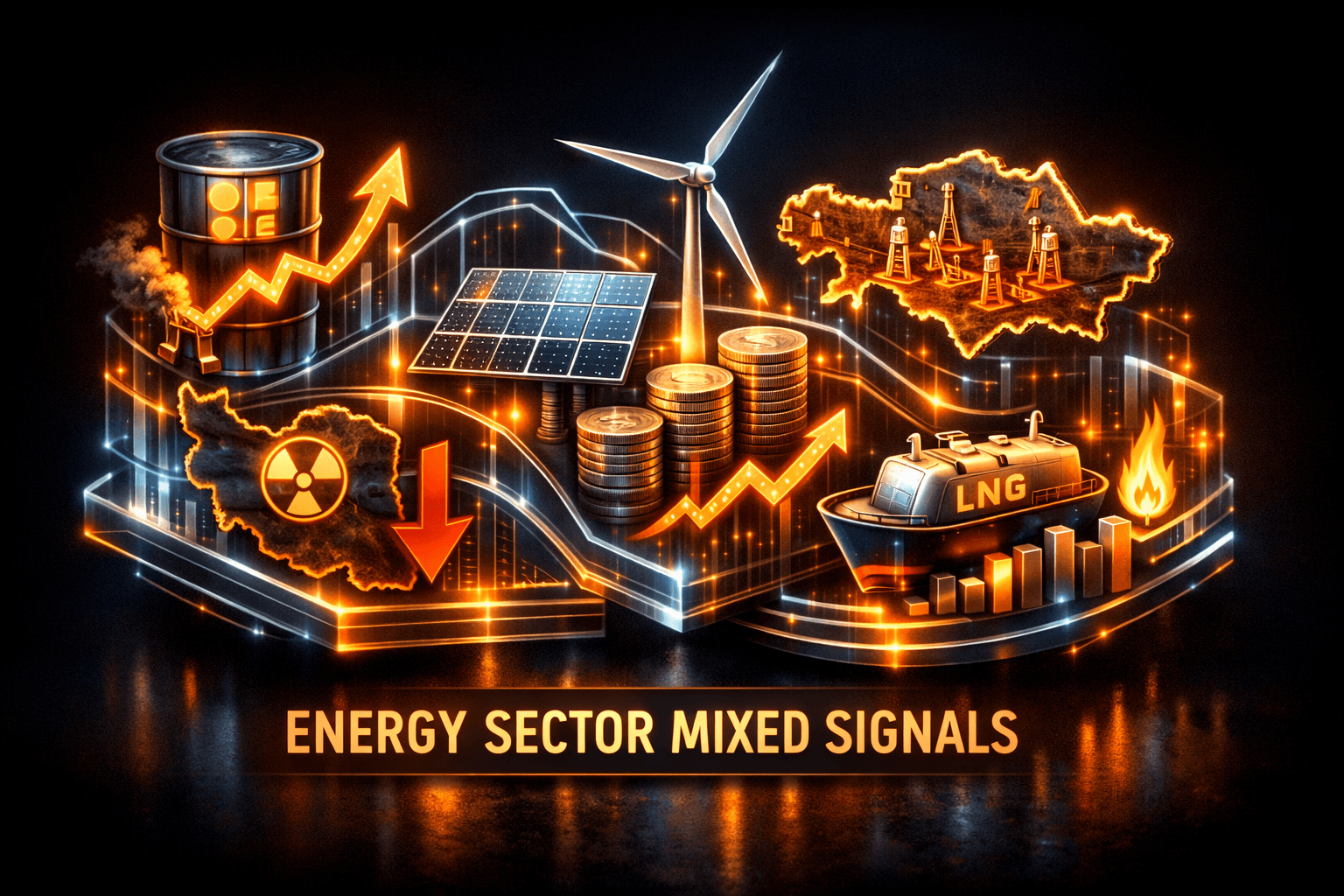
Energy markets traded on conflicting cues today, leaving investors with mixed signals about near-term direction and long-term fundamentals. OPEC reiterated that demand growth should outpace non-OPEC+ supply into 2027, suggesting structural tightness, yet oil prices fell to April lows after signs of progress toward a peace deal with Iran.
At the same time, large renewables deals and upstream licensing rounds signaled capital flow into growth areas, while reliability and downstream demand issues reminded you that the energy transition still faces operational and policy hurdles.
Market Highlights
Key numbers and moves to keep top of mind.
- OPEC reported crude production from cooperating countries averaged 33.13 million barrels per day in May, down 190,000 bpd from April, and warned demand could outpace supply through 2027.
- Global oil prices slipped sharply to April lows after U.S. signals of progress toward a potential Iran peace deal reduced near-term risk premia.
- Cypress Creek Energy locked in $3.5 billion in financing for a major Arkansas solar-plus-storage project, one of the largest US builds in that category.
- Kazakhstan launched its 12th hydrocarbon licensing round covering about 53,000 square kilometers and more than 9 billion barrels of oil equivalent in preliminary resource potential, with minimum work commitments generally $2 million to $3 million per block and signature bonuses starting at $30,000.
- UK heat pump retrofits fell 18% in Q1 2026 versus Q1 2025 despite subsidy boosts, highlighting deployment bottlenecks for electrification efforts.
- Greece's Atlantic SEE LNG Trade reported mounting difficulty in securing long-term U.S. LNG deals, a possible signal of shifting contract dynamics in liquefied natural gas markets.
- Notable company mentions include $CVX, $SHEL, $BP, $ENI and $SNP in upstream and licensing contexts, and $BYDDY for EV developments tied to demand growth.
Key Developments
Oil, geopolitics and prices
News that the U.S. signaled progress toward a peace deal with Iran removed some geopolitical premium and pushed crude down to April lows. That reaction shows how sensitive prices remain to diplomatic shifts even as OPEC keeps a longer term view of market tightness.
For you that means volatility may persist as headlines shift, with near-term price moves driven by diplomacy and longer-term direction shaped by supply additions and OPEC policy.
Renewables financing and project momentum
Cypress Creek Energy's $3.5 billion financing for one of the largest U.S. solar-plus-storage projects is a clear vote of confidence for utility-scale renewables paired with batteries. Large capital commitments like this accelerate grid-scale storage buildout and create construction and supply-chain demand.
Will those projects ease some of the reliability complaints you keep hearing about? Not immediately. Storage helps but it requires grid upgrades and permitting to deliver firming at scale.
Upstream opportunity versus downstream strain
Kazakhstan's licensing round, with more than 9 billion BOE on offer, underlines that upstream players still see big conventional opportunities and are willing to back exploration with modest entry costs. Major names are already positioned to participate.
Contrast that with softer demand signals in parts of the downstream and electrification value chain: U.S. gasoline prices have fallen for four straight weeks and UK heat pump installations have stalled, showing that adoption timelines and contract structures are uneven across markets.
What to Watch
Focus on catalysts that could resolve some of today's mixed signals.
- Kazakhstan licensing auction on July 29. Bid activity and partner lists will reveal appetite for conventional projects and capital flow to Central Asia.
- OPEC monthly reports and meetings. Look for updates on supply, demand forecasts and production coordination that could alter the medium-term view on tightness.
- Geopolitical headlines on Iran and other supply risks. Could a peace deal become durable, or will disruptions re-emerge? That will drive short-term oil swings.
- Project execution on big renewables builds. Watch permitting, interconnection timelines and battery supply chain updates to see when capacity becomes operational.
- Contract trends in LNG. If long-term U.S. deals get harder to secure, as one Greek buyer said, that changes pricing and investment dynamics for exporters.
Risks to monitor include policy shifts that affect permitting and subsidies, wildfire and climate-driven reliability issues, and demand volatility tied to EV adoption and macro growth. How actively you respond will depend on your time horizon and risk tolerance.
Bottom Line
- Today's headlines offer a mixed bag, with structural supply concerns from OPEC and large renewable financing balanced by an immediate oil price drop and reliability warnings.
- Big-cap upstream opportunities like Kazakhstan's round could support longer-term supply growth, but they won't soothe near-term price volatility driven by geopolitics.
- Solar-plus-storage financing shows capital is available for transition projects, yet grid upgrades and permitting remain practical bottlenecks for reliability and large-scale integration.
- Watch upcoming auctions, OPEC updates and geopolitical developments closely, because they are likely to set market tone for the weeks ahead.
- Analysts note that mixed demand signals and contract shifts in LNG mean selective exposure and active monitoring remain important for you.
FAQ Section
Q: How does OPEC's outlook affect oil prices? A: OPEC's view that demand will outpace non-OPEC+ supply through 2027 suggests structural support for prices, but short-term moves will still respond to headlines and geopolitical developments.
Q: Will big solar-plus-storage financing speed the energy transition? A: Large project financing removes a major hurdle to buildout, but grid interconnection, permitting and supply-chain timelines will determine how quickly capacity comes online.
Q: Should changes in LNG contracting worry U.S. exporters? A: Difficulty in securing long-term U.S. deals signals shifting buyer preferences and contract structures, which could affect export volumes and pricing dynamics over time.