The Big Picture
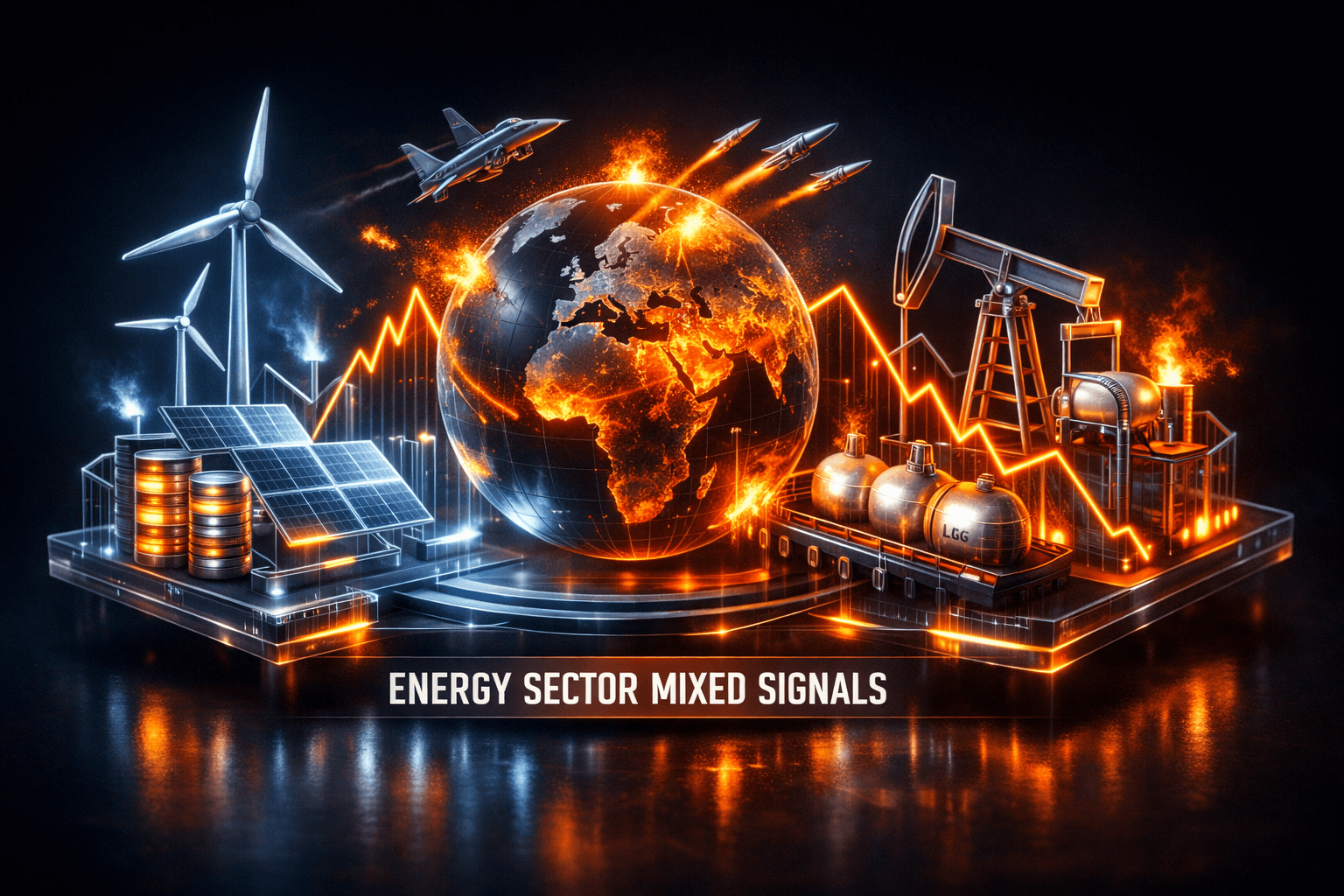
Global energy headlines on May 13 deliver mixed signals, with technology and demand trends pushing the clean-energy transition forward even as geopolitics and LNG dependence keep supply-side risk front and center. You can see momentum in storage, recycling and electrification, yet Europe's exposure to U.S. LNG and the fallout from the Iran conflict are tangible headwinds.
Why should you care? These developments will affect commodity flows, project economics and policy decisions, and they could shape sector returns in the months ahead. If you own energy-related assets or follow the space, today's news signals both opportunities and risks you need to monitor closely.
Market Highlights
Quick facts and market-moving numbers to start your trading day.
- South Africa's state utility Eskom taps grid-scale gravity energy storage, a move that underscores growing interest in long-duration storage for system reliability.
- Citi projects India's power demand to grow 5% to 6% annually in the medium term, driven by electrification, data centers, cooling and manufacturing.
- U.S. LNG already accounts for about 58% of EU LNG imports and IEEFA warns this could climb to roughly 80% within two years, raising concentration risk for Europe.
- Gas car sales in China's April data plunged 37% year over year, with plug-ins now dominating top sales charts and accelerating electrification trends.
- $BP announced entry into six exploration blocks in Uzbekistan, marking the group's first project in that country and a geographic expansion of upstream exposure.
Key Developments
Geopolitics and the Global Gas Picture
The ongoing Iran conflict is described as having fundamentally altered the global energy landscape, increasing volatility and complicating supply planning, according to industry commentary. Europe is already feeling the squeeze, with gas industry groups asking Brussels for flexibility on a 90% storage refill target because LNG supply has tightened.
Data suggests the EU's reliance on U.S. LNG is rising fast, from around 58% today to the IEEFA projection of about 80% within two years. That concentration raises questions about leverage to U.S. export capacity and U.S. domestic market dynamics. Can Europe manage that risk while keeping energy prices and security in check?
Renewables, Storage and End‑of‑Life Solutions
Storage and recycling innovations grabbed attention overnight. Eskom's move into grid-scale gravity energy storage highlights investor and policy interest in long-duration, low-operational-cost storage to balance high renewable output. At the same time U.S. researchers unveiled an infrared laser technique that enables damage-free backsheet removal from end-of-life silicon solar modules, a step that could lower recycling costs and preserve material value.
These technical gains are important because they make large renewables rollouts more sustainable and grid-friendly. If projects are easier to integrate and modules are cheaper to recycle, project economics and investor confidence may improve, suggesting more attractive long-term capacity growth.
Demand Growth, Market Structure and Corporate Moves
Citi's outlook for India shows a structural demand upswing, with power consumption expected to rise 5% to 6% annually amid a multi-vector capex cycle across solar, wind, coal and grid investment. That's big news for developers, equipment suppliers and grid players targeting Indian expansion.
On the corporate side $BP entering six exploration blocks in Uzbekistan signals that majors are still seeking geographic diversification and resource access. Meanwhile Russia expects flat oil output in 2026 as infrastructure comes under drone attack, a reminder that supply disruptions remain a real variable for oil markets.
What to Watch
Here are the catalysts and risks to track today and over coming weeks. You'll want to follow these items if you have exposure to energy equities or commodities.
- Policy and storage mandates: Watch EU discussions on the 90% gas storage target and any regulatory easing. Changes could influence gas price seasonality and storage economics.
- Supply disruptions: Monitor Iran-related developments and security incidents affecting Russian and regional infrastructure. Those events will move oil and gas sentiment quickly.
- Technology adoption: Track pilot projects and contracting activity for gravity storage and advanced solar recycling. Early procurement or contract awards could accelerate project pipelines.
- Demand indicators: Look at updated power demand or industrial activity data from India and EV sales trends in China. Citi's 5% to 6% demand growth estimate already raises the bar for new capacity investment.
- Corporate actions: Follow announcement details and partner disclosures from $BP's Uzbekistan entry and any exploration spending plans by other majors.
Bottom Line
- Renewables and storage innovations, including Eskom's gravity storage initiative and improved recycling techniques, point to steady technology-driven progress.
- Demand signals are strong in key markets, notably India where power use may climb 5% to 6% annually, and China where EV adoption is reshaping transport fuel demand.
- Geopolitical tensions and concentrated LNG supply to Europe are meaningful risks, with U.S. LNG share of EU imports rising from 58% now toward 80% projected in two years.
- Corporate moves show majors still pursuing resource diversification, but production risks in conflict zones could keep commodity volatility elevated.
- Take a selective approach, stay alert to policy shifts and near-term supply shocks, and use data to validate exposure as market conditions evolve.
FAQ Section
Q: How will Europe’s growing reliance on U.S. LNG affect prices and security? A: Greater dependence increases exposure to U.S. export dynamics and freight costs, so prices may stay sensitive to U.S. capacity, weather and geopolitical news.
Q: Does Eskom’s move into gravity storage change the economics of renewables in South Africa? A: It improves integration prospects by offering long-duration dispatch, which can reduce curtailment and support higher renewable penetration, analysts note.
Q: What does India’s 5% to 6% power demand growth projection mean for investors? A: The forecast implies sustained project and equipment demand across thermal and renewable builds and stronger grid investment, data suggests.
Note, this briefing presents market analysis and reported facts for informational purposes only. Analysts note conditions can change quickly and you should consider multiple sources before acting.