The Big Picture
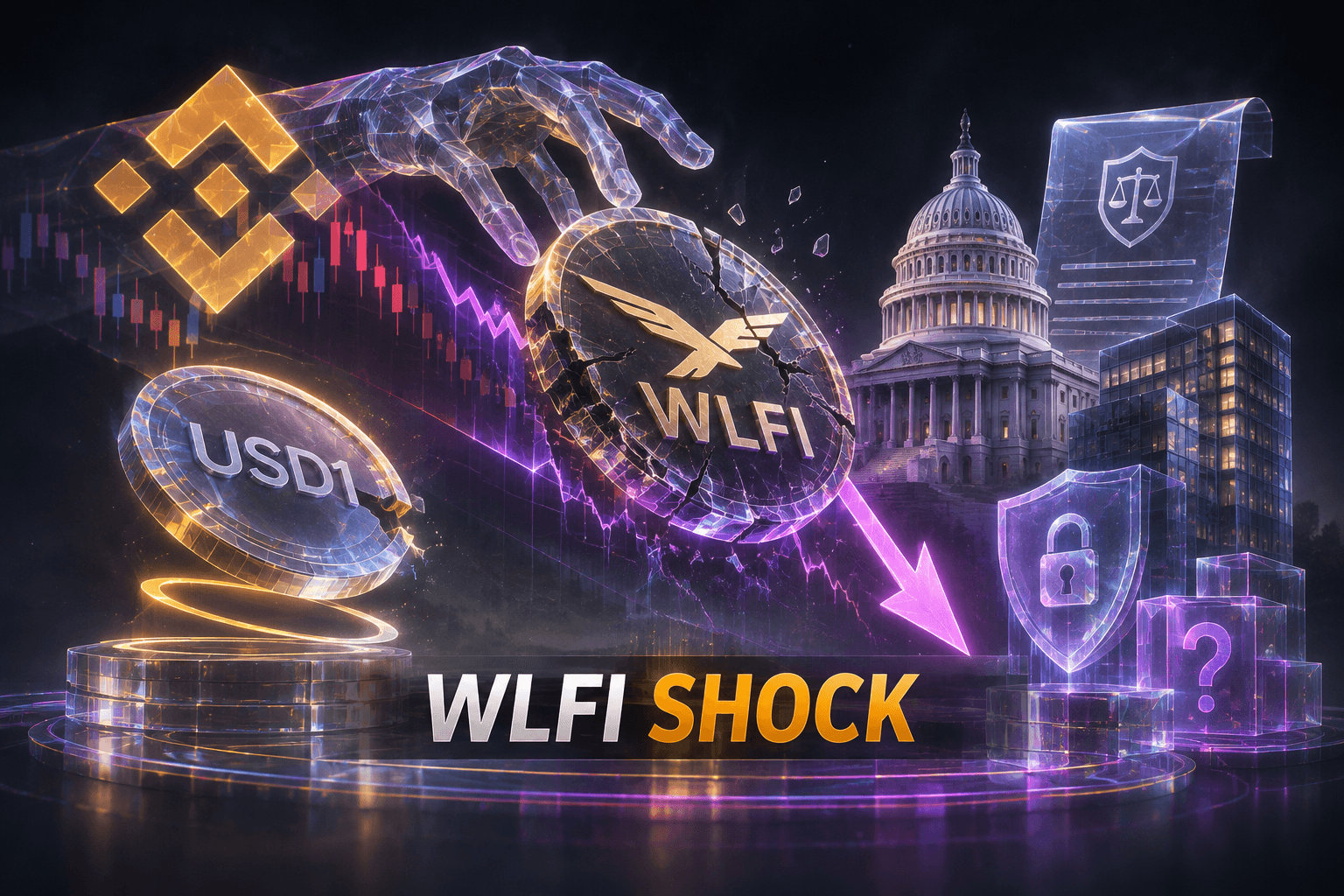
WLFI’s slide to a record low, alongside a brief depeg in its USD1 stablecoin, was the day’s clearest warning sign for crypto investors. The selloff followed World Liberty’s defense of a loan arrangement on a protocol co-founded by its chief technology officer, and renewed scrutiny of how the project manages risk and communicates with tokenholders.
Crypto markets remain open over the weekend, but the news flow was mixed beyond WLFI: Latvia’s authorities signaled caution, Japan explored links between stablecoins and conventional banking, and Bybit kept a completed hack postmortem private. What should you take away? Risk controls and transparency are front and center, while the more constructive institutional signals have yet to resolve those concerns.
Market Highlights
The available reports did not provide broad market prices or percentage moves for Bitcoin and other major cryptocurrencies. The clearest reported price action was in WLFI, where heavy selling on Binance drove the token to a record low. USD1 briefly traded away from its intended dollar peg, though the reports did not specify the size or duration of the deviation.
- WLFI reached a record low after substantial Binance selling, following World Liberty’s defense of a loan on a protocol co-founded by its CTO.
- Justin Sun called for exchanges to delist WLFI, issue warnings, restrict deposits and disclose where funds had gone. These are Sun’s calls, not reported exchange actions.
- Tether added $10 million in Bitdeer shares, taking its reported holdings to 41.45 million shares, nearly 10% higher. Its Class A voting stake fell to 17.9% because of share dilution.
- US stock markets were closed Saturday. Tether’s reported Bitdeer Technologies (BTDR) position is a company holding, not a same-day US equity market move; the next US trading session is Monday, November 30.
Other developments offered a less uniformly negative picture. Latvia’s Financial Intelligence Unit backed a 10% crypto tax declaration window while raising its risk rating for crypto firms to medium-high. Japan’s central bank is studying how stablecoins and tokenized finance might work with traditional payment systems.
Key Developments
WLFI’s fall puts governance and stablecoin confidence under pressure
World Liberty defended a loan arrangement tied to a protocol co-founded by its CTO. Within hours, large sales on Binance sent WLFI to a record low, while USD1 briefly depegged. The reports do not establish that the loan caused the selling or the stablecoin deviation, but the sequence has put the project’s governance and risk disclosures under scrutiny.
Sun’s request that exchanges delist or restrict WLFI adds pressure, but it remains an appeal rather than a confirmed exchange response. If you follow the token, distinguish verified actions from claims and requests, and watch for project or exchange disclosures that clarify the loan, collateral and stablecoin backing.
Regulators and central banks send different signals
Latvia’s policy position combines a possible compliance pathway with heightened concern: the FIU supported a 10% crypto tax declaration window while moving crypto firms’ risk rating to medium-high. That mix may matter to companies weighing compliance costs and to users assessing how regulation is developing, but the report does not establish a new sector-wide rule.
In Japan, the central bank is exploring whether blockchain-based money can connect with conventional payment systems. Officials are weighing stablecoin risks against potential benefits such as faster settlement between banks. This is exploratory work, not an announced rollout, but it shows that established institutions are still examining practical uses for tokenized finance.
Security, investment and AI economics remain open questions
Bybit’s $1.4 billion hack postmortem is reportedly complete, but the exchange will not make it public. Chief Technology Officer Rockman Zhang said more detail could help attackers, referring to the risk that disclosures might aid copycat incidents. For users and market participants, the decision leaves questions about the incident unanswered in public, even as the company cites security concerns.
Separately, Tether increased its Bitdeer position after retaining shares through an 87% decline. Its share count rose to 41.45 million, while its voting stake dropped to 17.9% because of dilution. The purchase is a reported corporate investment, not evidence by itself of a broader crypto-market recovery.
AI infrastructure also faces a business-model test: paid AI token usage on OpenRouter has surged this year as prices fell, but spending has barely grown since October. That disconnect challenges the assumption that rising usage will automatically translate into rising revenue for infrastructure providers. A separate report about a Russian company offering pigeon-based drones drew attention, but it has no clear direct implication for crypto markets. CZ, meanwhile, called Netflix’s “The Altruists” “basically defamation” and said he was speaking with lawyers; his comments and the dispute are not a market ruling.
What to Watch
Over the weekend, monitor whether World Liberty or relevant exchanges provide verifiable details on the loan, WLFI’s selling pressure and USD1’s peg. Any further depeg or new disclosure could affect confidence in the project, but the reports provide no basis for predicting the token’s next move.
On Monday, November 30, US stock markets reopen after the Saturday closure, giving investors a fresh session to assess listed-company exposure, including $BTDR. That does not pause crypto trading, which continues around the clock. You can also watch for further statements from Latvia’s authorities and the Bank of Japan, while treating exploratory policy work separately from enacted rules.
For the wider sector, security disclosure remains a key issue after Bybit’s decision to withhold its postmortem. The OpenRouter usage-spending gap is another metric to follow: sustained usage growth without corresponding spending growth could complicate expectations for AI-related infrastructure demand. The CZ dispute and the unrelated drone story are less direct market catalysts unless they lead to further concrete developments.
Bottom Line
- WLFI’s record low and USD1’s brief depeg put project governance and stablecoin confidence in focus.
- Sun’s delisting request is not confirmation that exchanges will restrict WLFI.
- Latvia’s tax declaration support is tempered by a medium-high risk rating for crypto firms.
- Japan’s tokenized-finance work is exploratory, while Bybit’s withheld report leaves security questions open.
- Watch for disclosures and measurable follow-through; today’s headlines alone do not establish broad market direction.
FAQ
Q: Why did WLFI reach a record low? A: The report links the decline in timing to substantial Binance selling after World Liberty defended a loan arrangement, but it does not prove the loan caused the selloff.
Q: Did USD1 lose its dollar peg? A: USD1 briefly depegged, according to the report. The size and duration of the deviation were not provided.
Q: Are US stock markets open on Saturday, November 28? A: No. US stock markets are closed Saturday and are scheduled to reopen Monday, November 30; crypto markets trade continuously.
This article is for informational purposes only and is not personalized investment advice.