The Big Picture
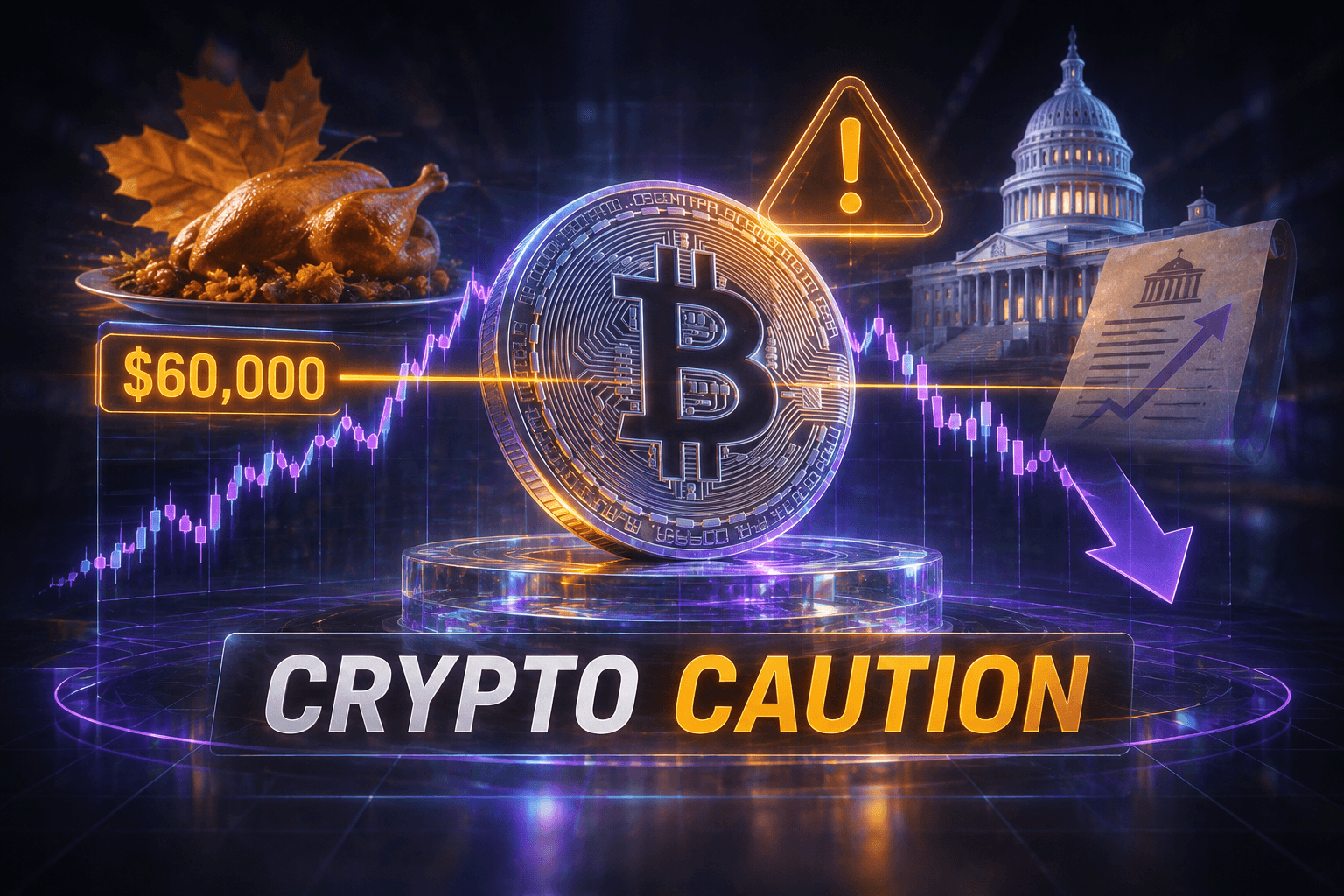
Crypto’s Thanksgiving bounce is running into a wall of regulatory and market risks: Bitcoin stayed above $60,000, but a death cross, warnings about a hawkish Federal Reserve, and fresh scrutiny of DeFi and self-custody temper the recovery. With cryptocurrency trading open around the clock, prices can still shift during the US Thanksgiving holiday, even though US stock markets are closed today.
The news is mixed rather than decisive. Tokenization and rising dormant Bitcoin supply offer developments to watch, while proposed oversight in Japan and Spain could change how some services operate. What should you take from the headlines? For now, the gap between a short-term bounce and a durable improvement remains important.
Market Highlights
Bitcoin and major altcoins edged higher on Thursday, according to Decrypt, with Bitcoin holding above $60,000. The report did not provide a percentage gain, so the move is best described as a slight rise rather than a confirmed trend reversal. A technical death cross, a bearish signal based on moving averages, remains a cloud over the recovery.
Other market context was more cautious. Bitcoin was reported to be about 50% below its peak, while a CoinDesk report said its dormant supply had increased. The US stock market was closed for Thanksgiving; the last US equity session was Wednesday, November 25, and the next is Friday, November 27.
- Bitcoin: above $60,000 during a slight Thanksgiving recovery, with no percentage move provided.
- Altcoins: also rose slightly, according to the market report.
- Tokenized Anthropic: the number of holders reportedly doubled over three days, though the report did not give a holder count.
- Tokenized stocks on Base: a Bitcoin Magazine report said they accounted for about one-third of weekly spot trading in their market shortly after launch.
Key Developments
Regulators target DeFi and account controls
Japan is weighing tighter oversight of DeFi and self-custodial wallets as regulators consider ways to address illicit finance risks. Potential restrictions on access to DeFi services are under discussion, not reported as enacted policy. For you, the distinction matters: a proposal can signal the direction of regulation, but its final scope and timing remain uncertain.
In Spain, a new decree would give the financial intelligence unit power to suspend crypto accounts, with firms facing fines for failing to comply. If adopted, the measure could raise compliance obligations for companies and introduce the possibility of account freezes. Together, the Japan and Spain stories put access, custody, and regulatory control in focus, even as an explainer on self-custody highlights the responsibilities and risks of holding your own keys.
Bitcoin’s recovery faces technical and macro headwinds
The reported death cross is a warning sign for momentum, but it does not determine what prices will do next. Separately, economist Robin Brooks warned that a hawkish Federal Reserve could put risk assets under pressure in December if officials fail to offer dovish cues before the FOMC blackout period. That is an economist’s warning, not a new policy announcement from the Fed.
Meanwhile, rising dormant Bitcoin supply has appeared in some previous bear-market bottoming phases. It may indicate that more coins are sitting untouched, but it doesn’t establish that a bottom is in or explain why each holder is inactive. You’ll want to weigh that onchain observation alongside price behavior and broader market conditions.
Tokenization grows, while wallet privacy draws attention
Two reports point to ongoing experimentation with digital assets and payments. Tokenized Anthropic holders doubled in three days, and a separate report described tokenized stocks on Base capturing roughly a third of weekly spot trading in their market within months of launch. These are signs of activity in specific products, not evidence that tokenization has become broadly adopted.
Security deserves equal attention. A Bitcoin Core contributor found that a small payment, reportedly costing under 35 cents, could expose the IP address associated with a wallet under a particular payment-resending behavior. The finding is a reminder that self-custody doesn’t automatically provide privacy. If you use a wallet, its network behavior and software design can matter as much as who controls the keys.
What to Watch
Over the coming days, monitor whether Bitcoin can sustain its position above $60,000 and whether the death-cross signal continues to weigh on sentiment. Crypto trades through the US holiday, so there is no stock-market session today to anchor comparisons; US equities resume Friday, November 27. Avoid treating a thin holiday move as a settled signal.
Regulatory details will be key: Japan’s proposals and Spain’s decree could develop into more concrete rules, but neither headline alone confirms a final outcome. Also watch communications ahead of the Federal Reserve’s December meeting and any further data on dormant supply or tokenized asset activity. These developments may help clarify whether current signals reflect persistent demand, caution, or simply short-term positioning.
Bottom Line
- Bitcoin held above $60,000 during a slight crypto-market recovery, but the death cross remains a technical caution.
- Rising dormant supply may be consistent with past bottoming periods, but it is not confirmation of a market floor.
- Japan is considering tighter oversight, while Spain’s proposed decree could enable account suspensions and penalties for firms.
- Tokenized asset activity is growing in select markets, though reported holder and trading figures don’t establish broad adoption.
- Wallet privacy and Federal Reserve signals are worth monitoring; these developments are information, not a recommendation to buy, sell, or hold any asset.
FAQ
Q: Why did Bitcoin rise on Thanksgiving? A: Bitcoin and major altcoins rose slightly, but the reports provided no specific catalyst or percentage gain.
Q: Does rising dormant Bitcoin supply mean the market has bottomed? A: No. It has appeared during some previous bottoming phases, but it cannot confirm a bottom on its own.
Q: Are Japan and Spain already restricting crypto access? A: The reports describe measures under consideration or a proposed decree, not a confirmed, fully implemented set of restrictions.