The Big Picture
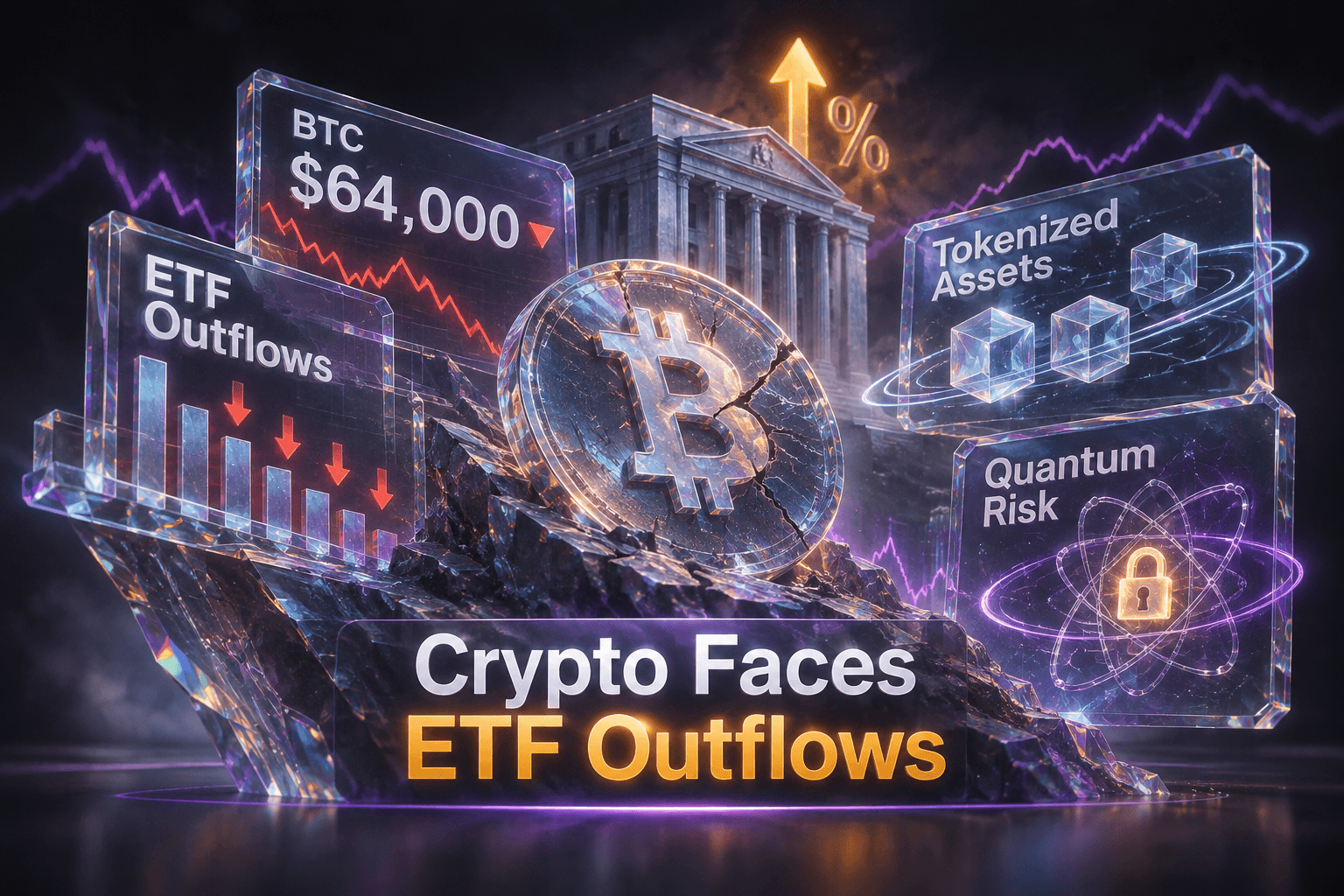
Bitcoin’s retreat and heavy ETF withdrawals are setting a cautious tone for crypto this morning, even as new tokenized-finance projects advance. Bitcoin has fallen 13% in a week and briefly traded below $63,000, while U.S. spot Bitcoin ETFs recorded a $306.4 million outflow on Wednesday.
That contrast matters: near-term demand signals are weak, but Singapore’s central bank and private-sector firms are still building settlement systems around tokenized assets. For you, the key distinction today is between pressure on crypto prices and continued experimentation with the underlying infrastructure.
Market Highlights
Bitcoin is nearing the $64,000 level but has struggled to hold it, with reports citing ETF outflows and expectations of another Federal Reserve rate increase as sources of pressure. One report put November ETF outflows at $2.9 billion; another said 2026 net outflows have topped $2.5 billion, reflecting different reporting periods and measures.
- Bitcoin fell 13% over the past week and briefly traded below $63,000.
- U.S. spot Bitcoin ETFs lost $306.4 million on Wednesday, and combined assets fell to $77.7 billion, a three-month low.
- Nasdaq futures rose nearly 2% as Anthropic shares were indicated as much as 24% higher in its record IPO. One analyst suggested IPO proceeds could flow into crypto, but that remains a possibility, not a confirmed inflow.
Price action and ETF flows are the clearest near-term indicators in today’s news, while the technology and settlement announcements are longer-horizon developments. If you’re tracking the session, watch whether Bitcoin can regain and sustain $64,000, and whether reported fund flows show any sign of easing.
Key Developments
Bitcoin faces a demand and rate-policy test
ETF outflows have put a measurable figure on investor withdrawals during a sharp weekly decline. The reported $77.7 billion in combined ETF assets and November outflow figures give investors concrete indicators to monitor, though daily flows can fluctuate and don’t by themselves establish a lasting trend.
The news also ties crypto’s pressure to expectations for another Federal Reserve rate hike. Higher rates can weigh on demand for risk-sensitive assets, but the supplied reports don’t confirm a policy decision. A possible boost from money tied to Anthropic’s IPO is another variable to watch, not evidence that crypto has already received fresh capital.
Quantum warnings raise a long-term security challenge
A securities watchdog warned that highly advanced quantum computers could threaten financial encryption within five years, while emphasizing that no quantum computer can currently break widely used cryptography. Banks and blockchains may need years to upgrade, and the watchdog says many organizations have barely begun that work.
The technical transition may bring trade-offs. A Solana test network reportedly ran about 90% slower when using quantum-resistant signatures, and wallets that continue using older keys could remain exposed if cryptographic standards change. This is not a report of an active break, but it puts upgrade readiness, network performance and wallet security on the longer-term risk list.
Tokenized finance expands, alongside new trading access
Singapore’s Monetary Authority settled a $77.5 million tokenized bill sale using wholesale central bank digital currency on its test network. The bills were issued natively on the network, which MAS plans to rename SG Digital Ledger, and the central bank aims to expand the settlement system and test broader collateral use in 2027.
Separately, Ant International launched the Whale Orchestration Protocol to enable settlement between tokenized deposits and tokenized money market funds. In crypto trading, 1inch integrated Hyperliquid perpetual futures into its app and wallet. Users can fund a position with a token they already hold on 1inch, which is routed into USDC and deposited to a Hyperliquid balance. These launches show product and infrastructure development, but they don’t establish how widely the services will be used. Perpetual futures also carry trading risks that differ from spot ownership.
What to Watch
For the rest of today’s session, monitor Bitcoin around $64,000, whether it revisits the reported sub-$63,000 level, and any new ETF flow data. Also follow Federal Reserve communications and rate expectations, since policy signals could affect appetite for risk-sensitive assets. The IPO-related optimism may support sentiment, but watch for evidence of actual crypto allocations rather than relying on a forecast.
Over a longer horizon, look for details on Singapore’s planned 2027 collateral tests and expansion of its digital settlement network, as well as signs that Ant’s protocol and 1inch’s Hyperliquid integration attract users. On security, the practical questions are whether blockchain teams publish quantum-readiness plans, how they address older wallet keys, and whether stronger signatures can be deployed without unacceptable performance costs. What matters for you is separating an active market catalyst from a pilot or a risk that may take years to develop.
Bottom Line
- Bitcoin’s 13% weekly drop and substantial ETF withdrawals keep near-term conditions cautious.
- Track the $64,000 level, ETF flows and rate expectations for evidence of a change in market pressure.
- Singapore’s $77.5 million CBDC-settled bill transaction and Ant’s protocol mark continued tokenized-finance testing.
- 1inch’s integration adds a route to Hyperliquid perpetuals, while exposing users to the risks of derivatives trading.
- Quantum-resistant upgrades are a long-term security priority, but current reports do not indicate that existing cryptography has been broken.
This summary is for informational purposes only and is not personalized investment advice.
FAQ
Q: Why is Bitcoin under pressure today? A: Reports point to a 13% weekly decline, spot ETF outflows and expectations of another Federal Reserve rate hike.
Q: Has a quantum computer broken blockchain encryption? A: No. The warning concerns future risk and the need to prepare for a lengthy security upgrade; no current quantum computer can break widely used cryptography.
Q: What did Singapore test with its tokenized bill sale? A: MAS issued $77.5 million in tokenized bills on its test network and settled the transaction using wholesale CBDC.