The Big Picture
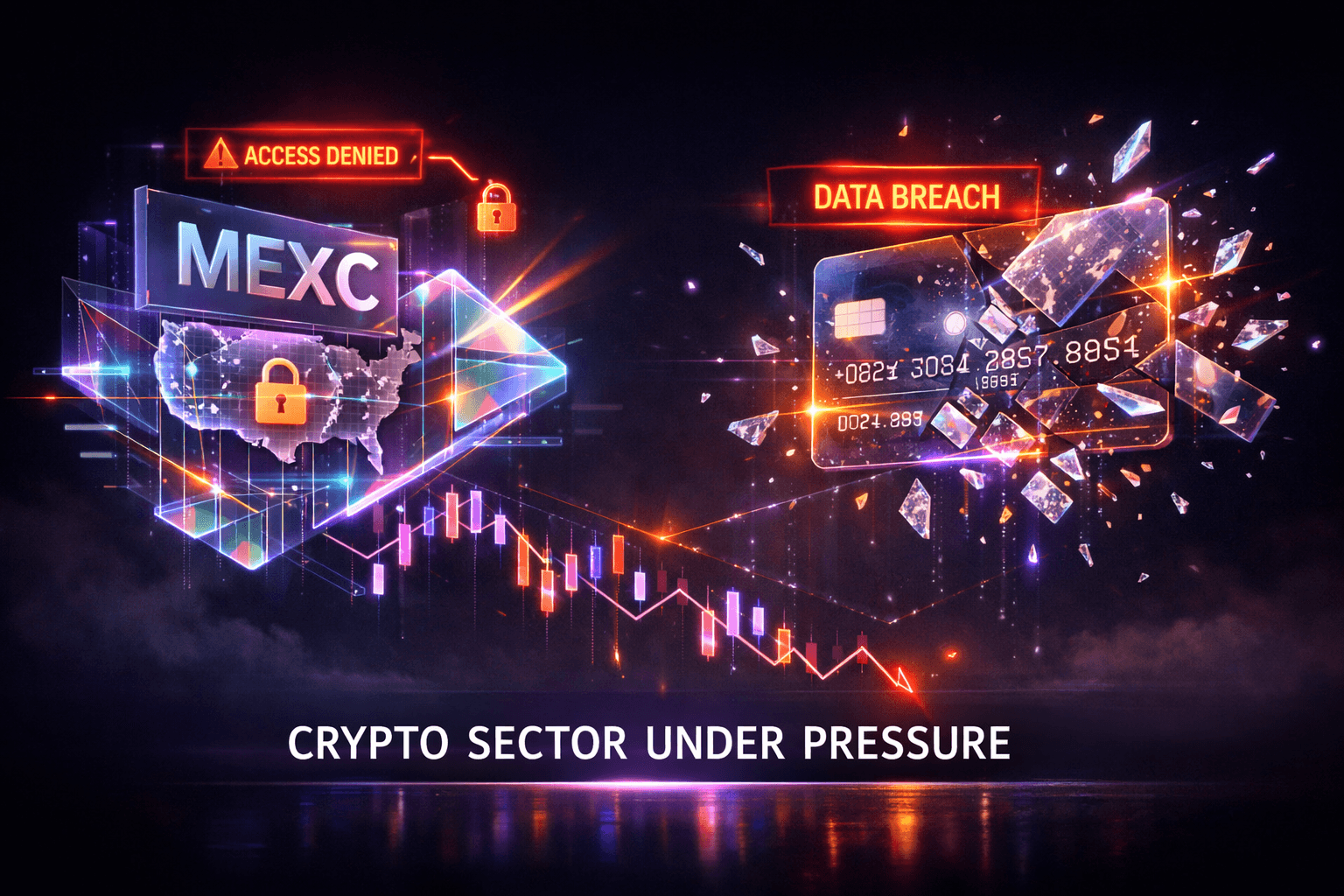
The U.S. Treasury's move to sever MEXC Global over alleged involvement in about $16 billion of illicit transactions took center stage today, delivering a sharp regulatory blow to the exchange ecosystem. That step, combined with data breaches and renewed debate over large-scale hacks, leaves the sector facing elevated compliance and security risk.
For you, that means volatility and a renewed focus on custody, counterparty risk, and regulatory exposure as drivers of price and operational outcomes. Markets reacted to these headlines while regulators signaled they remain active, and companies scrambled to address exposures and reassure customers.
Market Highlights
Quick facts and reactions investors should note from today.
- U.S. Treasury severs ties with MEXC Global, alleging approximately $16 billion in transactions linked to Iran, North Korea and Russia.
- Gnosis Pay disclosed a legacy debit card system breach from Nov 3 that exposed card details and wallet information, though the firm said customer funds were not affected.
- Commentary on the Binance theft resurfaced after TRM Labs framed the $6.3 billion exploit as cyberwar, calling for stronger government action.
- The Treasury withdrew a proposed expansion of the crypto "travel rule," removing a contested surveillance proposal from consideration.
- Greece approved a crypto tax law with a 10% levy on gains, 15% on staking and DeFi income, and a €500 annual gains threshold, about $557.
- Tokenized stock push faltered as major issuers like Apple (AAPL) and Meta Platforms (META) opted out, while crypto firms including Coinbase Global (COIN) and Robinhood Markets (HOOD) remain named participants.
- Hyperliquid Strategies applied to become a U.S. futures commission merchant, a potential development for perpetual futures access for U.S. customers.
Key Developments
Treasury severs ties with MEXC Global
The Treasury's action against MEXC is the most consequential regulatory move today. Allegations that the exchange supported roughly $16 billion in transactions tied to sanctioned jurisdictions raise questions about compliance controls at centralized trading venues.
Investors should view this as a wake-up call about counterparty risk. If you have exposure to smaller or offshore exchanges, now is the time to reassess operational and legal risk associated with those platforms.
Data breach and cyber threats intensify scrutiny
Gnosis Pay reported unauthorized access to a legacy debit card system on Nov 3 that exposed cardholder and wallet information, but the firm says funds are safe. Separately, TRM Labs framed the record $6.3 billion Binance theft as part of a broader cyber conflict and urged stronger offensive government action against state-linked hackers.
Security incidents like these compound reputational and regulatory risk. You should expect more regulatory scrutiny of custodians, card providers, and exchanges after today's disclosures.
Regulatory tug of war and policy developments
Not all regulatory news was negative. The Treasury walked back a controversial expansion of the crypto "travel rule," removing a proposed surveillance step that had alarmed industry and privacy advocates. At the same time, Greece's new tax rules create fresh tax reporting and cost considerations for European holders, with a 10% gains levy and 15% rates on staking and DeFi income.
Meanwhile, the tokenized stock initiative with ICE saw 90% of issuers opt out, as $AAPL and $META declined participation, leaving crypto-native firms like $COIN and $HOOD as focal points. That mix of retreat and selective acceptance shows regulatory and issuer caution, and it raises questions about who will lead regulated tokenization efforts.
What to Watch
Heading into next week, several catalysts and risks could shape prices and sentiment. Watch for follow-up enforcement actions or guidance from the Treasury related to the MEXC decision. Will other exchanges face scrutiny or restrictions?
Monitor incident reports and forensic updates on the Gnosis Pay breach and any new details about the Binance theft investigations. These are likely to influence custody and counterparty assessments across the sector.
Regulatory policy remains fluid. Keep an eye on U.S. and EU guidance about travel rule implementations, tax reporting obligations, and any moves that affect tokenized assets. Also watch Hyperliquid's regulatory application for clues about how futures access for crypto products may evolve.
Finally, consider broader macro and geographical risks. Greece's tax law shows national regimes can change quickly, and political unrest in regions like Paraguay continues to underscore how crypto intersects with local banking disruptions and social movements.
Bottom Line
- Regulatory enforcement against MEXC is a major negative development, highlighting counterparty and jurisdictional risk.
- Security incidents, including the Gnosis Pay breach and renewed scrutiny of the $6.3 billion Binance hack, keep custodial risk front and center.
- The Treasury's withdrawal of the travel rule proposal is a temporary regulatory relief, but it does not end scrutiny of crypto controls.
- Tokenization momentum is uneven as major issuers opt out, while crypto firms move forward with pilot plans and regulatory applications.
- Tax and local policy changes, exemplified by Greece's new law, increase compliance complexity for holders and platforms in affected jurisdictions.
FAQ Section
Q: What does the Treasury action against MEXC mean for crypto exchanges? A: It signals tougher enforcement and heightened due diligence expectations for exchanges, especially those with flows tied to sanctioned jurisdictions.
Q: Should I worry about the Gnosis Pay data breach affecting my crypto funds? A: Gnosis Pay has said customer funds were not affected, but exposed personal and card data raise identity and fraud risks, so you should monitor accounts and follow any provider guidance.
Q: Does the Treasury walkback of the travel rule mean less regulation ahead? A: The withdrawal removes one contentious proposal, but regulators remain active on compliance and surveillance, so policy uncertainty persists.