The Big Picture
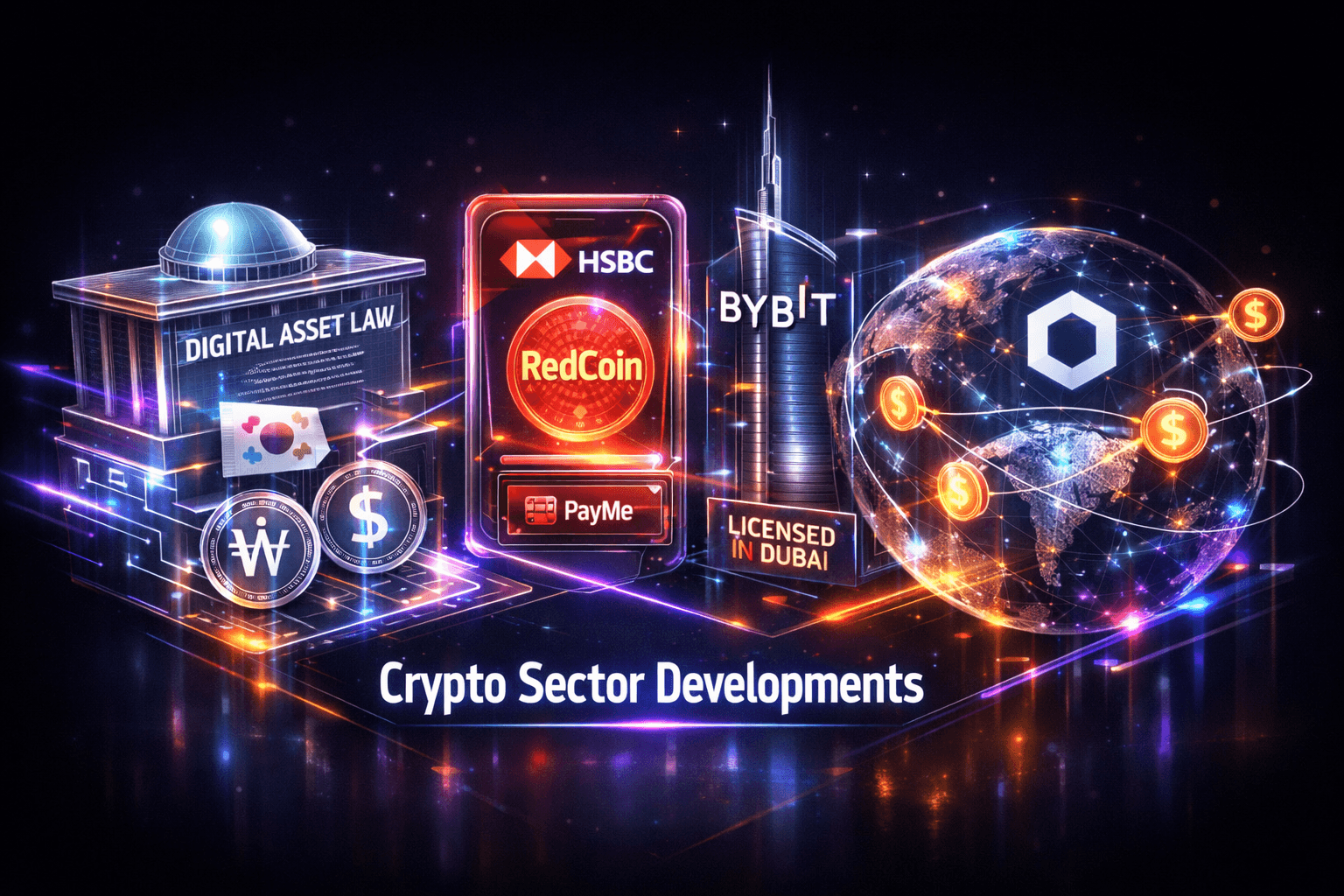
Overnight the cryptocurrency story centered on steady institutional and regulatory momentum, not market fireworks. South Korea's push to treat stablecoins as payment instruments and HSBC's retail RedCoin rollout in Hong Kong are the most consequential developments for payments and adoption.
These moves come as exchanges secure formal access to new markets, with Bybit winning Dubai's first full spot trading license. What does that mean for you and your view on adoption? It suggests regulators and institutions are moving from experimentation to scaled deployment, even as a few security and governance issues keep risk management front of mind.
Market Highlights
Here are the quick facts and headline moves to know this morning.
- South Korea: Authorities are drafting a Digital Asset Basic Act to regulate crypto more comprehensively, and are preparing amendments to forex law that would classify stablecoins as payment instruments.
- HSBC: The bank is launching a Hong Kong dollar stablecoin, RedCoin, for PayMe users, enabling peer-to-peer and merchant payments and future tokenized investment subscriptions, under $HSBC branding.
- Bybit: The exchange secured the first full Dubai VARA license for spot trading services, though it must complete additional regulatory steps before a live launch.
- Cross-border push: Singapore's BLOOM initiative gained backing from Malaysia and Thailand to coordinate stablecoin and tokenized deposit use regionally.
- Chainlink: The protocol is partnering with LG CNS to support Korean won stablecoin expansion, integrating cross-chain and data infrastructure for local digital asset platforms, under the $LINK ecosystem.
- Risks flagged: Blockchain sleuths highlighted about $16 million in suspicious outflows tied to CoinDCX wallets, a claim the exchange denies. Polymarket reportedly fired its marketing chief after an internal probe.
- Market tone: Analysts describe Bitcoin, $BTC, as in a "wait and see" mode, a quiet phase that some see as constructive for longer term momentum.
Key Developments
South Korea moves to regulate stablecoins as payments
Seoul is drafting a Digital Asset Basic Act and amending forex law to treat stablecoins as payment instruments. That framework aims to give legal clarity to issuers, custodians, and payment providers, and to align crypto payments with existing monetary controls.
For you that means an emerging legal path for stablecoin use in a major Asian market, and greater certainty for firms building local fiat-token rails.
HSBC launches RedCoin while Bybit secures Dubai license
HSBC's RedCoin rollout to PayMe users marks a notable retail stablecoin deployment from a global bank. The initial use cases focus on peer-to-peer and merchant payments, with tokenized investment subscriptions on the roadmap. Banks entering retail stablecoins reduce friction between fiat rails and tokenized assets.
Bybit's VARA license in Dubai signals regulatory openings for global exchanges. It's the first full spot license granted by Dubai's regulator to an international exchange. The license isn't a free pass, there are still compliance and onboarding steps to clear before trading goes live.
Regional coordination and infrastructure tie-ups accelerate
Singapore's cross-border stablecoin push through BLOOM picked up partners in Malaysia and Thailand. The aim is to lower transaction costs and coordinate standards for tokenized deposits and stablecoins across borders.
Chainlink's deal with LG CNS to support Korean won stablecoin infrastructure is a complementary move. It links data and cross-chain tooling to local platforms, which could speed up compliant stablecoin issuance and use cases backed by reliable oracles and bridges.
Security and governance reminders
CoinDCX denied a reported USD 16 million in suspicious outflows tied to its wallets. Investigations like this show you'll want to watch on-chain provenance and exchange transparency metrics. Separately, Polymarket's reported firing of its marketing chief for misconduct underlines that governance and internal controls remain a priority for decentralized and centralized platforms alike.
What to Watch
Watch the implementation timelines. South Korea's Digital Asset Basic Act and forex amendments will matter only when rules, licensing processes, and compliance checks are published. Will those rules favor banks and licensed issuers or permit broader private-issuer participation?
Keep an eye on HSBC's rollout cadence and merchant acceptance for RedCoin. Tokenized investment subscriptions are listed as planned, so you'll want to see product details, custody arrangements, and settlement rails.
Monitor Bybit's regulatory checklist with VARA and any announcements on launch timing. Progress or delays will be a bellwether for how quickly global exchanges can scale into regulated markets.
On-chain indicators and flows will help you gauge market health. Track stablecoin issuance volumes, cross-border transfer activity under BLOOM, and $LINK integrations into new payment rails. Also watch how regulators in Europe and the US respond to these regional moves.
Bottom Line
- Regulatory clarity is accelerating in Asia, with South Korea and Dubai taking steps that reduce legal uncertainty for stablecoins and exchanges.
- Bank-led retail stablecoins such as $HSBC's RedCoin could bridge traditional payment apps and tokenized finance, increasing real-world utility.
- Cross-border coordination via BLOOM and infrastructure partnerships with $LINK suggest stablecoin use cases are moving from pilots to production.
- Security and governance issues remain relevant, highlighted by the CoinDCX outflows claim and internal probes at crypto firms, so due diligence and transparency metrics matter.
- Analysts see a quiet market as potentially constructive, so consider watching adoption indicators rather than chasing short term price action.
FAQ
Q: How will South Korea's changes affect stablecoin issuers? A: The draft Digital Asset Basic Act and forex amendments aim to define stablecoins as payment instruments, which would create licensing and compliance pathways for issuers operating in Korea.
Q: Does HSBC's RedCoin mean banks will dominate stablecoins? A: Banks entering retail stablecoins raises competition and credibility, but market structure will depend on regulation, interoperability, and whether banks or private issuers provide better merchant and custody services.
Q: Should you worry about the CoinDCX outflow report? A: Unusual on-chain flows warrant investigation, but CoinDCX has denied a hack. You'll want to follow exchange transparency reports and any formal audit or regulator findings for clarity.