The Big Picture
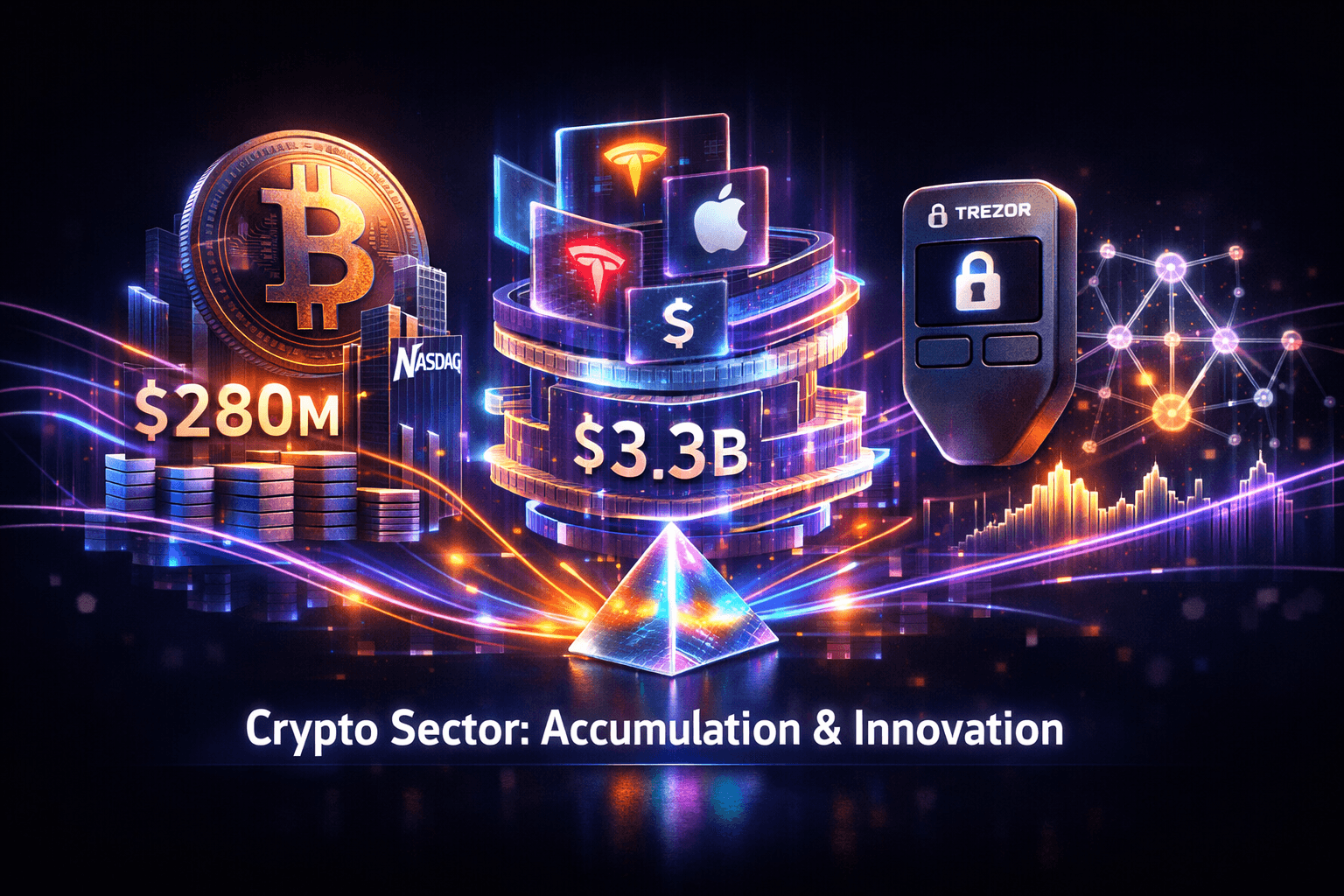
Today’s crypto tape was dominated by accumulation and infrastructure moves that suggest growing institutional participation and developer activity. A Nasdaq-listed manager bought $280 million of Bitcoin, tokenized equities exceeded $3.3 billion, and liquidity dynamics on exchanges point toward tighter supply.
Those developments matter because they affect both market structure and investor access. If you own crypto or build products around it, today’s headlines indicate more capital flows and more tooling, but also remind you to watch security risk controls closely.
Market Highlights
Quick facts and price cues to scan before you follow up on individual stories.
- Tokenized equities on chains like Solana and BNB Chain reached nearly $3.3 billion in total value, with much trading occurring outside U.S. market hours.
- A long-held Bitcoin wallet moved 4,581 BTC today, worth about $377 million at the time of transfer.
- Nasdaq-listed asset manager Strive purchased $280 million of Bitcoin at an average of about $84,500, bringing its total to 32,773 BTC.
- On-chain analytics show the amount of Bitcoin on exchanges is shrinking, a supply signal analysts say could tighten markets.
- Trezor announced it will cut authorized resellers starting Jan. 1 as a preventative response to reported tampering incidents affecting Ledger devices.
- Ripple and Stripe-owned Privy launched embedded wallet tooling on the XRP Ledger, supporting XRPL tokens and new payment flows.
- New entrant MNX launched pre-IPO futures tied to private AI companies, targeting traders who want exposure to firm valuations before public listings.
Key Developments
Institutional Accumulation: Strive and Exchange Outflows
Strive’s $280 million purchase, at an average near $84,500 per BTC, raised its holdings to 32,773 BTC. That’s a meaningful add for a listed asset manager and it reinforces a trend of institutions increasing spot exposure.
Meanwhile, on-chain data showing shrinking Bitcoin balances on exchanges adds fuel to the narrative that supply available to trade is declining. Taken together, these moves suggest demand-side strength, which analysts note could be supportive for price action if inflows continue. What does that mean for you, the retail investor? It means you should monitor exchange supply alongside institutional balance sheets to gauge momentum.
Tokenized Stocks See After-Hours Activity
Tokenized equities have climbed to nearly $3.3 billion in value, and Cointelegraph reports most trading on Solana and BNB Chain happens outside U.S. market hours. That affects liquidity and arbitrage windows for traders who rely on 24/7 markets.
If you trade tokenized stocks or build strategies that span centralized and decentralized venues, you’ll want to watch liquidity timing, settlement differences, and regulatory signals. Who’s arbitraging price gaps when Wall Street is closed? That’s one practical question you can track in real time.
Security Response: Trezor Tightens Reseller List
Trezor told certain resellers they will be removed from its authorized list starting Jan. 1, citing preventative steps after reports of Ledger device tampering and fund drains. The move underscores heightened vendor scrutiny across the hardware wallet market.
Security incidents act as a canary in the coal mine for custody and vendor management practices. You should verify point-of-sale integrity if you buy hardware, and follow official vendor lists rather than secondary sellers to reduce tampering risk.
Product and Market Innovation: XRPL Wallets and Pre-IPO Futures
Ripple and Privy’s partnership brings embedded wallets to the XRP Ledger, enabling app-level XRPL accounts with support for XRP, RLUSD, agent payments, and the x402 standard. That lowers integration friction for developers and could boost on-chain usage.
Separately, MNX rolled out pre-IPO futures for AI companies, offering a new way to express views on private valuations. These derivative-style products create novel exposure that some traders will use to speculate on the future of high-profile AI firms.
What to Watch
Focus on catalysts that could move markets in the next 24-72 hours. You’ll want to monitor liquidity metrics, institutional flows, and security developments.
- Exchange balances: follow real-time changes to Bitcoin held on exchanges. Continued outflows could tighten spot liquidity.
- Institutional reporting: watch for disclosures from other asset managers or funds that may add crypto to their balance sheets.
- Tokenized stock regulation: regulators may scrutinize after-hours token trading. Any enforcement talk could affect liquidity and product availability.
- Hardware security updates: look for official advisories from Trezor, Ledger, and resellers. Confirm you’re buying from authorized channels.
- New product traction: track developer adoption of XRPL embedded wallets and user metrics for MNX’s pre-IPO futures to see if they gain meaningful volume.
Bottom Line
- Institutional buys and shrinking exchange inventories point to bullish supply dynamics, analysts note, but momentum depends on sustained inflows.
- Tokenized stocks are growing in value and shifting trading into after-hours windows, altering liquidity patterns for traders.
- Security incidents prompted proactive reseller cuts from Trezor, so you should confirm vendor authenticity before purchasing hardware wallets.
- New tooling on XRPL and novel derivatives like pre-IPO futures expand market access and warrant close monitoring for volume and regulatory responses.
- Overall, the sector shows accumulation and innovation, but risks around custody and regulatory clarity remain important to watch.
FAQ Section
Q: Why does a decline in Bitcoin on exchanges matter? A: Fewer coins on exchanges can reduce available liquidity, which may amplify price moves if demand rises. Analysts say it’s a supply-side factor worth tracking.
Q: Should I be worried about hardware wallet tampering? A: You should take precautions, including buying only from authorized resellers, checking tamper-evident seals, and following vendor security guidance to reduce risk.
Q: How do tokenized stocks on chains affect regular stock trading? A: Tokenized stocks provide 24/7 access and different settlement mechanics, which can create arbitrage and liquidity differences, especially outside U.S. market hours.