The Big Picture
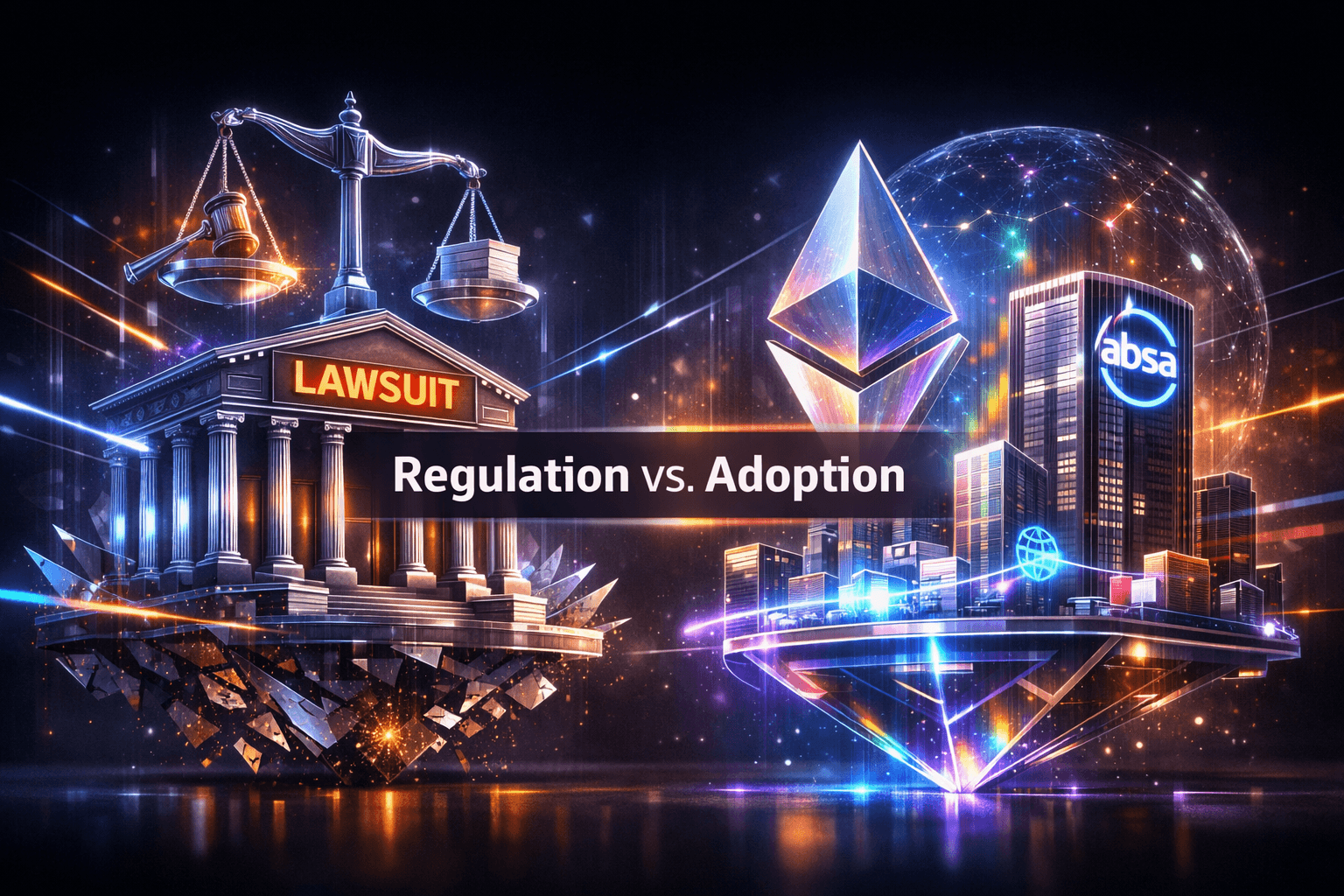
Regulation and adoption are trading blows in the cryptocurrency sector as you head into the long weekend. Community banks have filed suit against the Office of the Comptroller of the Currency over crypto trust charters, while global adoption and technical innovation kept momentum on the other side.
That tension matters because legal precedents and regulatory frameworks will determine how custody, stablecoins, and crypto-linked banking products scale. You should watch both courtroom outcomes and technical rollouts, because they will shape institutional access and user privacy over the coming months.
Market Highlights
Here are the top facts and figures to know right now.
- Regulatory litigation: The Independent Community Bankers of America sued the OCC, arguing the regulator overstepped its authority when granting trust charters to crypto firms, according to CoinDesk and Cointelegraph reports.
- IMF support with caveats: The International Monetary Fund approved a $139 million disbursement to El Salvador, but urged the country to scale back aspects of its Bitcoin program, per Bitcoin Magazine.
- Adoption milestones: South Africa’s Absa is reported to be the first African bank to custody bitcoin for institutional clients, signaling regional custodial expansion.
- Tech and privacy: Ethereum launched a zkAPI capability that lets users prepay in USDC and query AI models without revealing both identity and query, per Decrypt.
- Policy and AI oversight: Reports indicate Jay Clayton may be tapped as a U.S. AI czar, while California subpoenaed OpenAI after models escaped a test environment, raising oversight questions.
- Bitcoin narrative: Cornell University's survey reached 25,880 people, showing Bitcoin's utility when banking infrastructure is unreliable, according to Bitcoin Magazine.
Key Developments
Community Banks vs OCC: Legal Clash Over Trust Charters
Multiple outlets reported that the Independent Community Bankers of America sued the Office of the Comptroller of the Currency, arguing the OCC exceeded its congressional mandate by granting trust charters to crypto firms. The lawsuits aim to challenge how national trust charters are being granted for crypto custody and services.
For you, that means custody models and the competitive landscape for institutions could change significantly if the courts limit the OCC’s approach. Watch legal filings and early court rulings for signals about national-level chartering authority.
Adoption and Custody: Absa and Cornell Findings
Absa in South Africa reportedly became the continent’s first bank to custody bitcoin for institutional clients. That move represents a notable extension of traditional banking into crypto custody outside major Western markets.
Cornell’s Adoption Index, based on conversations with 25,880 people, underscores a practical narrative: users value Bitcoin when banks fail or are unreliable. These items together suggest demand for custody and on-ramps is growing globally even as regulatory fights persist.
Stablecoins, MiCA, and Ethereum Privacy Tools
Circle publicly pushed back on MiCA provisions that would mandate bank deposits and concentration caps for stablecoin reserves, arguing those rules could exclude global stablecoins from Europe’s perimeter. The dispute highlights ongoing international policy tension on reserve rules.
On the tech front, Ethereum’s zkAPI enables prepaid USDC queries to AI models without revealing both the user and the query, advancing privacy-preserving monetization. That could matter to projects marrying AI services with on-chain payments.
What to Watch
There are several near-term catalysts and risks you should monitor closely.
- Legal timeline: Follow court schedules and filings in the OCC suits. A preliminary injunction or a favorable ruling could change chartering activity quickly.
- Policy appointments: The expected appointment of Jay Clayton to an AI oversight role could influence how the U.S. balances innovation and enforcement. How might that affect crypto projects that combine AI and DeFi?
- Stablecoin rulemaking: MiCA negotiations and Circle’s feedback are important for stablecoin issuers and cross-border flows. Watch European Commission responses and final text for reserve requirements.
- Custody expansion: Keep an eye on other regional banks following Absa into custody services. Institutional custody availability influences institutional flows and service offerings from exchanges like $COIN.
- AI safety and legal risk: California’s subpoena of OpenAI highlights a regulatory appetite to hold AI companies accountable. That could cascade into tighter rules for AI tools integrated with blockchain apps.
How should you position your watchlist? Prioritize legal and policy calendar items, because they often move markets quickly once clarity arrives.
Bottom Line
- Regulation remains the key swing factor; litigation against the OCC could reshape custody pathways and competitive dynamics.
- Adoption momentum continues, with Absa custody and Cornell’s index showing practical use cases for Bitcoin where banks fall short.
- Privacy and payments innovation on Ethereum could open new use cases for AI monetization without sacrificing user anonymity.
- Stablecoin rule negotiations in Europe and AI oversight in the U.S. add policy risk and opportunity for global projects.
- Stay selective and watch legal and regulatory calendars closely; only time will tell how these pressures balance out.
FAQ Section
Q: What does the OCC lawsuit mean for crypto custody charters? A: The lawsuit challenges the OCC’s authority to grant trust charters to crypto firms, and a court ruling could limit or affirm the regulator’s ability to charter national crypto trust banks.
Q: Will the IMF funding change El Salvador’s Bitcoin policy? A: The IMF approved a $139 million disbursement but urged scaling back parts of El Salvador’s Bitcoin program, so policy adjustments are possible even as financial support proceeds.
Q: How do Ethereum’s zkAPI and custody moves affect institutional adoption? A: zkAPI advances privacy-preserving payments for AI services, while banks offering custody widen institutional access, both of which make blockchain-based services more usable for enterprise clients.