The Big Picture
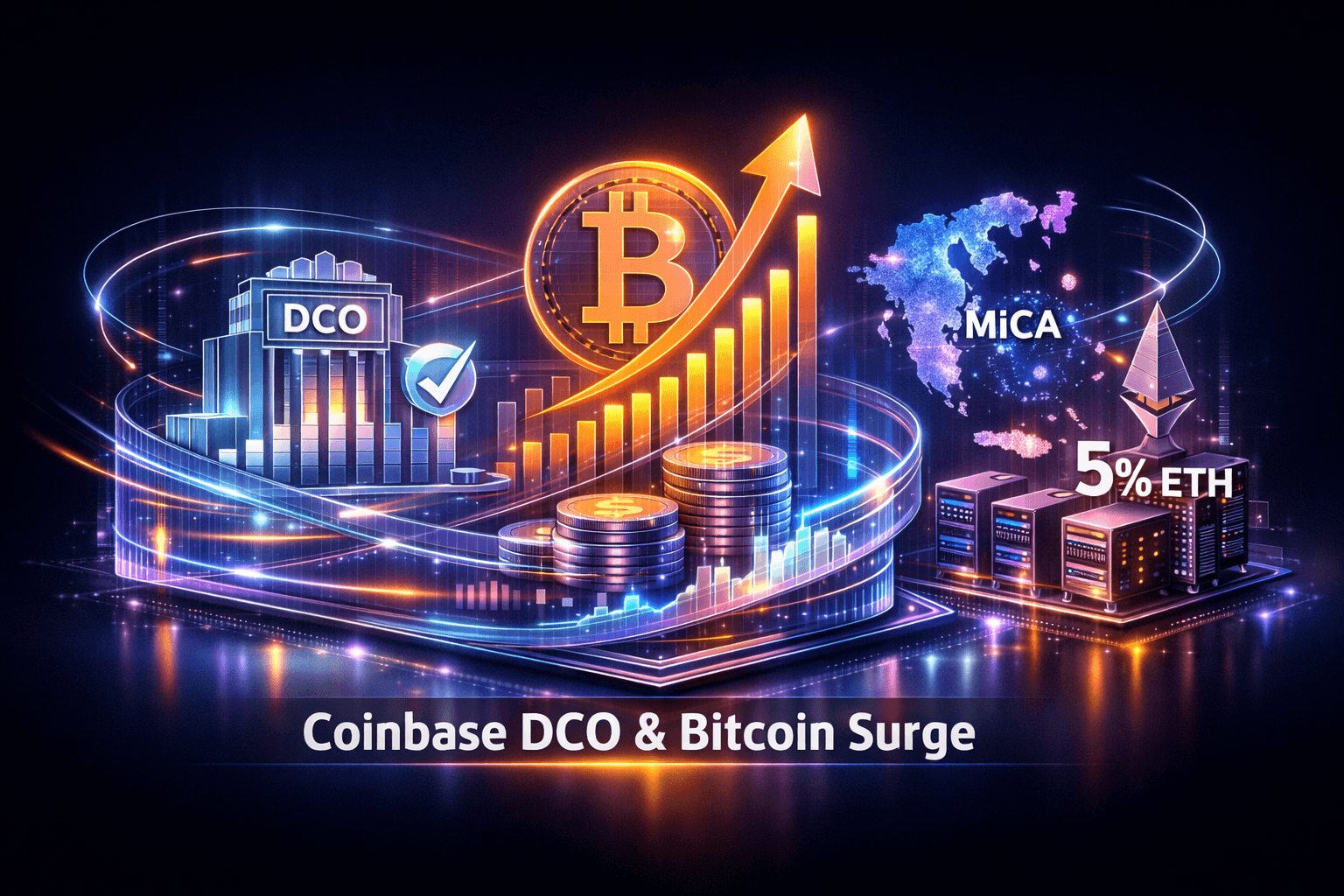
Coinbase's DCO approval is the standout development this morning, putting the exchange in control of listing, brokering, and clearing fully collateralized derivatives in-house. That shifts market plumbing and could reduce operational friction for institutional products, which matters if you trade or track crypto derivatives.
At the same time Bitcoin looks set for a third straight monthly gain and the EU is moving ahead on MiCA enforcement with four providers now on Greece's register. Those trends point to building structural support for the sector, even as rising Treasury yields and concentrated Ether holdings present visible risks.
Market Highlights
Quick facts to start your trading day.
- Coinbase $COIN received DCO approval from the CFTC, completing its derivatives stack and enabling in-house clearing with USDC collateral and 24/7 settlement.
- Bitcoin is on track for a third straight monthly gain, according to market trackers, though analysts flag higher yields and two major November events as potential tests for Q4 momentum.
- Analysts are discussing a 10-year Treasury yield moving toward 6%. Experts note the reason for rising yields matters more for Bitcoin than the absolute level.
- BitMine could reach 5% of Ether's supply by early November, a concentration threshold flagged in recent coverage.
- Near Intents flagged and blocked about $50 million in attempted Bitget hacker swaps, though many rejected funds moved through alternative providers.
- Greece joined the EU MiCA register with four providers, and the HCMC expanded its denial of remarks attributed to officials in a separate report on Binance.
Key Developments
Coinbase completes its derivatives stack with DCO approval
The Commodity Futures Trading Commission granted Coinbase DCO approval, allowing the firm to clear derivatives in-house and accept USDC as collateral. Clearing will operate around the clock and moves Coinbase closer to a vertically integrated derivatives franchise, though margined products will still be handled with partners for now.
For you that means potentially cleaner execution and reduced counterparty layers for cleared products, and analysts note the move could alter execution economics across competing venues.
Bitcoin's momentum vs rising yields
Bitcoin's third straight monthly gain signals resilient demand into quarter end, but macro conditions are shifting. Analysts are debating a 10-year Treasury rate nudging toward 6 percent, and commentary suggests how yields rise is more important for crypto than the peak level.
Will rising yields derail the rally, or will Bitcoin decouple from traditional rates again? Watch how risk appetite and institutional flows respond in the coming weeks.
Concentration and security risks: BitMine and the Bitget hacker swaps
BitMine's push toward owning about 5 percent of Ether's supply by early November raises concentration questions for Ether liquidity and governance. Market participants and analysts are watching whether purchases continue beyond that threshold and how the market absorbs large holder behavior.
Security events add another layer of concern. Near Intents blocked roughly $50 million in attempted hacker swaps tied to Bitget, but most rejected funds shifted through other providers. That shows monitoring tools can help, but it also demonstrates how determined actors can route around defenses.
What to Watch
Here are the catalysts and risks that could move the sector in the next 1 to 6 weeks.
- November events cited by analysts, which could include macro or market-specific catalysts, may test Bitcoin's Q4 momentum. Track volume and funding rates to gauge durability.
- 10-year Treasury yields approaching 6 percent, monitor the pace of yield moves and real rates since those dynamics influence institutional flows into crypto.
- BitMine hitting 5 percent of Ether supply by early November, watch on-chain holder concentration metrics and large transfer patterns for liquidity signals.
- Coinbase rolling out cleared products in markets, keep an eye on $COIN notices, product listings, and clearing volumes as early indicators of institutional uptake.
- Regulatory developments under MiCA and local watchdog statements, including follow-up from Greece's HCMC, may affect EU market access and compliance costs.
- Security incidents and routing of stolen funds, monitor the flow of flagged addresses and how on-chain analytics providers trace or contain movement.
You'll want to follow exchange filings and on-chain dashboards closely. Are you set up to monitor funding rates and large transfers in real time? If not, consider your sources of market telemetry before volatility picks up.
Bottom Line
- Coinbase's DCO approval is a structural positive for derivatives infrastructure and could lower frictions for cleared crypto products, analysts note.
- Bitcoin's third straight monthly gain suggests positive momentum, but rising Treasury yields and November catalysts could create headwinds.
- BitMine approaching 5 percent of Ether supply raises concentration and liquidity questions that you should monitor on-chain.
- Security tooling can block large swaps, yet hackers still route funds through alternate providers, so operational risk remains meaningful.
- EU MiCA progress in Greece points to clearer regulatory pathways in Europe, but local watchdog statements can still sway market perception.
FAQ Section
Q: What does Coinbase's DCO approval mean for markets? A: It allows Coinbase to clear fully collateralized derivatives in-house, accept USDC as collateral, and offer 24/7 settlement, which may streamline execution and change competitive dynamics.
Q: Should I worry about Bitcoin if Treasury yields rise to 6 percent? A: Rising yields are a risk factor, but analysts say the reason yields rise matters more than the level. Watch liquidity, flows, and correlation shifts for clarity.
Q: How serious is BitMine reaching 5 percent of Ether supply? A: It is a concentration risk that could affect Ether liquidity and price impact for large trades, so monitor large-holder behavior and exchange flows closely.