The Big Picture
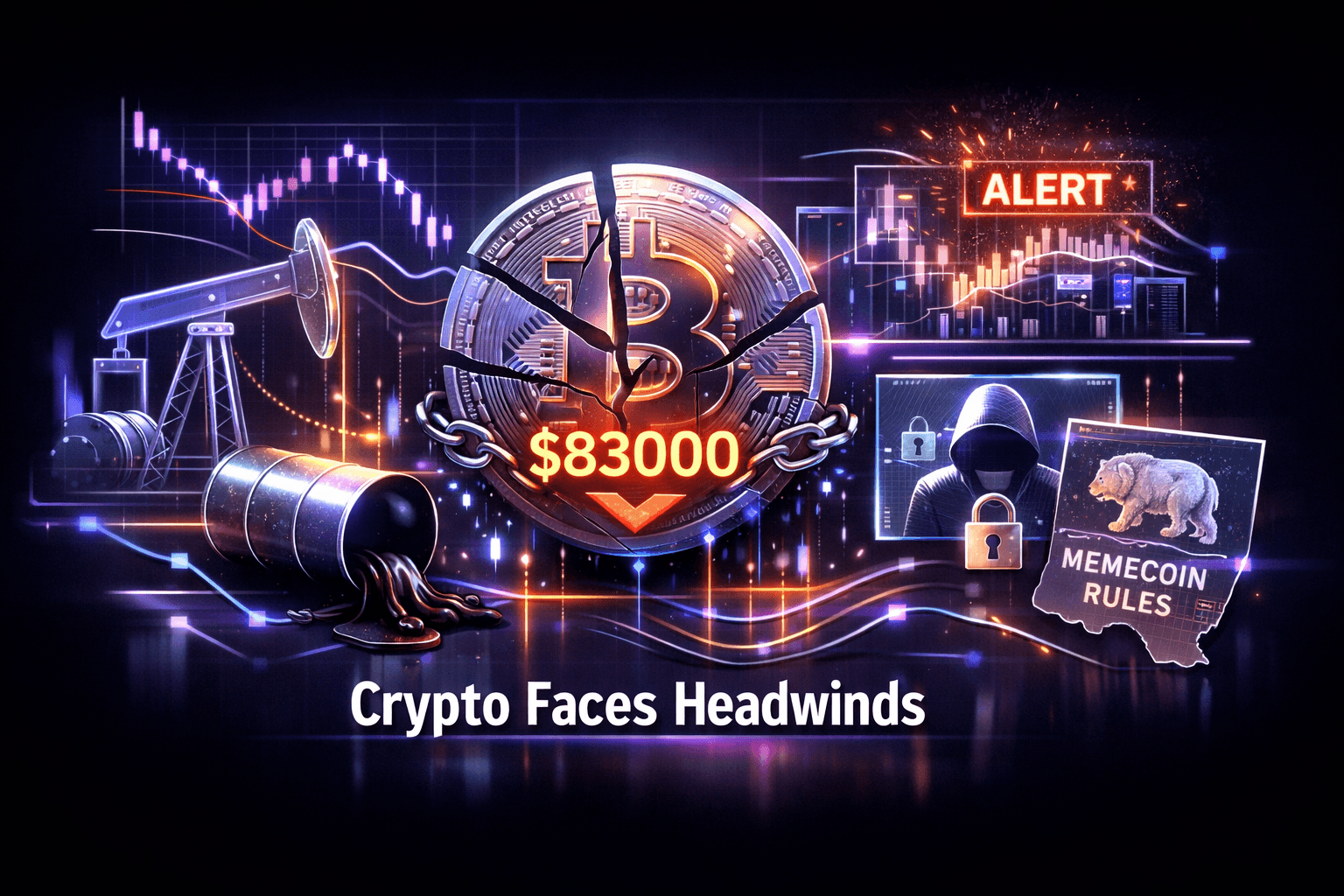
Bitcoin tumbled below $83,000 overnight as macro and geopolitical risks pushed risk assets lower, and traders priced in another potential Fed rate increase ahead of this week’s inflation and jobs data. That pullback came even as Bitcoin-focused ETFs logged their biggest weekly inflow since October 2025, underlining a split between institutional demand and short-term price pressure.
This matters because liquidity and leveraged positions look fragile right now, and you need to weigh stretched ETF flows against rising security and regulatory risks. The day’s headlines point to a market that’s vulnerable to shocks, so you should monitor both macro prints and onchain signals closely.
Market Highlights
Quick facts and price moves to know this morning.
- $BTC slipped under $83,000 after trading above $87,100 earlier in the week, an intraday pullback of roughly 4.5 percent from recent highs.
- Bitcoin ETFs recorded roughly $2.4 billion of inflows for the week, the largest weekly intake since October 2025, even as daily flows slowed.
- Futures open interest for Bitcoin is near yearly lows, and available capital in leveraged markets appears skewed toward bearish positions.
- Brent crude approached $108 a barrel, a tailwind for risk-off moves that CoinDesk linked to $BTC weakness, while ZEC led losses among major tokens.
- Security incidents remain prominent: an estimated $388 million exploit hit Bitget, though the exchange says it will fully cover losses and has resumed phased withdrawals.
- Scams and rug pulls continue to drain capital, with reports of $2 million in ETH stolen in a fake GIWA network scam, and $18.4 million linked to memecoin extractions on Robinhood Chain; Robinhood is $HOOD.
Key Developments
Bitcoin pullback and macro drivers
Bitcoin’s slide under $83,000 came as traders increased bets on additional Fed tightening ahead of imminent U.S. inflation and employment reports. Liquidity hunting kept bulls from challenging the yearly open and left futures open interest near yearly lows, suggesting lower leverage and higher sensitivity to headline risk.
What should you watch for this week? Employment and CPI prints will likely steer short-term direction, and oil price moves are showing they can amplify market reactivity.
Security incidents and exchange fallout
Bitget confirmed a $388 million exploit but says it patched the flaw and will cover losses via a user protection fund while resuming withdrawals in phases. That step reduces immediate solvency concern, but the incident is a reminder that exchange operational risk remains front and center.
Separate scams drained about $2 million in ETH from a fake GIWA network, and DYORSWAP reportedly paid over 200 ETH in compensation. These events show attackers keep finding new social engineering angles, and you should expect more such drain operations unless custody and verification improve.
Regulation hits memecoins and investor protections
California Governor Gavin Newsom signed a law banning public officials from launching memecoins and approved clearer restitution rules for crypto scam victims. The move targets memecoin celebrity promotions and aims to increase accountability when investors lose money.
At the same time, onchain analysis linked $18.4 million in memecoin extractions on Robinhood Chain to a single rug-pull operation. Can regulators and platforms get ahead of memecoin fraud before more retail capital is lost? The short answer is not yet.
What to Watch
Here are the near-term catalysts and risk points you should track as the week unfolds.
- U.S. CPI and employment data: These prints are the primary drivers for rate expectations and risk appetite, and they could prompt rapid moves in $BTC and risk-on assets.
- Bitcoin ETF flows vs price: The $2.4 billion weekly inflow shows ongoing demand, but slowing daily inflows and price pullbacks could create divergence. Watch whether flows persist if prices fall further.
- Futures open interest and funding rates: Low OI suggests a thin leveraged base. A rebound in OI or a spike in funding rates could accelerate moves in either direction.
- Exchange remediation updates: Follow Bitget’s phased withdrawal timeline and proof of reserve updates, because outages or slow reimbursements can magnify market stress.
- Regulatory developments: California’s memecoin ban may prompt similar legislation elsewhere or new exchange delisting policies. Track statements from federal regulators and major platforms.
- Security signals onchain: Large unusual transfers, approvals, or new token launches that exempt wallets from anti-sniping measures are red flags after the Robinhood Chain findings.
Bottom Line
- Market momentum has cooled, with $BTC falling under $83,000 even as ETFs continue to attract meaningful weekly inflows, data suggests a tug of war between institutional allocation and short-term selling.
- Futures open interest is low and available leverage is skewed bearish, which increases the chance of volatile moves on macro or geopolitical surprises.
- Recent exploits and rug pulls underscore persistent security and fraud risks, so you should prioritize custody checks and confirm platform remediation steps before moving capital.
- New state-level regulation targeting memecoins raises compliance and reputational risk for projects and public figures involved in token launches.
- Analysts note that upcoming U.S. inflation and jobs data will likely set the near-term direction for crypto markets, so plan ahead and monitor liquidity.
FAQ Section
Q: Why did Bitcoin drop below $83,000? A: Macro and geopolitical developments, rising oil, and increased bets on Fed tightening pushed risk assets lower, while futures liquidity remained thin which amplified the move.
Q: Are ETFs still attracting money despite the pullback? A: Yes, Bitcoin ETFs drew about $2.4 billion in inflows for the week, the largest weekly intake since October 2025, though daily inflows slowed as prices retreated.
Q: How serious are recent hacks and scams for retail participants? A: They are significant, with a $388 million exploit at Bitget and multiple memecoin rug pulls and a $2 million ETH scam reported, so you should verify custody, follow exchange updates, and be selective with new token launches.