The Big Picture
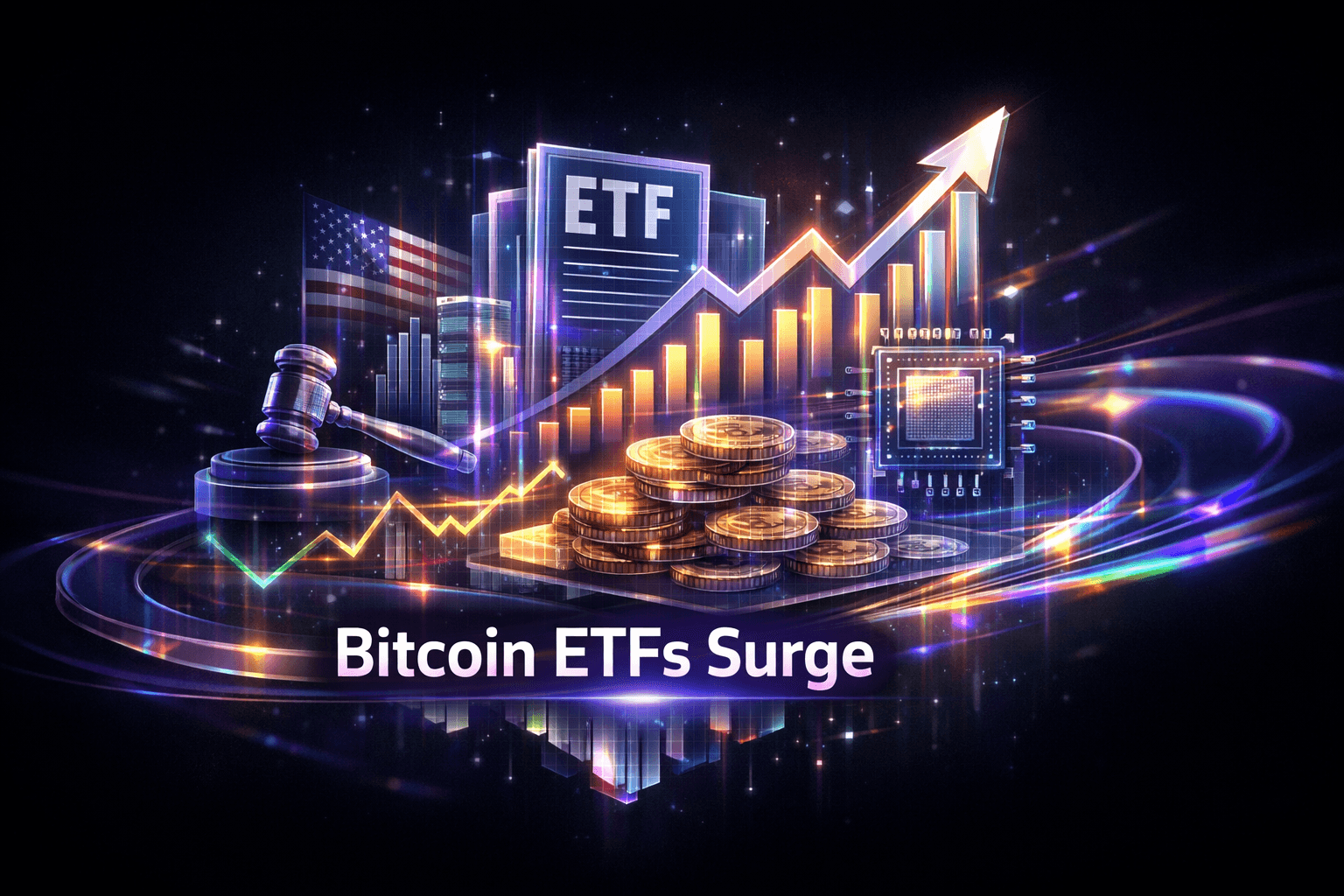
Bitcoin exchange traded funds logged their biggest weekly inflow since last October, drawing roughly $2.4 billion and helping 2026 ETF flows flip back into positive territory. That swing, together with nearly $3 billion over a seven-session run, is the most consequential development for the crypto sector today.
Why does this matter to you? Renewed institutional demand and simultaneous progress on infrastructure and cryptographic security suggest momentum is building, even as regulation and litigation create headline risk. Heading into the long weekend, traders and longer term holders will be watching whether flows continue and how regulators respond.
Market Highlights
Quick facts and numbers to know as of reporting on Sep 26.
- Bitcoin ETF inflows: about $2.4 billion in the latest weekly pulse, the largest weekly intake since October, per The Block.
- Seven-session streak: Bitcoin ETFs drew nearly $3 billion over seven straight sessions, according to Decrypt, erasing earlier 2026 outflows and pushing year to date flows back above zero after being roughly $5.8 billion negative two months ago.
- Technical note: Bitcoin to gold correlation hit a six year high and BTC is showing higher lows since February, suggesting the bitcoin gold ratio is approaching a meaningful price threshold, per Bitcoin Magazine analysis.
- Infrastructure and tech: Kraken parent Payward is committing billions to unify trading, payments, asset management and institutional services on common rails, CoinDesk reports.
- Security progress: An AI driven competition slashed the estimated cost of a quantum safe Bitcoin transaction from about $320 to roughly $67, per Decrypt.
- Legal developments: Kalshi lost an appeal on Friday in the 6th Circuit over sports event contracts, widening a circuit split and setting up a potential Supreme Court review, The Block and Cointelegraph report.
Key Developments
Bitcoin ETF Inflows Turn the Tape
Money moving into bitcoin ETFs is the dominant market story. The $2.4 billion weekly inflow lifted year to date ETF flows back above zero after several months of outflows, signaling fresh institutional appetite. Analysts note that sustained ETF demand could support liquidity and price discovery for $BTC over coming weeks.
Regulatory Action and the Kalshi Ruling
With the Clarity Act stalled in the Senate, regulators moved quickly to draft crypto rules, and that makes regulatory headlines more immediate than legislative fixes. At the same time, a federal appeals court ruled against Kalshi on sports event contracts, widening a circuit split and increasing the odds of a Supreme Court showdown. What does that mean for you? Expect more legal clarity but also intermittent headline volatility as courts and agencies define the landscape.
Tech Advances, Security and Infrastructure Bets
Technology stories pushed the positive case. An open competition backed by StarkWare and others showed AI agents can drive down the cost of quantum safe Bitcoin transactions from about $320 to $67. That’s a meaningful technical advance for long term security assumptions. Separately, Kraken parent Payward said it’s investing billions to become a full financial infrastructure provider, which highlights a strategic shift from exchange services to broader rails for institutional flows.
What to Watch
Here are the near term catalysts and risks you should monitor.
- ETF flow persistence, not a one week wonder. Can daily and weekly inflows continue when markets reopen? Momentum indicates watch for follow through into next week.
- Regulatory rule texts and comment periods from the SEC, CFTC and the Fed. Regulators moved fast after the Clarity Act stalled. You should watch proposed rule timelines and any market guidance they provide.
- Kalshi litigation path. The 6th Circuit decision raises the chance of Supreme Court review. A high court case would set precedent for prediction markets and affect other event contract operators.
- Kraken/Payward execution. You should follow how Payward deploys capital and integrates products. Infrastructure wins could attract more institutional counterparties over time.
- Security innovations and crypto research. The AI competition cutting quantum safe transaction costs is a sign that academic and industry work could lower future security barriers for Bitcoin and related projects.
Bottom Line
- ETF flows are the immediate bullish signal, with weekly inflows near $2.4 billion and a seven session run totaling about $3 billion.
- Regulatory activity is front and center, creating both short term volatility and longer term clarity as agencies write rules after Congress stalled.
- Technology progress and infrastructure bets by firms like Payward strengthen the case for institutional adoption over time.
- Legal risks remain, highlighted by the Kalshi appeal loss and potential Supreme Court involvement, so headlines could flash risk quickly.
- Analysts note this looks like a turning point, but you should watch flow persistence and policy details for the next leg of market direction.
FAQ Section
Q: How important are the recent ETF inflows? A: The inflows are significant because they reversed 2026 ETF net outflows and show renewed institutional demand, which can improve liquidity and price discovery for $BTC.
Q: Will the Kalshi ruling affect other crypto firms? A: The Kalshi decision narrows legal options for prediction market operators and could ripple into how states and exchanges treat event contracts, so related firms should expect closer regulatory and legal scrutiny.
Q: Does the AI driven drop in quantum safe transaction costs change security risk? A: Lower estimated costs for quantum safe transactions reduce a technical barrier, making future upgrades more feasible, but practical deployment timelines will vary and you should follow ongoing research.