The Big Picture
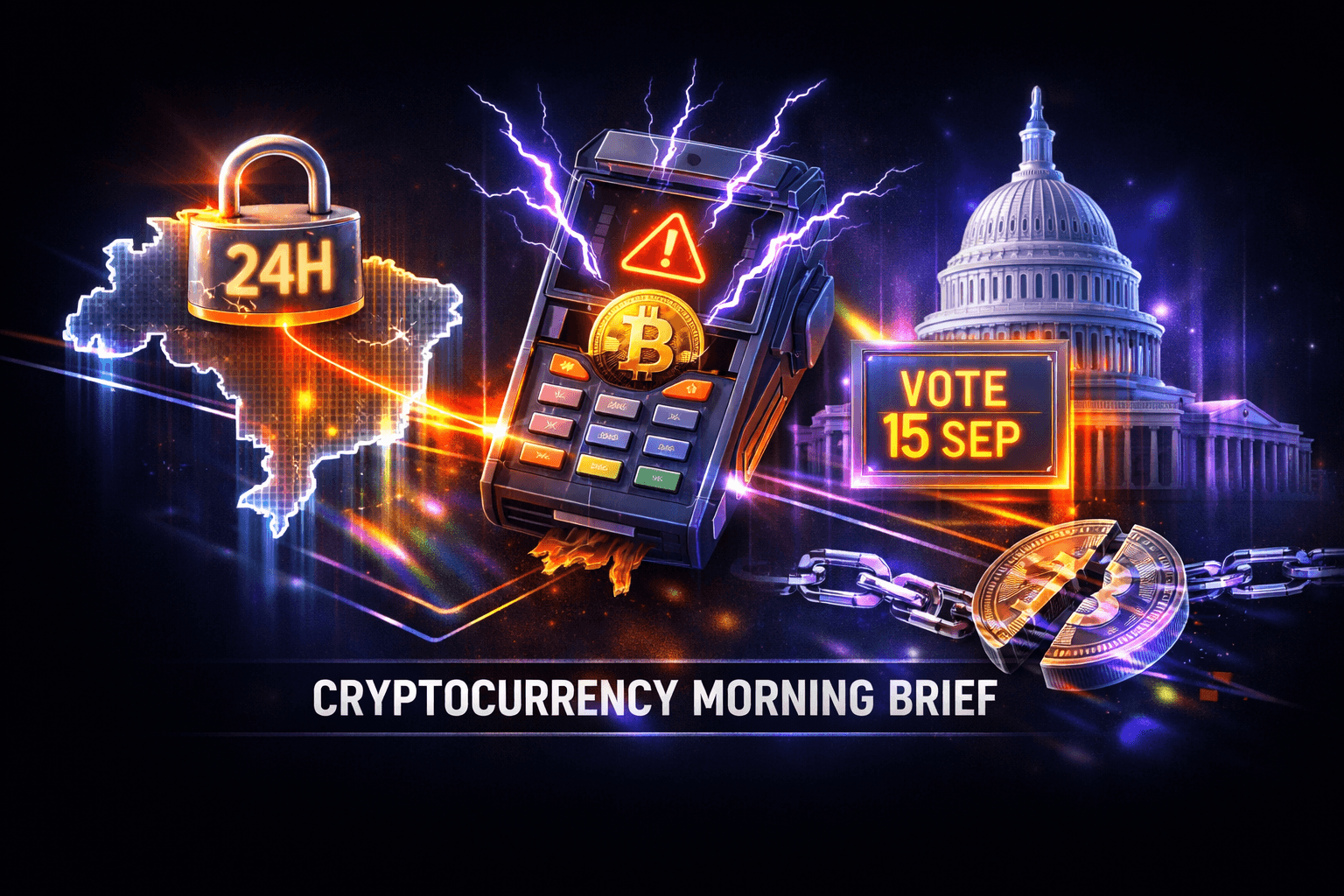
You should be paying attention to a mix of regulatory changes, security incidents, and protocol-level drama that unfolded over the weekend. Brazil announced rules that allow up to 24-hour holds on certain outbound crypto transfers, while U.S. lawmakers advanced the Clarity Act toward a September vote, creating both near-term friction and longer-term legal clarity.
At the same time, technical and operational risks surfaced: BTCPay restricted remote Lightning access after attackers drained funds, and a contentious Bitcoin soft-fork proposal, BIP-110, produced a breakaway chain that mined two blocks then stalled. What does this mean for you as a crypto investor or operator? Expect more scrutiny on custody, node security, and regulatory compliance heading into September.
Market Highlights
Crypto markets trade around the clock, while U.S. equities were closed Sunday as the U.S. heads into a holiday-adjusted week. For context, the last U.S. trading day was Friday, Aug. 7, and markets reopen Monday, Aug. 10.
- Brazil regulation: New rules effective Jan. 1, 2027, allow up to 24-hour holds on transfers above $10,000 to overseas providers or self-custody wallets, plus other flagged transfers, Reuters and Cointelegraph report.
- BTCPay incident: Foundation and Citadel21 said Lightning nodes were drained, forcing BTCPay to restrict remote Lightning access; total theft amounts and number of affected operators remain unknown.
- BIP-110 fork: Supporters activated a fork that mined two blocks after inheriting bitcoin’s difficulty, then stopped, leaving blocks hours apart and both chains accepting the same transactions.
- Security push: The volunteer Bitcoin Red Team scanned 150 repositories, disclosed more than a dozen vulnerabilities, and is building an open-source AI platform to automate security reviews.
- Hardware wallets: Russian retail sales more than doubled, average price on Wildberries fell 13% to 7,900 rubles, and M.Video expanded its lineup ahead of new local rules.
- U.S. regulation: Senate Majority Leader John Thune filed cloture on the Clarity Act, setting up a Sept. 15 vote as the Senate returns.
Key Developments
Brazil to Allow Up to 24-Hour Holds on Large Crypto Transfers
Brazil’s new rules, effective Jan. 1, 2027, target fraud prevention by allowing exchanges and intermediaries to pause outbound crypto transfers above $10,000 to overseas providers or self-custody wallets, plus transfers flagged for review. This creates operational work for firms and could slow large cross-border flows, especially if other jurisdictions follow suit.
For you, that means higher compliance friction and potentially slower settlement on big transfers. Analysts note firms will need stronger KYC and automated monitoring to avoid delays and penalties.
BTCPay Restricts Remote Lightning Access After Thefts
BTCPay limited remote Lightning access after Foundation and Citadel21 reported Lightning nodes were drained by attackers. The scope and dollar value of losses remain unclear, and operators are being urged to audit keys and connectors.
Node operators and custodians should ask how you’re protecting remote access and consider temporary mitigation steps until fixes and guidance are widespread.
BIP-110 Deploys, Splits, Then Falters
BIP-110, a proposed one-year rule to limit non-financial data in Bitcoin blocks, entered mandatory signaling with miner support below 3 percent and then produced a minority chain that mined two blocks before activity dried up. The main $BTC network pulled ahead, leaving the fork as a brief, yet noisy, governance episode.
That incident highlights two things: protocol governance can still create short-term transaction ambiguity, and miners’ lack of support kept disruption limited. You should track signaling levels and any hard-fork fallback discussions in case tension reappears.
What to Watch
Expect several catalysts and risk points over the next month. The Senate vote on the Clarity Act is now scheduled for Sept. 15 if cloture succeeds, and that timing matters for firms seeking regulatory certainty in the U.S. Will the bill attract the bipartisan backing it needs?
Security remains front and center. Monitor BTCPay’s follow-up disclosures, the Bitcoin Red Team’s AI security tool releases, and any coordinated patching across major wallet and node projects. If you run nodes, when was the last time you rotated keys or tightened remote RPC controls?
Also watch how Brazil’s rule is implemented in the coming months, including guidance on thresholds and review triggers. Firms with cross-border flows should test controls now to avoid frozen transfers in early 2027.
Bottom Line
- Regulatory action and legislative progress are both increasing scrutiny and potential clarity, not necessarily opposing outcomes.
- Operational security incidents, like the BTCPay Lightning drains, underscore the need for stronger remote access controls and audits.
- BIP-110’s short-lived fork created uncertainty but lacked miner backing, so broader network disruption appears limited for now.
- Security research and AI-driven scanning are scaling, which should improve code quality over time but may reveal more issues in the short term.
- Keep an eye on the Sept. 15 Senate calendar and Brazil’s implementation timeline for impacts to custody and flows.
FAQ Section
Q: What is BIP-110 and should you be worried about chain splits? A: BIP-110 is a proposal to limit non-financial data in Bitcoin blocks; the recent activation produced a minority fork that quickly stalled, and analysts note low miner support makes a sustained split unlikely but worth monitoring.
Q: How will Brazil’s 24-hour hold rule affect your transfers? A: Transfers above $10,000 to overseas providers or self-custody wallets can be paused up to 24 hours starting Jan. 1, 2027, meaning large cross-border moves may take longer and require stronger compliance checks to avoid delays.
Q: What should node operators do after the BTCPay thefts? A: Operators should audit access controls, rotate keys, limit remote RPC exposure, and follow vendor advisories; security research groups are also releasing tools that may help you identify vulnerabilities.
Analysts note this weekend’s headlines show the sector is navigating both pressure and progress. You’ll want to stay informed on regulatory rollouts, follow security advisories closely, and revisit operational controls before next month’s legislative and implementation deadlines. This summary is informational only; it’s not investment advice.