The Big Picture
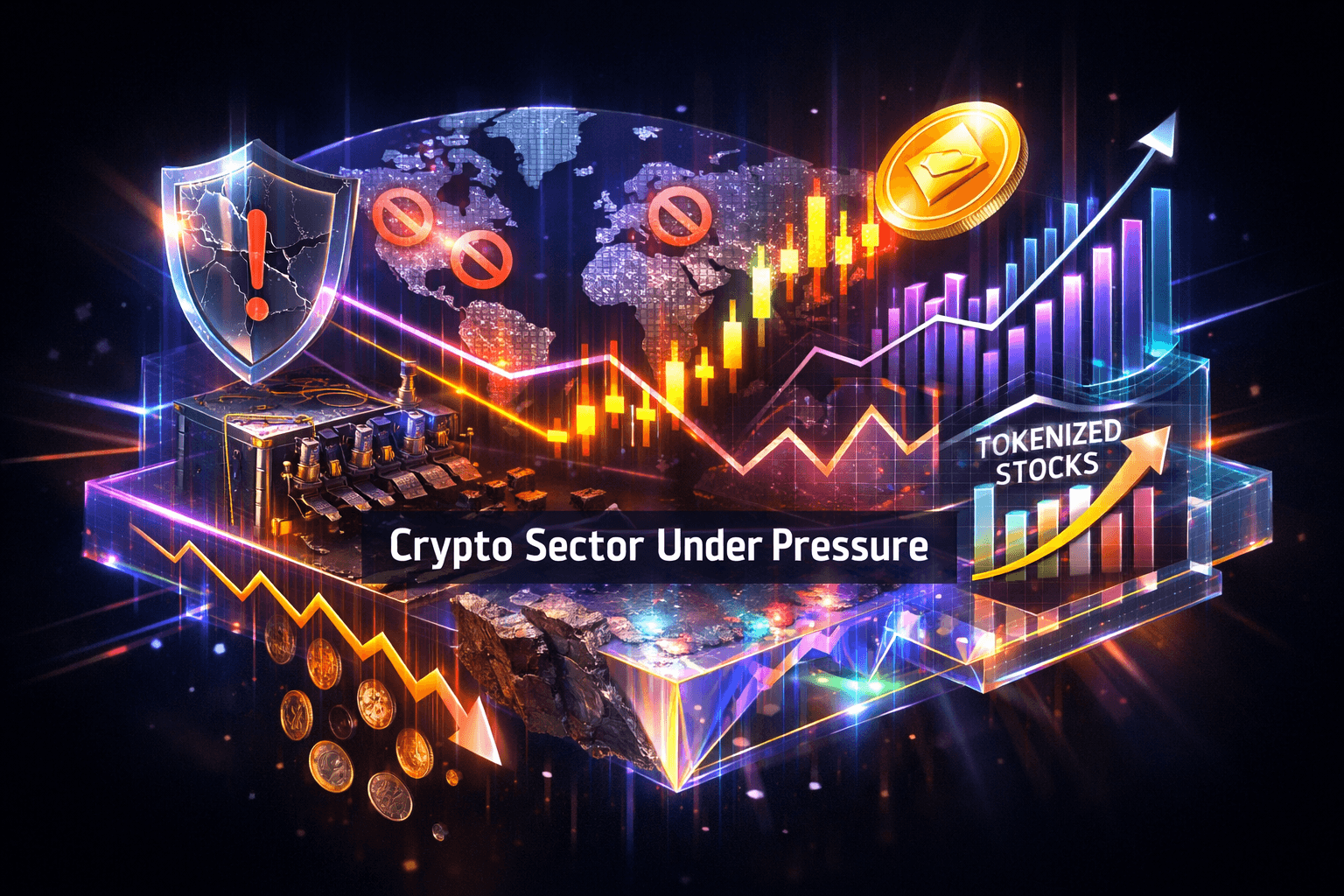
A string of security incidents, regional policy moves and deteriorating mining economics put the crypto sector on the defensive on Aug 1. You should note that the headlines matter for risk and liquidity, even as tokenized markets and political spending show pockets of resilience.
US equity markets were closed for the weekend. The last trading day was Friday, July 31, and the next trading day is Monday, August 3. Crypto markets trade around the clock, and the developments below will shape sentiment heading into next week.
Market Highlights
Key facts and figures from today's top stories that retail investors should keep in mind.
- Coldcard wallet exploit estimated at about $70 million, Binance founder cautioned Bitcoin holders that 'nothing is 100%', raising wallet security concerns for $BTC users.
- Bitcoin mining difficulty fell roughly 14% from this year's high as miners cut capacity and revenues plunged, signaling stress in mining economics.
- Tokenized stock trading jumped 288% in July, but most of that surge was driven by a single QQQ-linked product, with underlying $QQQ exposure concentrated in QQQB.
- Russia expanded a mining ban through 2032 for Moscow region and parts of Kursk region, citing about 1 gigawatt of consumption and reliability risks for the grid.
- Minnesota implemented a statewide ban on crypto ATMs after reports that mostly senior citizens lost about $1 million to related scams between 2023 and 2025.
- BNB Chain said it is pursuing legal action after a former employee reportedly bought nearly 80 percent of a memecoin named ASTEROID for ten thousand dollars then sold most for around $638,000.
Key Developments
Security and Wallet Risk
The Coldcard exploit, with Galaxy Research estimating roughly $70 million in losses, put wallet firmware and hardware risks back in focus. CZ's public warning urging users to spread funds across wallets highlights that custody and operational security remain primary risk vectors for $BTC holders.
What does this mean for you, the retail holder? You should double-check your setup, diversify custody approaches, and stay alert for vendor patches and official advisories. Software and hardware wallet vendors may face greater scrutiny and pressure to improve audits.
Regulatory and Policy Moves
Russia's decree banning crypto mining across the Moscow region through 2032 underscores a global trend where local grid pressures lead to restrictions. Officials estimated mining uses about 1 GW of power and could threaten electricity availability, a justification we've seen before in other jurisdictions.
In the US, Minnesota's crypto ATM ban went into effect after regulators linked kiosks to roughly one million dollars in losses, mainly among seniors. These measures show regulators are willing to act quickly on consumer protection grounds, and you should expect more targeted local rules rather than blanket acceptance.
Market Structure and Tokenization
Tokenized equity trading surged in July, up 288 percent month over month, but CoinDesk notes that most of that activity was driven by one QQQ-linked token. Without that outlier, tokenized equity volume would have declined versus June. The takeaway is that growth in novel products can be concentrated and may not reflect broad adoption.
At the same time, Bank of Italy research found stablecoins are often not cheaper for remittances once fees and FX spreads are included. That casts doubt on one of stablecoins' mainstream value propositions and should temper expectations about rapid displacement of traditional remittance rails.
What to Watch
Looking ahead, there are several catalysts and risks to monitor that will influence direction next week and beyond.
- Security disclosures and vendor patches tied to the Coldcard exploit, plus any follow-up audits or legal actions, could change custody risk perceptions.
- Mining economics and forward price signals for $BTC. With difficulty down about 14 percent from the year's high, watch hash rate, miner balance sheets and hashrate redeployments. How will miners pivot under sustained weak revenue?
- Regulatory responses to Minnesota's ATM ban and Russia's mining bans. Expect local regulators and utilities to scrutinize energy use and consumer safeguards more closely.
- Tokenized asset regulation and transparency demands after the QQQB-driven volume spike. Exchanges and issuers may face calls for clearer disclosure about underlying liquidity and concentration risks.
- Political influence in crypto policy, highlighted by another $1 million from an industry PAC into a Michigan House race, could affect state-level approaches to crypto activity. You should follow lobbying developments if state rules matter to you.
Bottom Line
- Security is the dominant near-term risk, with a major exploit and a high-profile custody warning increasing short-term caution for $BTC holders.
- Mining headwinds are tangible, with a 14 percent drop in difficulty and weak revenue signals pushing operators to cut capacity and reassess models.
- Regulatory pressure is active at regional levels, from Minnesota's ATM ban to Russia's mining restrictions, so expect more localized interventions.
- Tokenization shows growth, but concentration in one product means headline volume gains may overstate broad adoption.
- Follow security fixes, miner reports, and local regulatory moves closely before making portfolio changes, and remember that data suggests some crypto use cases still face cost and transparency challenges.
FAQ Section
Q: Is my Bitcoin safe after the Coldcard exploit? A: Safety depends on your custody choices. Hardware wallets reduce certain risks but you should check vendor advisories and diversify storage.
Q: Will Russia's mining ban affect global Bitcoin supply? A: The ban reduces local mining capacity but global hashrate may shift as operators relocate. You should watch hashrate and miner balance sheet reports for clearer impact.
Q: Are stablecoins really cheaper for remittances now? A: Bank of Italy research suggests not always. Fees and FX spreads can offset savings, so you should compare total costs before using stablecoins for transfers.