The Big Picture
The dominant development in crypto overnight is a large Coldcard-related Bitcoin loss, now estimated at roughly $70 million after further analysis by Galaxy Research. This incident appears to have exploited weak seed generation rather than access to the physical devices, raising fresh security questions for hardware wallet users and custodians alike.
Why this matters to you is simple: custody practices and key generation methods are central to crypto safety, and this episode could change how holders store private keys, how services advertise security, and how regulators view noncustodial risk. US stock markets were closed Saturday, but crypto markets moved and commentary came fast.
Market Highlights
Overnight headlines were dominated by security fallout, yet some market flows showed resilience in broader crypto demand.
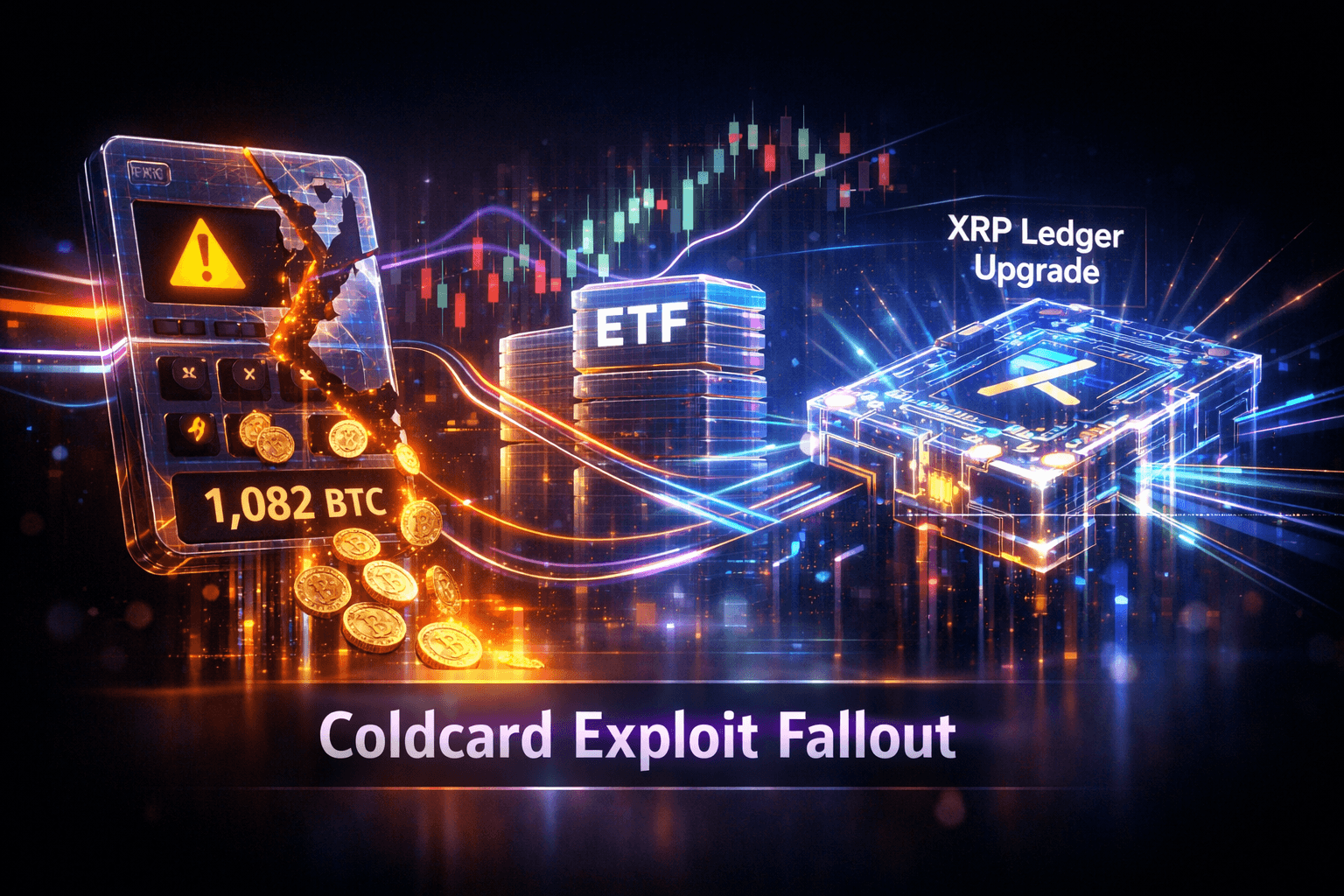
- Coldcard incident: Galaxy Research identified 1,196 addresses that lost 1,082.65 BTC in a 41-minute window, taking the loss estimate to about $70 million, according to Cointelegraph and The Block.
- Industry reaction: Binance founder Changpeng Zhao urged users to diversify wallets after the exploit, echoing calls from analysts and outlets to move funds promptly.
- ETF flows: Spot Bitcoin ETFs drew $172.4 million of inflows in July, leaving the ETF complex down about $5.3 billion year to date, per Cointelegraph.
- XRP protocol: The XRPL dev team plans xrpld 3.3.0 next week with five amendments, including two features that were previously withdrawn for security fixes, CoinDesk reports.
Key Developments
Coldcard Exploit Grows to $70M, Attack Did Not Touch Devices
Galaxy Research expanded the tally to 1,082.65 BTC drained from nearly 1,200 addresses in a concentrated 41-minute window. Reporting from CoinDesk and Cointelegraph says investigators believe weak seed generation allowed the attacker to recreate private keys offline and sweep funds without ever accessing the physical devices.
The implication for you is stark, especially if you rely on hardware wallets: physical possession alone is not a complete defense when seed entropy or generation methods are flawed. Analysts are urging heightened scrutiny of seed generation libraries and the procedures used when moving coins into noncustodial storage.
Community and Industry Response, and Practical Guidance
High-profile responses came quickly. Binance founder Changpeng Zhao publicly recommended spreading funds across multiple wallets to limit single-point failures. Bitcoin Magazine and The Block reported that the attacker likely used major blockchain service infrastructure to streamline the sweeps, which adds complexity for tracing and recovery efforts.
You'll hear the phrase better safe than sorry a lot this weekend. For many, that will mean moving funds, rechecking seed phrases, and avoiding reuse of any known vulnerable key-generation toolkits.
Mixed Macro Signals: ETFs and Protocol Upgrades
Despite the security shock, spot Bitcoin ETFs had positive net inflows in July, about $172.4 million, showing continued demand for regulated access to BTC exposure. Still, ETF flows remain negative year to date by about $5.3 billion, so momentum is far from one-way.
On the protocol side, the XRP Ledger plans to reintroduce features that were previously pulled after bug discoveries. The xrpld 3.3.0 release aims to restore functionality with fixes in place, which suggests maturity in governance and testing but reminds you that protocol changes can create temporary risk windows.
What to Watch
Expect more forensic reporting and possibly legal fallout over the coming days. Who provided the weak seed-generation tools and whether vendors had warnings will be focal points. Will vendors update firmware or change recommendations quickly?
Monitor these specific catalysts over the next week:
- Further Galaxy Research updates and any public disclosures from Coldcard maker or related service providers.
- Announcements from major exchanges and custodians on temporary holds or increased monitoring for funds linked to the drained addresses.
- xrpld 3.3.0 release notes and timing for the five proposed amendments, which could affect $XRP network operations and client software updates.
- Macro and regulatory signals, including any renewed calls for standards in wallet seed generation and third party audits.
Also watch how markets trade into the long weekend, since crypto markets operate 24/7 and liquidity may thin at times. You should think about risk sizing and operational security until technical details are clarified.
Bottom Line
- Major security incident: Galaxy Research now links about 1,082.65 BTC, roughly $70 million, to a Coldcard-related exploit tied to weak seed generation.
- Custody lessons: Industry leaders are urging wallet diversification and immediate checks of seed-generation practices; this event exposes noncustodial operational risk.
- Mixed market signals: Spot Bitcoin ETFs had modest July inflows of $172.4 million but remain negative year to date by $5.3 billion, showing uneven demand.
- Protocol updates matter: The XRP Ledger upgrade shows developers reintroducing features after fixes, a reminder that protocol governance and security reviews are ongoing.
- Practical next steps: If you hold private keys, review your seed generation process, consider diversification, and follow vendor advisories closely. Analysts note further reporting and vendor responses will be key to clarity.
FAQ Section
Q: How did attackers drain Coldcard wallets without touching the devices? A: Galaxy Research reports weak seed generation allowed offline recreation of likely private keys, enabling sweeps without physical access.
Q: Should you move funds off hardware wallets now? A: Analysts and industry figures are advising caution and diversification, but you should follow vendor guidance and confirm secure seed-generation practices before making moves.
Q: Does the Coldcard event change the outlook for Bitcoin ETFs? A: ETF inflows were positive in July, but the security story raises custody concerns that could influence investor sentiment and flows until technical issues are clarified.