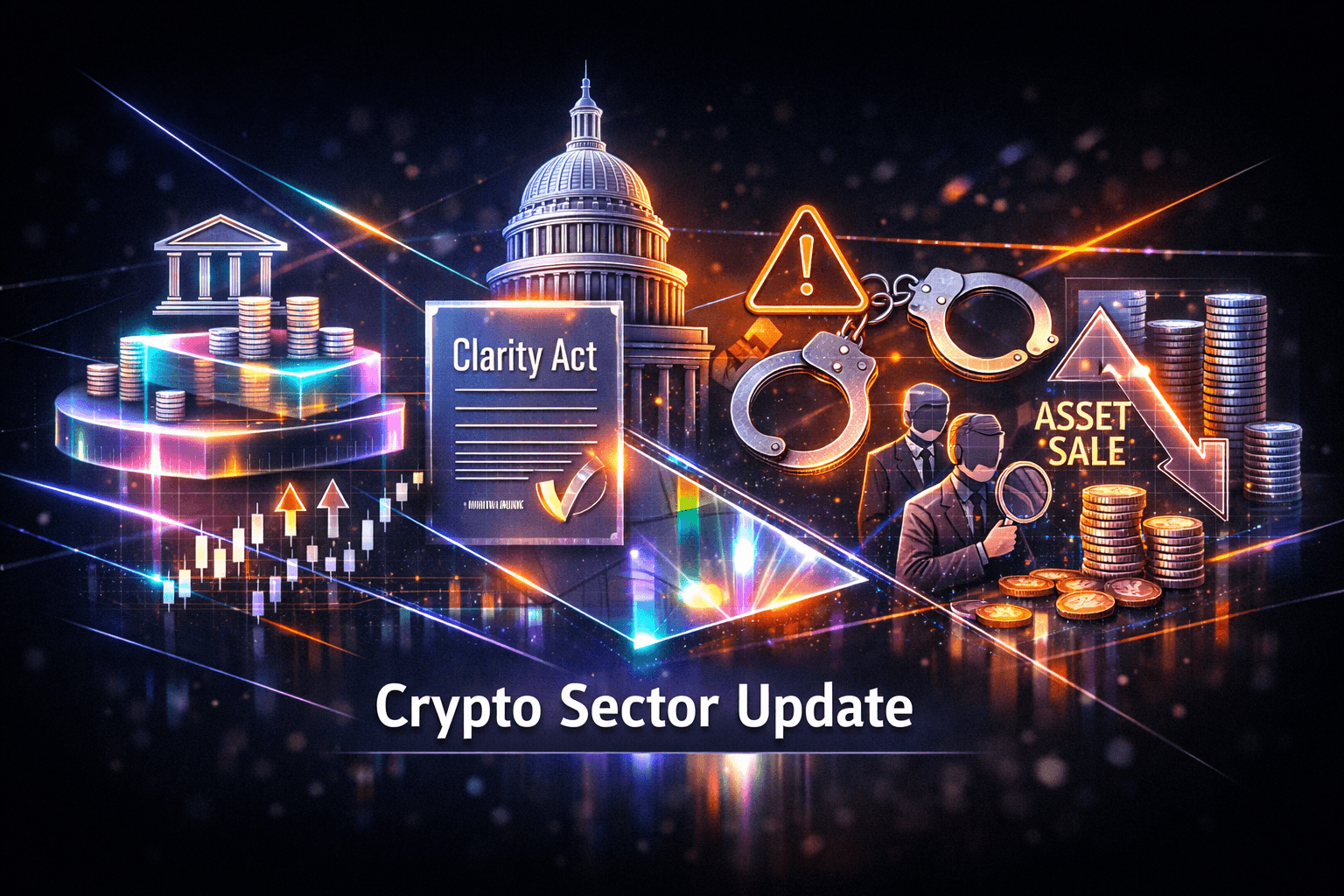
The Big Picture
Today the cryptocurrency sector sent mixed signals, with institutional adoption and renewed legislative momentum on one side, and regulatory scrutiny, fraud alerts, and asset sales on the other. You saw tokenization win an important regulatory approval while lawmakers pushed for a market-structure bill at the same time new proposals and enforcement concerns raised fresh questions for market participants.
That combination matters because clarity and custody developments can widen access to crypto, but legal and security risks can sap investor confidence. If you follow this space, you need to weigh both forces as the market digests these developments overnight.
Market Highlights
Quick facts and numbers to know from today’s coverage.
- Ray Dalio, the legendary investor, still holds Bitcoin, but only about 1% of his portfolio according to Bitcoin Magazine. That underscores selective institutional interest in $BTC.
- Aviva Investors received Central Bank of Ireland approval to launch a tokenized US dollar liquidity fund on the XRP Ledger, creating a regulated XRPL share class tied to traditional custody processes. The move signals more institutional tokenization activity via legacy managers such as $AV.
- Quantum Solutions sold another $1.9 million of ETH, trimming its ETH treasury by 28.6% since mid-June and costing it the top Japan ETH treasury spot, according to The Block.
- Regulatory and enforcement headlines were active: Senator Schumer floated a new agency proposal targeting corruption that referenced large crypto-related disclosures, and the IRS warned of fraudsters sending fake letters to steal crypto assets or data.
Key Developments
Clarity Act sees a renewed push from Treasury and bipartisan senators
Treasury Secretary Scott Bessent publicly urged the Senate to vote on the Clarity Act and quoted Satoshi Nakamoto while criticizing delays, and a bipartisan team led by Senators Tillis and Gallego delivered revised ethics language to the White House. Analysts note these moves increase the odds of a near-term vote, which could reshape market structure and clarify regulatory jurisdiction.
Why it matters to you, the retail investor, is simple: legal clarity tends to reduce uncertainty around custody, listing rules, and compliance, and that can broaden institutional participation. But how fast will the bill move through Congress? That remains unclear.
Tokenization gets a regulatory green light in Europe
Aviva Investors launched a tokenized share class for a US dollar liquidity fund after getting approval from the Central Bank of Ireland, using the XRP Ledger to enable blockchain-based access while maintaining traditional custody safeguards. This is a practical example of legacy asset managers bridging regulated funds and tokenized rails.
For you this means tokenized products are moving from pilot projects to regulated offerings, which could expand on-ramps for larger investors if custody and oversight remain robust.
Regulatory scrutiny and security risks keep pressure on sentiment
Senator Schumer proposed a new agency to tackle corruption that singled out high-profile crypto disclosures, including mentions of billions in crypto earnings tied to political figures. The proposal raises the prospect of heightened oversight and investigations into complex crypto-linked financial arrangements.
At the same time the IRS and Bloomberg warned of fake IRS letters aimed at stealing digital assets or data. Combine that with Quantum Solutions’ repeated ETH sales and Telegram’s founder being labeled a terrorist by Russia after refusing state surveillance demands, and you get a reminder that legal, geopolitical, and security risks are very much front and center.
What to Watch
Upcoming catalysts and risks you should track for tomorrow and the near term.
- Clarity Act timeline, including any Senate schedule updates or White House responses to the Tillis-Gallego compromise. A confirmed vote could be a market-moving catalyst for regulated crypto products.
- Further institutional tokenization approvals or launches after Aviva’s XRPL share class. Watch for custodial partners and eligibility rules that affect who can access these funds.
- Any follow up to the Schumer proposal and potential investigations that could raise compliance costs for firms linked to political actors. You should monitor public filings and official statements closely.
- Security alerts from the IRS or other agencies, and any reported scams tied to fake correspondence. If you hold crypto, protect your keys and verify any tax letters through official IRS channels.
- Corporate treasury moves, such as additional ETH sales by large holders. Continued disposals by treasury managers could pressure token prices, so watch on-chain transfers and multi-million dollar sales reports.
Bottom Line
- Legislative momentum on the Clarity Act and the arrival of a regulated tokenized fund show progress toward institutional access and clearer market rules.
- Simultaneous regulatory proposals and fraud warnings increase near-term legal and security risks, adding volatility potential.
- Notable insiders and managers remain selective, as exemplified by Ray Dalio’s 1% $BTC allocation and Quantum Solutions’ 28.6% ETH reduction since mid-June.
- Tokenization initiatives like Aviva’s XRPL fund could broaden on-ramps, but custody, eligibility, and compliance are the gating factors to watch.
- Stay alert to legislative timelines, enforcement actions, and large on-chain sales. These are the levers that will shape sentiment in the days ahead.
FAQ Section
Q: Will the Clarity Act pass soon? A: It is showing renewed momentum with Treasury and bipartisan senators pushing compromise language, but a final vote timing is not certain and depends on floor scheduling and political negotiations.
Q: Does Aviva’s tokenized fund mean tokenized funds are safe for retail investors? A: The fund is a regulated share class with traditional custody arrangements, but access and eligibility rules will determine who can invest, and you should verify custodial safeguards and fund docs before participating.
Q: How should I protect my crypto from scams like fake IRS letters? A: Verify any tax letter through official IRS channels, never share private keys or recovery phrases, enable hardware wallets or reputable custody, and treat unsolicited crypto requests with extreme caution.