The Big Picture
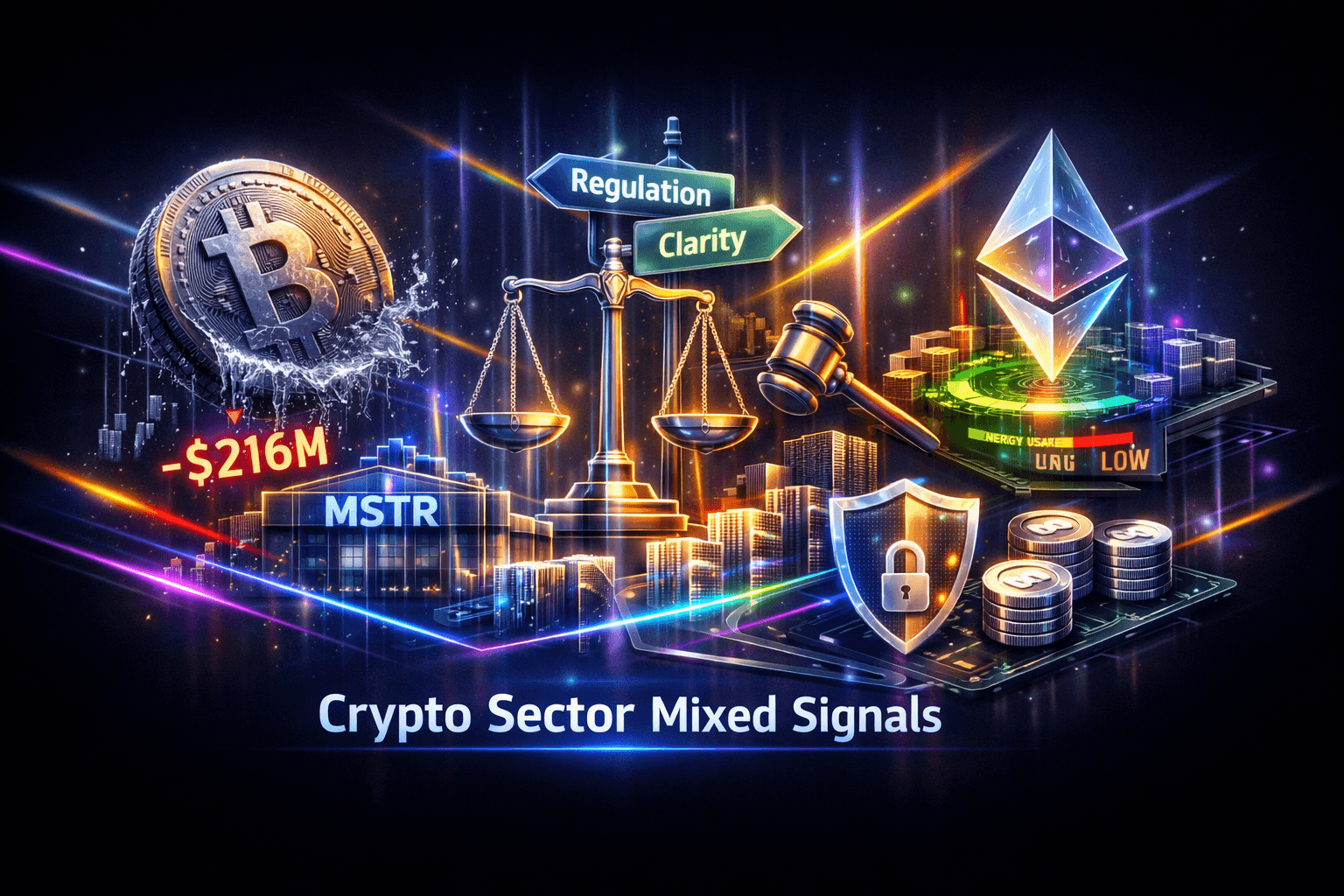
Michael Saylor's Strategy sold about $216 million of bitcoin and posted a cryptic chart, spotlighting the world's largest corporate BTC treasury while raising fresh questions about messaging and intent. At the same time, regulators and researchers offered potentially constructive developments for the sector, leaving you with mixed signals heading into the long weekend.
These developments matter because they touch three investor priorities: large-treasury stewardship, regulatory clarity, and on-chain security. If you're tracking market direction, today's headlines give reasons for both caution and selective optimism.
Market Highlights
US equity markets were closed Sunday; last trading day was Friday, July 10, and the next open is Monday, July 13. Crypto markets traded through the weekend and the stories below influenced price narratives.
- Strategy (MicroStrategy) update: $MSTR's parent Strategy holds 843,775 BTC at an average cost of $75,476, leaving the position roughly $9.7 billion underwater with bitcoin trading near $64,000, and the firm sold about $216 million of BTC this week.
- Stablecoins: The combined stablecoin market cap has fallen about $10 billion since May, including a $7.7 billion decline in June, the largest monthly dollar drop since May 2022.
- Security breach: Hedera lending protocol Bonzo Lend suffered a roughly $9 million exploit after a Supra price verifier accepted a manipulated update; a second wallet later identified itself as a white hat and said funds would be returned.
- Ethereum energy profile: A Cambridge study estimates Ethereum's PoS energy use at about 7.87 GWh annually, placing it near the lower end of PoS networks on market-value-adjusted intensity.
- Infrastructure: Robinhood launched or detailed Robinhood Chain, an Arbitrum-based layer 2 for tokenized stocks and crypto apps, pushing a new angle on tokenized assets and on-chain finance.
Key Developments
Strategy and Saylor's BTC moves
Michael Saylor posted a cryptic Strategy chart soon after the company disclosed a roughly $216 million bitcoin sale. Strategy still holds 843,775 BTC at an average cost near $75,476, which leaves the stake about $9.7 billion below cost with BTC around $64,000.
Analysts note the sale and the opaque messaging complicate confidence in how the world's largest corporate treasury will behave. Is Strategy trimming risk or reallocating capital? The communication gaps are creating short-term uncertainty for holders of related equities and for market sentiment around large holders.
Regulatory signals: Clarity Act and Pakistan dialogue
CoinDesk reports a new draft of the Clarity Act may arrive this week, a development that could shape US crypto policy. At the same time Pakistan's virtual-assets regulator sought continued dialogue after an Islamic scholar ruled against crypto payments, signaling ongoing negotiations rather than immediate restrictions.
Regulatory drafts and dialogues suggest forward movement, but they also mean near-term volatility as stakeholders parse details. If you're holding exposure, you'll want to watch the language and timing closely for rules that affect custody, payments, and on-ramps.
Market structure and security: Stablecoins, support lines, and Bonzo Lend
Stablecoins shed about $10 billion since May, including a $7.7 billion drop in June, yet at least one analyst sees no reason to panic and expects long-term growth to resume. Meanwhile, Fidelity highlights that bitcoin is nearing a multi-year power law support line it has tracked since 2015, calling the zone an accumulation area but noting a lack of a clear catalyst to force a bounce.
Security remains a live risk: the Bonzo Lend exploit on Hedera cost roughly $9 million after a manipulated price oracle input. That event underscores how oracle and verifier integrity can create outsized losses, even on networks with strong fundamentals.
What to Watch
First, monitor any release or language in the Clarity Act draft. Clarity there could shift institutional flows and custody frameworks. Second, watch how Strategy communicates future BTC transactions, because large corporate wallets can alter liquidity narratives.
Third, keep an eye on stablecoin flows and redemptions. Are outflows concentrated in a few issuers, or broad based? That matters for short-term liquidity and on-chain swap spreads. Finally, track oracle and verifier fixes after the Bonzo Lend incident, and look for patch notes or audits from Supra and impacted projects.
What catalysts could move the market next week? Regulatory text, on-chain metrics around stablecoin balances, and any new large-treasury disclosures will likely be the main drivers. Are you watching your risk settings and exposure to oracle-dependent protocols?
Bottom Line
- Strategy's sale and mixed messaging have raised near-term uncertainty around large corporate BTC holdings; communication clarity will be important.
- Regulatory developments show signs of progress, but details matter and could create volatility when they emerge.
- Security risks persist, highlighted by the $9 million Bonzo Lend exploit; oracle integrity remains a critical watch item.
- Stablecoin supply contractions are notable but analysts suggest this may be a cyclical shift rather than structural collapse.
- Network and infrastructure improvements, including Robinhood Chain and low PoS energy intensity for $ETH, are constructive for long-term adoption narratives.
FAQ Section
Q: What does Strategy's sale mean for $BTC? A: A $216 million sale by Strategy removes a known volume from long-term holdings and creates short-term supply, but the company's large residual position means its ongoing actions, and messaging, will shape market perception.
Q: Should I be worried about stablecoin outflows? A: The market cap decline since May is notable, yet analysts cited by CoinDesk say long-term growth could resume; monitor issuer-level flows and on-chain peg behavior for signs of stress.
Q: How risky are oracle-related exploits like Bonzo Lend? A: Oracle and verifier failures are among the most damaging smart contract risks; you should watch whether protocols add circuit breakers, audits, or alternative price feeds to reduce future exposure.