The Big Picture
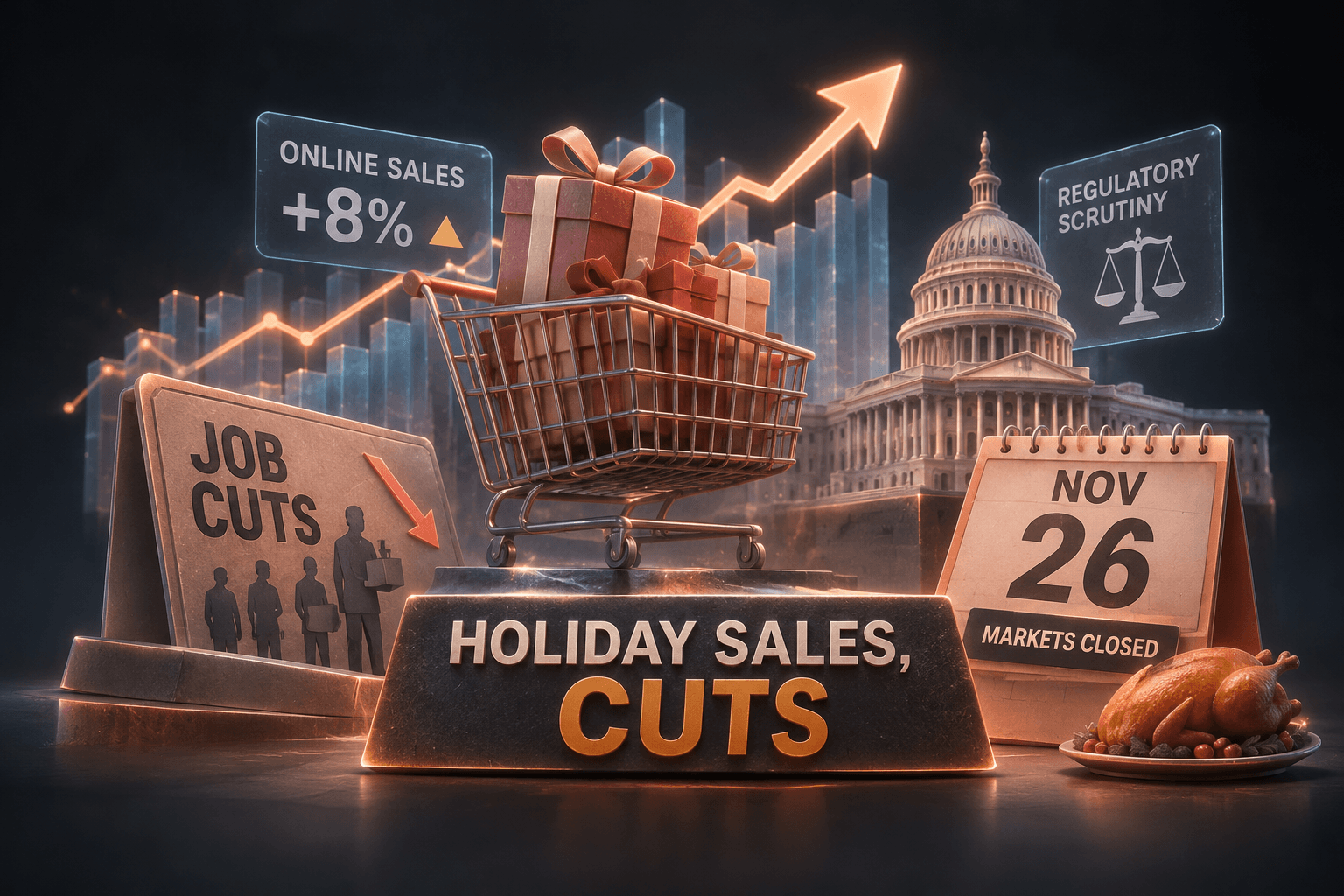
Holiday e-commerce is off to a strong start, but the consumer and retail landscape is far from an uncomplicated seasonal win. Adobe Analytics reported that online spending reached more than $82.5 billion from Nov. 1 through Nov. 22, up 9.1% from the comparable period last year, while companies including Dole Packaged Foods and Kroger moved ahead with workforce reductions.
Regulatory pressure, shifting consumer preferences, and efforts to streamline operations also featured in the day’s news. U.S. stock markets were closed Thursday for Thanksgiving, so these developments didn’t produce a Thursday equity session; you can assess any market response when trading resumes Friday, Nov. 27.
Market Highlights
The headlines point to a season of opportunity and adjustment. Holiday demand is a positive signal, while corporate restructuring and compliance issues show that retailers and suppliers still face meaningful operating risks.
- Adobe Analytics said U.S. online retail spending topped $82.5 billion from Nov. 1 through Nov. 22, up 9.1% year over year, based on activity across 1 trillion visits to retail sites.
- Dole Packaged Foods plans to close two California facilities, with more than 400 workers affected. Kroger (The Kroger (KR)) has begun issuing layoff notices as part of a previously announced plan to reduce about 3,000 positions over three years.
- Shein agreed to a $100 million Federal Trade Commission settlement over allegations involving shipping promises and online product reviews.
- US Foods ($USFD) plans to expand inventory-scanning robot pilots to six more warehouses by year-end.
Because U.S. markets were closed, no Thursday share-price changes are available to connect with these stories. For context, compare company performance with prices as of Wednesday, Nov. 25, rather than treating the holiday headlines as evidence of a trading-day reaction.
Key Developments
Holiday demand meets operational pressure
Adobe’s figures offer an encouraging early read on online holiday demand ahead of the five-day Cyber 5 period, which runs through Cyber Monday. The 9.1% increase suggests shoppers have already been active, although the data covers spending through Nov. 22 and doesn’t establish how the busiest shopping days will perform. For you, the key distinction is between a strong early-season total and sustained demand across the full holiday period.
At the same time, the cost and scale of operations remain in focus. Dole, owned by Japan-based Itochu, says closing two California plants will streamline its supply chain and support long-term competitiveness. Kroger’s planned corporate cuts are also underway, but the company hasn’t disclosed how many workers have received notices so far. These moves may reflect efforts to reshape costs, but their effects on execution and service will take time to assess.
Compliance and brand decisions carry consequences
Shein’s $100 million FTC settlement is a major regulatory development for the e-commerce company. The allegations involved fast-shipping representations and the presentation of product reviews, among other practices. The settlement puts a concrete cost on the dispute and underscores how marketing and customer-facing claims can create financial and reputational exposure in online retail.
Elsewhere, McCormick ($MKC) proposed selling Colman’s mustard to address U.K. regulatory concerns tied to its deal with Unilever. The regulator had warned the transaction could harm competition in dry ingredients and sauces, making the proposed divestiture a potential path toward resolving those concerns. PepsiCo (PEP), meanwhile, faced calls from PETA and shareholders for greater transparency about animal treatment across its supply chain. These stories put scrutiny of company practices and deal approvals alongside the usual focus on sales and margins.
Retailers adapt to shoppers and warehouse demands
Consumer preferences could also reshape grocery spending. Research from Dunnhumby found that GLP-1 use is associated with household spending shifting toward fresh products. The research suggests retailers may respond with lower-sugar and higher-protein options, using customer data to identify relevant needs. That creates a potential merchandising opportunity, but the report doesn’t quantify the sales effect for any one retailer.
US Foods’ plan to test inventory-scanning robots at six additional warehouses adds an operational technology angle. CEO David Flitman said the company intends to begin pilots at each facility by year-end. Investors can watch for evidence on whether the tests improve inventory visibility or efficiency, rather than assuming the planned rollout will deliver results immediately. Shoe Carnival ($SCVL) also reversed course on its store-banner strategy: most locations previously converted to Shoe Station are set to become Shoe Carnival stores again.
What to Watch
When markets reopen Friday, Nov. 27, look for company-specific responses rather than expecting a single sector-wide takeaway. The next useful holiday-demand checks will be updates on Cyber 5 and Cyber Monday spending, including whether early online growth continues through the full shopping window.
Keep an eye on Dole and Kroger for details on the timing and operational impact of their reductions, and on US Foods for results from its warehouse pilots. For McCormick, the proposed Colman’s sale and the U.K. review remain important to the deal’s path forward. What would make these headlines more conclusive? Follow-through in reported results, regulatory decisions, or further company disclosures.
Risks to monitor include weaker-than-expected holiday demand after the strong early online figures, disruption from facility or workforce changes, and added costs or limits resulting from regulatory and supply-chain scrutiny. The GLP-1-related grocery research is a trend to track, but it shouldn’t be treated as a guaranteed sales driver. This summary is for informational purposes and isn’t personalized investment advice.
Bottom Line
- Holiday e-commerce spending was up 9.1% year over year through Nov. 22, but the Cyber 5 will provide a fuller test of demand.
- Dole and Kroger are pursuing workforce and operating changes, with the effects on costs and execution still to come.
- Shein’s $100 million FTC settlement and McCormick’s proposed Colman’s sale highlight regulatory exposure across retail and food.
- Automation and GLP-1-linked product preferences are developments to monitor, not yet confirmed growth outcomes for individual companies.
FAQ
Q: Were U.S. stock markets open on Nov. 26? A: No. U.S. markets were closed for Thanksgiving and were scheduled to reopen Friday, Nov. 27.
Q: How much did online holiday spending increase? A: Adobe Analytics reported more than $82.5 billion in U.S. online spending from Nov. 1 through Nov. 22, up 9.1% year over year.
Q: What is the largest reported corporate cost or restructuring item? A: Shein agreed to a $100 million FTC settlement, while Dole announced closures affecting more than 400 workers and Kroger began issuing notices under a plan to cut about 3,000 jobs over three years.