The Big Picture
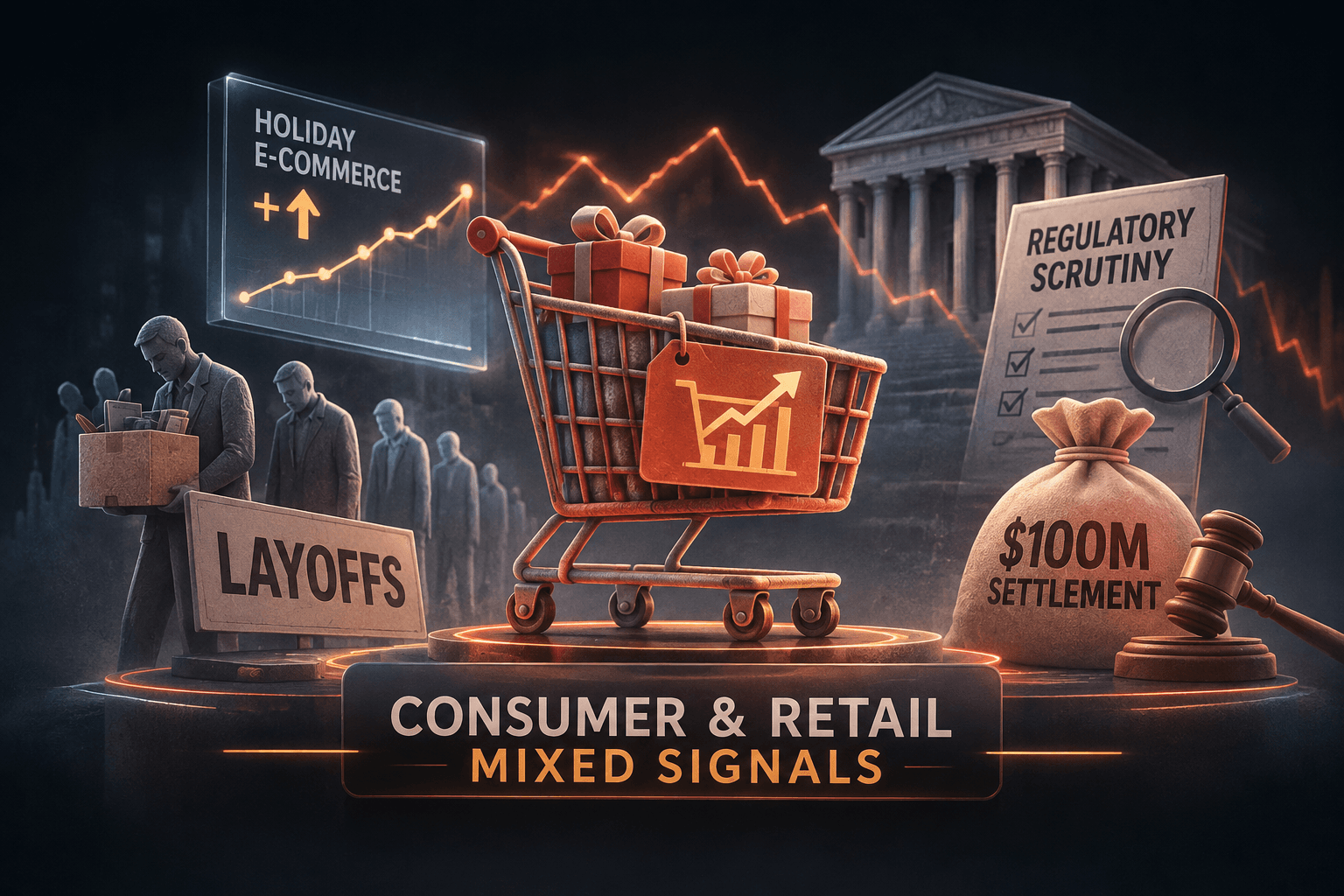
Retailers enter Thanksgiving with online holiday spending up 9.1%, yet today’s company headlines brought a tougher counterpoint: layoffs at Dole and Kroger, a proposed $100 million FTC settlement for Shein, and new regulatory pressure on McCormick’s proposed Unilever deal. Together, the stories highlight a sector balancing consumer demand against cost reductions, compliance risks and scrutiny of business practices.
There are encouraging signals in the data, including more than $82.5 billion in online spending through Nov. 22, as well as plans by US Foods to test inventory-scanning robots. But those developments don’t erase the risks. If you’re tracking retail into the holiday period, the key question is whether spending strength can translate into durable results while companies manage operational and regulatory challenges.
Market Highlights
Adobe Analytics’ holiday spending figures are the day’s clearest broad demand signal. U.S. shoppers spent more than $82.5 billion online from Nov. 1 through Nov. 22, across 1 trillion visits to retail websites, with spending up 9.1% from the prior year. The Cyber 5, the five-day shopping period that begins on Thanksgiving and ends on Cyber Monday, is the next major test of that momentum.
The company-specific news was less upbeat. Kroger (The Kroger (KR)) has begun issuing layoff notices as part of a previously announced plan to eliminate about 3,000 positions over three years. Dole Packaged Foods, owned by Japan-based Itochu ($8001.T), said it will close two California facilities and lay off more than 400 workers, citing supply-chain streamlining and long-term competitiveness.
- Shein agreed to a proposed $100 million FTC settlement over allegations involving shipping promises, product reviews and other practices.
- McCormick ($MKC) proposed selling Colman’s mustard to address U.K. regulator concerns about its deal with Unilever ($UL).
- US Foods ($USFD) plans to pilot inventory-scanning robots at six additional warehouses by year-end.
- Shoe Carnival ($SCVL) said most stores previously rebannered as Shoe Station will become Shoe Carnival locations again.
The supplied reports don’t include same-day share-price moves for the named companies, so no specific market reaction can be confirmed here. The stories instead point to issues investors may assess through future company updates and trading sessions.
Key Developments
Cost cuts and a costly compliance issue
Dole’s planned closures and Kroger’s corporate job cuts put restructuring in focus. Management teams may present workforce and facility reductions as ways to improve efficiency, but the moves also carry execution risks, including disruption to operations and the potential effect on employees and service. For Kroger, the notices mark the start of a previously disclosed multiyear plan, rather than a newly announced target.
Shein’s proposed FTC settlement is a separate but significant risk signal for online retail. The allegations concern the company’s shipping claims, online product reviews and other practices. The proposed $100 million payment could be costly, while the case also underscores the importance of clear consumer disclosures across e-commerce. The reports do not specify a broader financial impact beyond the settlement amount.
Regulatory pressure reshapes deal and brand decisions
McCormick’s proposed sale of Colman’s mustard is intended to address U.K. regulator concerns about its proposed transaction with Unilever. The regulator had warned that the deal could harm competition in dry ingredients and sauces. The proposed asset sale shows how regulatory review can shape the terms of a transaction, but the available report does not establish whether the regulator will consider the remedy sufficient.
PepsiCo (PEP) also faced pressure from PETA and shareholders seeking greater transparency about animal treatment across its supply chain. The story describes an advocacy and shareholder request, not a regulatory finding. Still, it places supply-chain oversight and disclosure on the list of issues companies may need to address with consumers and investors.
Demand, technology and changing shopping habits
Adobe’s figures suggest online holiday demand has started the season with year-over-year growth, but the coming Cyber 5 period will provide a more concentrated read on shopper activity. A separate Dunnhumby research finding says GLP-1 use is shifting household spending toward fresh products. The research suggests retailers may find opportunities in lower-sugar and higher-protein choices, while customer-data use raises practical questions about how companies identify and serve households.
US Foods’ planned warehouse robot pilots offer a more direct efficiency story. The distributor intends to begin tests at six additional facilities by year-end, according to CEO David Flitman. The results could help show whether scanning technology improves inventory visibility at scale, though the pilots are not yet evidence of realized savings. In stores, Shoe Carnival’s decision to reverse much of its Shoe Station rebanner plan also reflects the challenge of choosing a brand identity that works across locations.
What to Watch
Thanksgiving begins the Cyber 5 shopping window, making online spending and retailer commentary the immediate demand indicators to follow. Adobe’s reported 9.1% growth is a useful starting point, but it covers activity only through Nov. 22; the next data releases can show whether momentum held through the holiday weekend. U.S. stock markets are closed Thursday for Thanksgiving, so the next regular session is Friday.
For company-specific risks, monitor further details on the Shein settlement, the U.K. review of the McCormick-Unilever deal, and any updates from Kroger or Dole on the timing and effects of their workforce and facility changes. You can also watch whether US Foods reports measurable results from its robot pilots. Holiday promotions, consumer mix and the execution of cost-cutting plans are important variables, but today’s stories don’t provide enough information to quantify their eventual financial impact.
Bottom Line
- Holiday e-commerce spending is encouraging, with $82.5 billion recorded through Nov. 22 and 9.1% year-over-year growth.
- Layoffs at Dole and Kroger reinforce the focus on cost reductions and operational efficiency.
- Shein’s proposed $100 million FTC settlement adds a prominent compliance risk to the retail landscape.
- Regulatory review and supply-chain transparency remain relevant for McCormick, Unilever and PepsiCo.
- Robotics and GLP-1-related product shifts are potential operating and merchandising developments, but their financial effects remain to be demonstrated.
FAQ Section
Q: How much did online holiday spending grow? A: Adobe Analytics reported more than $82.5 billion in U.S. online spending from Nov. 1 through Nov. 22, up 9.1% year over year.
Q: Why is Shein facing an FTC settlement? A: The proposed $100 million settlement addresses FTC allegations involving fast-shipping promises, online product reviews and other practices.
Q: What is the next major retail catalyst? A: The Cyber 5 shopping period, beginning on Thanksgiving and running through Cyber Monday, will provide a key read on holiday demand.