The Big Picture
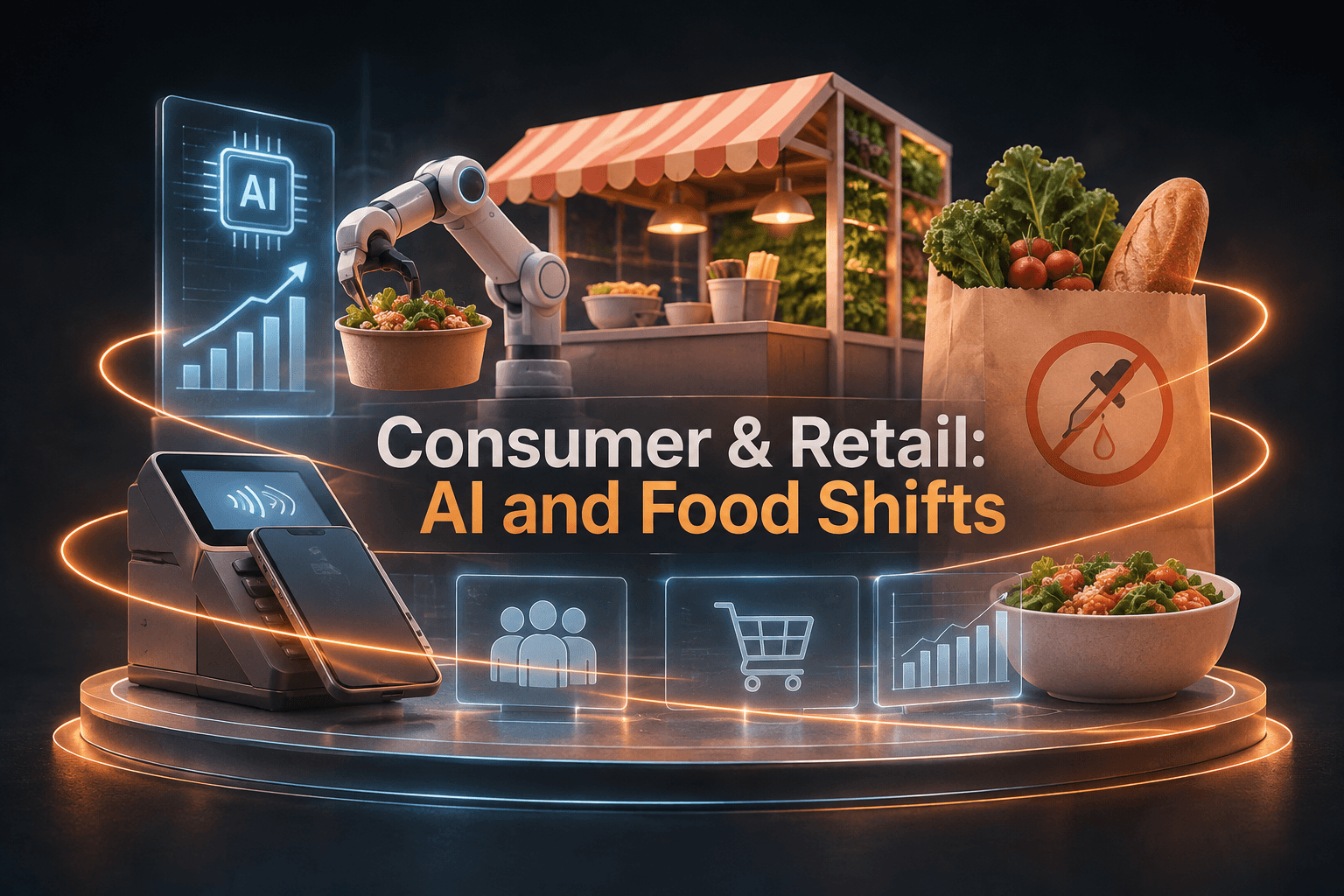
Retailers are weighing where technology can improve operations and where human expertise still matters, while food companies look for ways to stand out through fresh products and changing ingredients. That tension runs through Monday’s Consumer & Retail news, from AI behind the storefront to payment support during the holiday rush.
For investors, the reports offer a view into priorities rather than a fresh read on company results. Several stories are sponsored articles, and none provides revenue figures, sales growth, margin data or share-price moves. The useful takeaway is how retailers are positioning operations and products, not evidence yet of a measurable sector-wide financial impact.
Market Highlights
The day’s coverage spans retail technology, payment services, grocery merchandising and restaurant marketing. Sweetgreen’s cooking pop-ups put an experiential element behind its expanding menu, while a separate report describes artificial-dye removal as a growing food-industry shift shaped by policy and consumer demand.
No stock percentage changes or prices were included in the supplied reports, so there’s no reported market move to connect with these developments. For a public-company lens, Sweetgreen trades as $SG, but the story does not provide a financial update or quantify the expected impact of the pop-ups.
- Retail AI: a sponsored Retail Dive article argues that near-term returns may come from improving underlying systems rather than shopper-facing tools.
- Payments: another sponsored article says human expertise remains important when payment problems arise during peak season.
- Food and marketing: Florida oranges are presented as an example of fresh-food differentiation, while Sweetgreen is using scratch-cooking pop-ups to showcase its menu.
- Ingredient trends: a Modern Retail report says U.S. food brands and retailers are phasing out artificial dyes amid policy changes and consumer interest.
Key Developments
Retailers look beneath the storefront for AI gains
A Retail Dive sponsored feature makes the case that retailers’ faster AI returns may come from fixing the systems supporting the customer experience, rather than focusing only on shopper-facing applications. The article summary doesn’t identify particular retailers, implementation costs or measured savings, so it should be read as a strategic argument, not proof of realized returns.
The distinction matters for retail investors: operational tools can affect processes customers rarely see, but their value depends on execution and measurable results. You’ll want to look for companies that disclose specific outcomes, such as lower operating costs or better inventory performance, before treating broad AI ambitions as evidence of improved earnings.
Peak-season payment support keeps people in the loop
A second sponsored Retail Dive story emphasizes that automation may not be enough when payment issues occur during peak season. Its summary favors access to real human expertise, but provides no data on service costs, resolution times or customer retention.
That message complements the AI story rather than contradicting it: retailers may automate routine work while keeping human support available for problems that need judgment or quick resolution. For you, the investment question is whether the blend improves the customer experience without adding costs that pressure margins. The reports don’t answer that question with company-level figures.
Fresh food and menu storytelling become differentiators
Grocery Dive’s sponsored article uses Florida oranges as an example of a signature fresh product that could help retailers respond to consumer interest in distinctive foods. It doesn’t report sales or indicate how broadly the approach is being adopted, but it puts sourcing and product identity in the frame alongside price and convenience.
Separately, Modern Retail reports that Sweetgreen is staging scratch-cooking pop-ups to promote its growing menu. The format gives the restaurant a way to demonstrate how its food is prepared, though the story summary doesn’t quantify reach, conversion or revenue. The connection is straightforward: retailers and restaurants are using product experience and food identity to make their offerings more tangible. Whether that translates into repeat purchases remains a metric to watch.
Food formulation is also changing. A Modern Retail report says 2026 marked a turning point in the move away from artificial dyes, with policy shifts and consumer demand contributing to phase-outs by U.S. brands and retailers. The summary doesn’t name affected products or detail reformulation costs, leaving the impact on pricing and margins uncertain.
What to Watch
As the holiday period continues, watch for company disclosures that turn these themes into measurable business results. For retailers, relevant indicators include technology-related cost savings, inventory management, payment-service reliability and customer-service expense. For food businesses, sales of fresh or signature products and the cost of changing formulations can help clarify whether consumer preferences are translating into financial gains.
Sweetgreen’s pop-ups are worth tracking for evidence of customer engagement or menu demand, but no such figures were provided today. Likewise, broader artificial-dye phase-outs may require product changes; investors can monitor company statements for timing, costs and any effect on product availability. Could operational improvements and product differentiation offset added expenses? The available reports don’t yet provide enough data to say.
Keep the source context in mind: three of the five reports are sponsored features, and the remaining coverage is qualitative. The stories can identify strategic priorities, but they aren’t substitutes for earnings reports, company guidance or independently reported operating metrics.
Bottom Line
- Today’s news is balanced and mostly strategic, with no reported earnings updates or stock-price moves.
- Retailers are considering both operational AI and human help for complex payment issues, but quantified returns weren’t provided.
- Fresh-food positioning and Sweetgreen’s cooking pop-ups highlight efforts to make products more distinctive.
- Artificial-dye phase-outs may create both consumer-facing changes and reformulation questions; company-level costs remain unclear.
- Use these stories as a checklist for future disclosures, not as evidence of financial performance on their own.
FAQ
Q: What is the main Consumer & Retail theme today? A: Retailers are balancing operational technology with human support while using food identity and experience to distinguish products.
Q: Did the reports include stock moves or financial results? A: No. The supplied stories include no company earnings, percentage share-price changes or reported stock prices.
Q: What should investors monitor next? A: Look for company disclosures on AI savings, payment-service performance, food reformulation costs and measurable results from marketing efforts such as Sweetgreen’s pop-ups.