The Big Picture
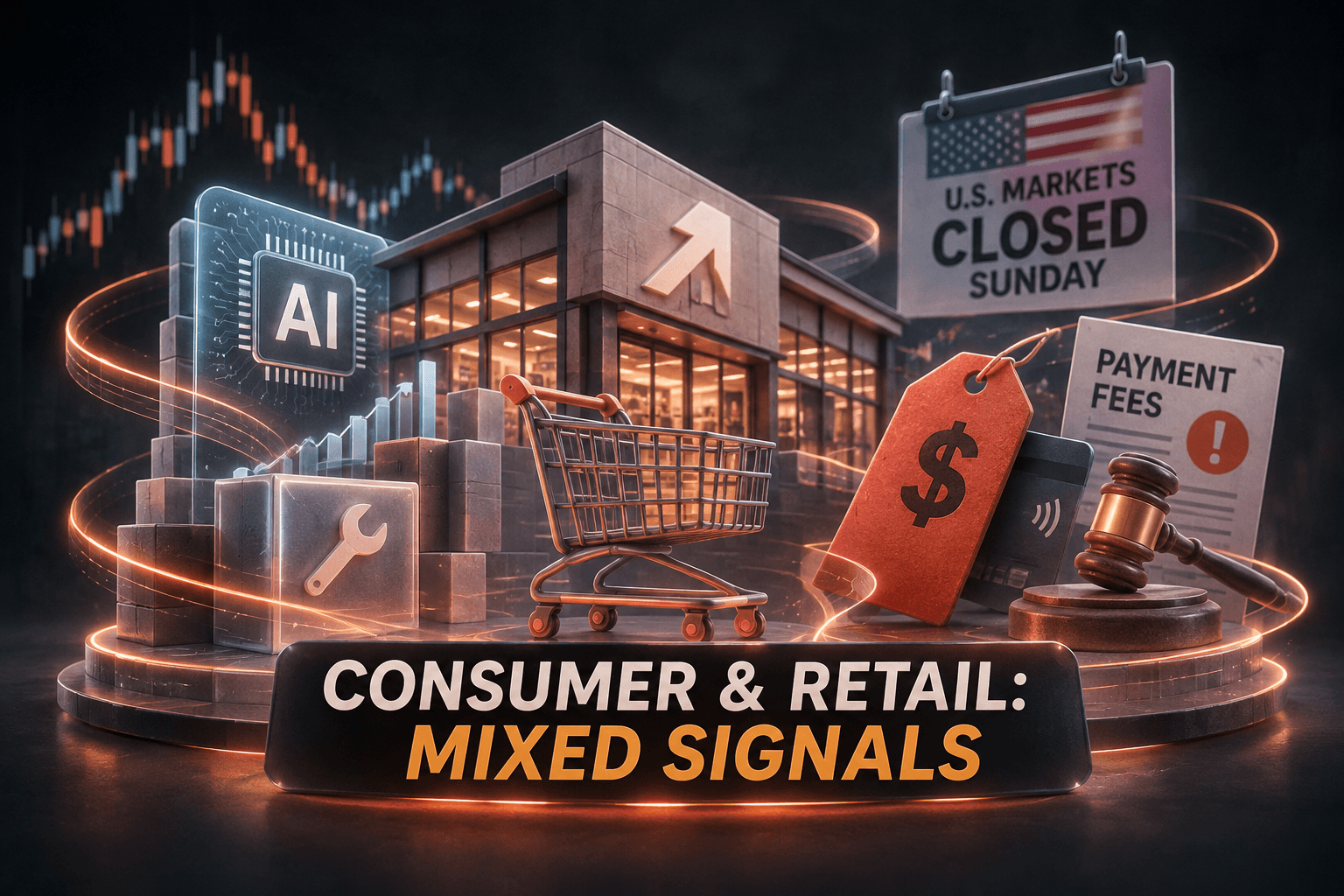
Retail’s weekend news points to a sector working to make its operations more dependable while addressing customer trust and cost pressures. ASICS says AI-powered drones are helping it recover misplaced distribution-center inventory 60% faster, while Kraft Heinz expects innovation investments to support a return to growth in 2027.
Those efforts sit alongside a $63 million Family Dollar settlement over unfair-pricing claims and lawsuits tied to Illinois card-fee rules. U.S. stock markets are closed Sunday, November 15, so there are no Sunday equity trading moves to report; investors can weigh these developments ahead of the next session on Monday, November 16.
Market Highlights
The headlines touch several parts of the consumer and retail landscape, from grocery and discount stores to beauty, apparel and food distribution. Most reports provide operating plans or legal developments, not new share-price data, so the implications will depend on how companies execute and how disputes proceed.
- ASICS says its autonomous drone system finds misplaced merchandise about 60% faster at its primary North American distribution center.
- Kraft Heinz expects a return to growth in 2027, citing product launches that are helping grow market share and volume.
- Family Dollar will pay $63 million to settle unfair-pricing claims brought by state and federal regulators.
- Sally Beauty plans to expand its Sally Ignited store concept in 2027, with a longer-term goal of refreshing two-thirds of its store fleet.
Other updates include Target’s appointment of Sally Grimes to its board and the sale of Centric Brands to CEO Jason Rabin. Seasonal product news from Hershey and PepsiCo adds a holiday angle, while a lawsuit over Illinois swipe-fee rules keeps payment costs in view. What connects these stories? Retailers are trying to improve the customer and operating experience while navigating legal and cost concerns.
Key Developments
Store execution and technology take center stage
ASICS’ use of Corvus Robotics drones targets a practical supply-chain issue: merchandise that is in the distribution center but cannot be located quickly enough to fulfill orders. A reported 60% improvement in recovery speed could help reduce the risk of unfulfilled orders, although the report doesn’t quantify financial savings or describe the system’s cost. For you, the key question is whether this kind of efficiency can be replicated at scale.
That operational focus echoes concerns raised in a Modern Retail discussion of the in-store shopping experience. Self-checkout friction, locked merchandise and inventory gaps can frustrate shoppers even as physical stores remain important to retail sales. Sally Beauty’s planned store refresh and Target’s board appointment are further reminders that store performance and oversight remain priorities, though the reports don’t provide measurable results from the initiatives yet.
Product innovation offers a growth test for food companies
Kraft Heinz says launches including lower-sugar ketchup and lactose-free cream cheese are helping grow market share and volume, and it expects to return to growth in 2027. That outlook makes product adoption an important point to monitor for $KHC: the stated momentum is encouraging, but the report doesn’t provide sales figures or a detailed forecast to assess the pace of improvement.
Holiday launches from Hershey and PepsiCo show brands seeking seasonal attention. Hershey is introducing a three-pound Reese’s peanut butter cup for holiday hosting, while PepsiCo is adding a zesty version of Tostitos Scoops. Cutwater’s Gingerbread White Russian also joins the seasonal lineup. These launches create opportunities to attract shoppers, but the coverage doesn’t establish their expected sales contribution. Investors can look for evidence of consumer response in future company updates.
Legal and commercial risks remain in focus
Family Dollar’s $63 million settlement resolves unfair-pricing claims from state and federal regulators. The company says it is cooperating and focused on improving pricing accuracy and maintaining customer trust. The settlement puts a concrete cost on the dispute, while the broader business issue is whether execution improvements can prevent similar problems from recurring. Family Dollar is owned by Dollar Tree, Dollar Tree (DLTR).
Separately, trade groups including FMI and NGA have sued federal regulators over the preemption of an Illinois law that bars swipe fees on taxes and tips. The litigation leaves uncertainty around payment costs for merchants and the rules that will apply. A sponsored Digital Commerce 360 article also discusses compliance risks when e-commerce brands pay international contractors; because it is sponsored content, treat it as industry context rather than independent evidence about a specific retailer’s results.
Other corporate developments include Sally Beauty’s store investment plan and changes at Target and Centric Brands. Sally Beauty, $SBH, intends to expand its refreshed concept in 2027 and ultimately update roughly two-thirds of its stores. Target, Target (TGT), named Sally Grimes an independent director. Centric Brands, meanwhile, is being sold to its CEO, Jason Rabin. The reports provide no transaction terms for Centric Brands, limiting conclusions about its financial implications.
What to Watch
When U.S. trading resumes Monday, November 16, watch for company disclosures or market responses to the weekend’s news, but don’t assume a particular price reaction from these reports alone. The next useful evidence will be operating data: whether ASICS’ faster inventory recovery supports fulfillment, whether store refreshes improve customer experience, and whether Kraft Heinz can sustain the volume and market-share gains it cites.
For $KHC, the 2027 return-to-growth outlook is a forward-looking milestone, not a completed result. For $SBH, execution and the pace of store upgrades will matter. You can also track developments in the Illinois card-fee case and any further information about Family Dollar’s pricing controls. Product launches and holiday shopping provide near-term demand signals, but the stories here don’t include sales forecasts or performance data.
Bottom Line
- Sector signals are mixed: efficiency and innovation initiatives coexist with customer-service and legal challenges.
- ASICS’ reported 60% faster inventory recovery is a notable operational result, but its financial impact isn’t disclosed.
- Kraft Heinz’s expected 2027 return to growth depends on sustaining product-driven volume and market-share gains.
- Monitor Family Dollar’s pricing improvements and the legal dispute over Illinois swipe fees for developments that could affect retailer costs and trust.
FAQ Section
Q: Are U.S. stock markets open on Sunday, November 15? A: No. U.S. stock markets are closed Sunday, with the next trading session scheduled for Monday, November 16.
Q: What did ASICS report about its inventory technology? A: The company says autonomous drones help it recover misplaced distribution-center inventory about 60% faster, reducing the risk of unfulfilled orders.
Q: Why is Kraft Heinz in the news? A: Kraft Heinz expects to return to growth in 2027 and says recent product launches are helping grow market share and volume.