The Big Picture
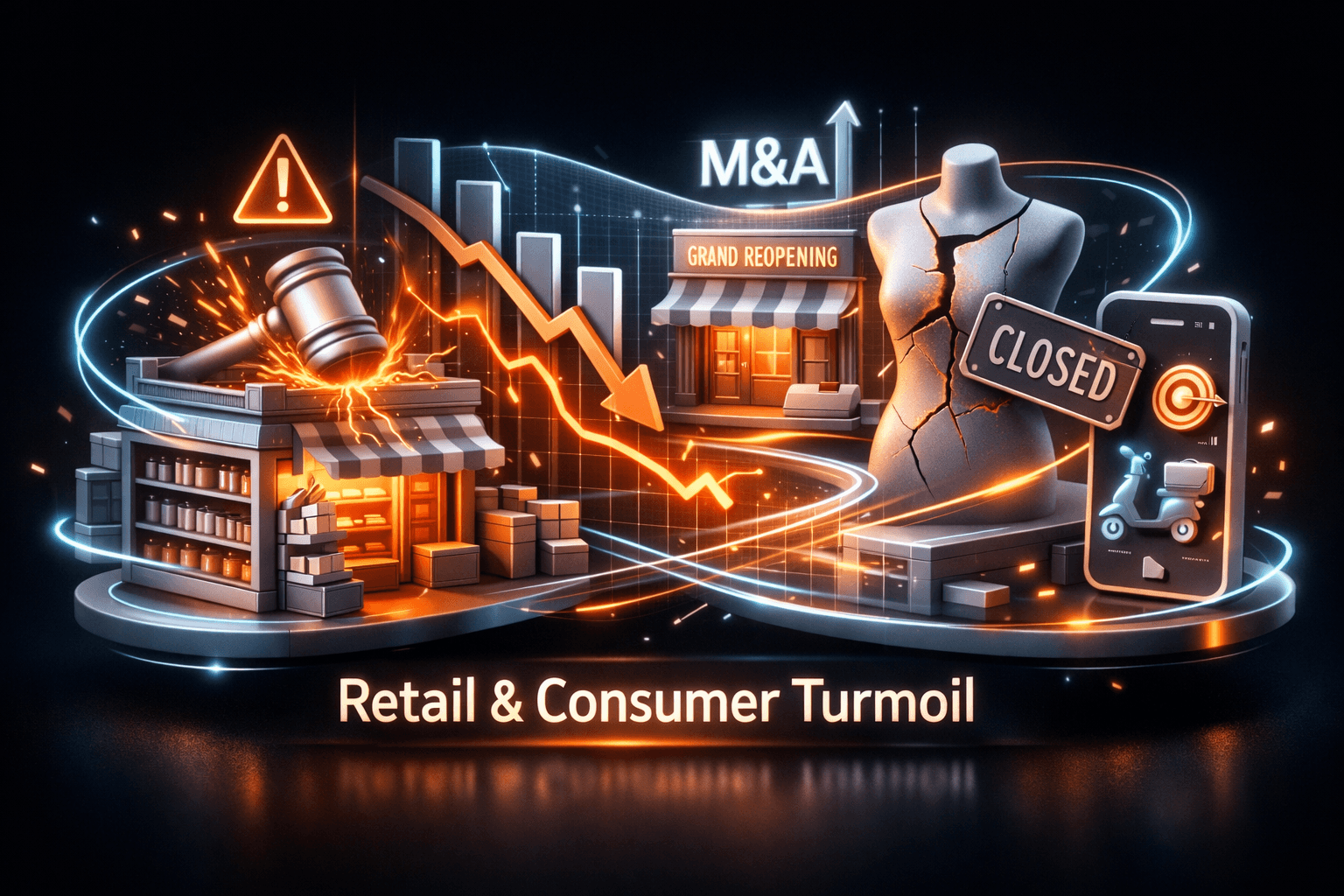
The biggest development for the sector this weekend is the legal and regulatory pressure bearing down on grocery chains, highlighted by a $900 million Washington state ruling against Albertsons. That judgment and the ongoing Kroger-Albertsons dispute add a material layer of legal and divestiture risk for supermarket investors.
At the same time, retailers and CPGs are pursuing growth through M&A, concept refreshes and platform-led ad strategies. If you follow retail closely, you’ll see both near-term headwinds and longer-term structural shifts that could reshape margins and marketing models.
Market Highlights
Markets were closed on Sunday. The items below summarize the key news items that will be in focus when U.S. trading resumes on Monday, Nov 9.
- Albertsons legal hit: A King County judge ordered Albertsons to pay $900 million, a large judgment tied to pharmacy opioid claims that raises regulatory and financial scrutiny for $ACI.
- Kroger-Albertsons trial: The retailers’ dispute over divestiture plans remains unresolved and could dictate the fate of a major consolidation in U.S. grocery, a topic that will keep The Kroger (KR) and $ACI under the microscope.
- Delivery apps push discovery and ad tech: Coverage of the DoorDash-Instacart tie-up frames delivery platforms as growing discovery and advertising channels, which matters for DoorDash (DASH) and platform monetization strategies.
- Retail execution and M&A: GME Supply bought Commercial Supply Co., while Bed Bath & Beyond rolled out a new store concept after reporting revenue gains; these moves underscore active consolidation and format testing in midmarket retail.
- CPG and channel pressure: Hershey’s CEO flagged softness in convenience-store sales on the Q3 call, and General Mills launched Dunkin-inspired cereal tie-ins, signaling product innovation even as channels vary in strength.
Key Developments
Albertsons judgment and the Kroger fight
The $900 million ruling in King County is the most immediate legal headline for grocers, based on findings that Albertsons failed to stop suspicious prescriptions at its pharmacies. That liability could complicate financing, divestiture planning and settlement dynamics for Albertsons $ACI and anyone negotiating or litigating with it.
Meanwhile the Kroger-Albertsons merger dispute still has a long way to go, as a judge weighs whether proposed divestitures are adequate. What does this mean for you? Expect continued legal headlines, and keep an eye on any rulings that change the competitive landscape in local markets.
Delivery apps evolve into discovery platforms
Writeups on the DoorDash-Instacart deal argue these marketplaces are moving from pure logistics to ad-driven discovery engines. Delivery apps are investing in ad tech and AI shopping features to monetize placement and recommendations, which could create a higher-margin revenue stream for dominant platforms such as $DASH.
Can delivery-based ads meaningfully offset food-cost pressure? Analysts note the potential, but execution risk remains. You’ll want to watch adoption metrics and ad revenue disclosures in coming quarters.
Store concepts, private label and specialty M&A
Retailers are experimenting with their formats and portfolios. Bed Bath & Beyond revived elements of its classic layout and couponing in a new concept while reporting stronger revenue after acquisitions. Under Armour $UA is shifting more full-price merchandise to outlet locations as part of a store overhaul to reinforce premium positioning.
On the grocery front, Lidl is refreshing private label holiday assortments, and GME Supply completed a regional acquisition that highlights ongoing consolidation in specialized distribution. Product tie-ins and private label pushes from CPGs such as General Mills General Mills (GIS) and promotion calendars will matter for holiday sales cadence.
What to Watch
Looking ahead, several catalysts could move sentiment and fundamentals in the Consumer & Retail space.
- Legal milestones: Any appeals or settlement developments around the Albertsons $ACI opioid judgment, and rulings in the Kroger $KR-Albertsons merger case, are high-impact events to monitor.
- Earnings and guidance: Watch upcoming quarterly reports for updates on c-store trends after Hershey The Hershey (HSY)’s comments, ad revenue disclosures from delivery platforms, and holiday sales guidance from grocers and discounters.
- Advertising and AI metrics: For delivery platforms, track ad revenue growth, take-rates, and engagement metrics. Those numbers will say whether discovery strategies are translating to durable monetization.
- Retail execution: Monitor store concept rollouts, outlet merchandising changes by $UA, and private label performance at chains such as Lidl. Early comp data and margin trends will show whether changes are working.
- Bankruptcy and leadership risk: The Children’s Place $PLCE leadership shakeup amid bankruptcy rumors is an important operational risk. You should watch liquidity updates and restructuring signals closely.
Bottom Line
- Legal and regulatory risk is front and center for grocers after a $900 million ruling against Albertsons, and the Kroger-Albertsons saga remains unresolved.
- Delivery platforms are increasingly positioning as ad and discovery engines, which could create higher-margin revenue if adoption scales.
- Retailers are testing heritage formats and outlet strategies to drive traffic and full-price sales, but results will show up over multiple quarters.
- CPG innovation continues despite channel softness, yet convenience-store weakness is a near-term headwind for candy and impulse categories.
- Given mixed signals, a selective approach looks prudent, with attention to legal outcomes, holiday comps, and platform monetization metrics.
FAQ Section
Q: How will the Albertsons $900M judgment affect grocery stocks? A: It raises legal and cash-flow risk for Albertsons and could influence merger negotiations and settlements, analysts note.
Q: Should I expect delivery apps to become a major ad channel? A: Data suggests delivery platforms are investing in ad tech and AI to drive discovery, but ad revenue scaling will depend on engagement and merchant uptake.
Q: What signals matter most for holiday retail? A: Watch comp sales, private label performance, and margin commentary in upcoming earnings, especially for grocers and mass merchandisers, as they’ll indicate holiday strength.