The Big Picture
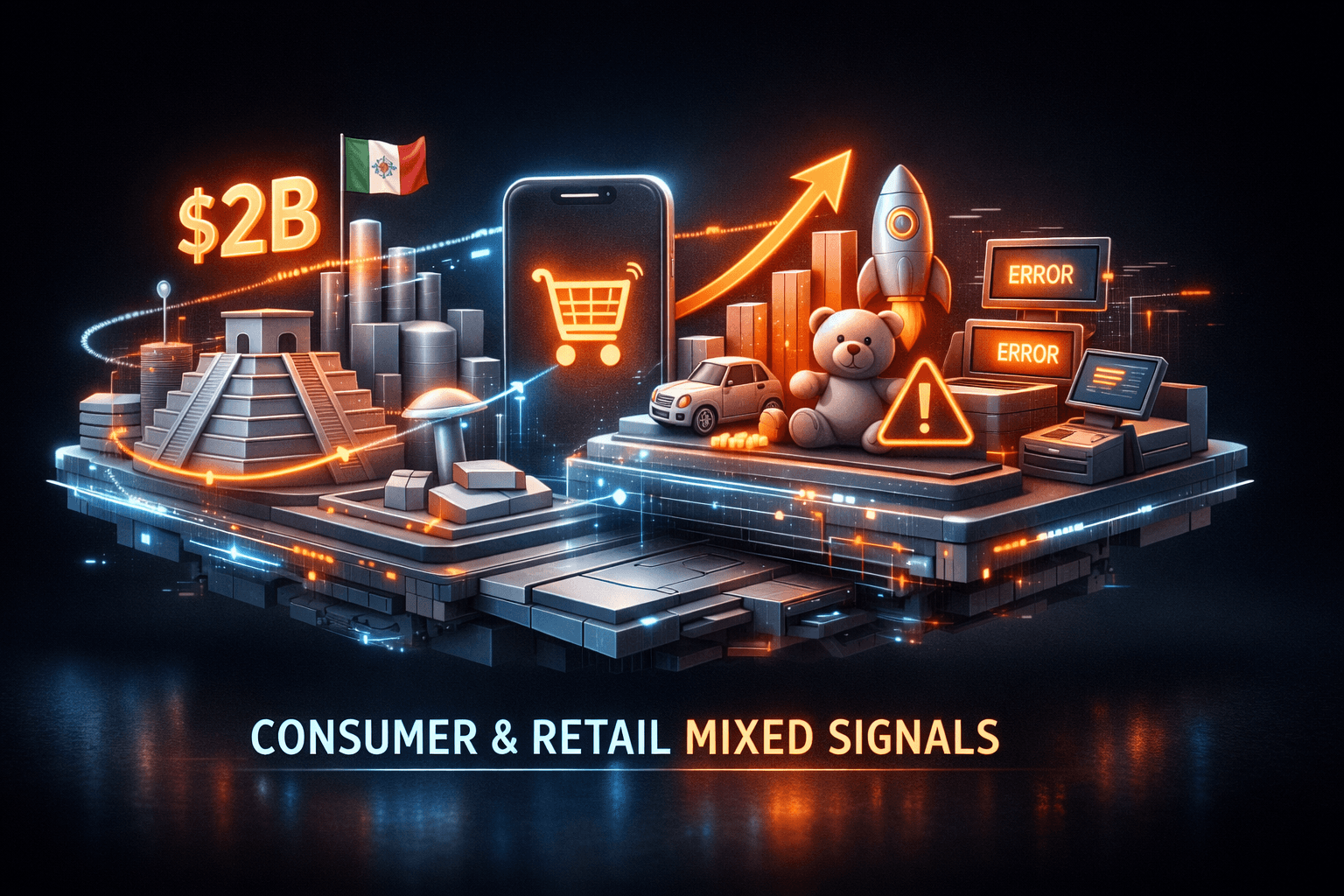
The Consumer & Retail sector is sending mixed signals this morning, with expansion moves rubbing up against cost and operational headwinds. You can see growth bets from major food and retail players even as inflationary pressure and a cybersecurity incident are creating tangible near-term risks.
For investors watching seasonal demand, today’s headlines matter because they touch supply chains, store efficiency, pricing power and consumer sentiment all at once. How companies respond to higher prices and shifting shopper preferences will shape holiday results and 2027 outlooks.
Market Highlights
Quick facts and numbers to start your trading day. Keep these in mind as you review positions or scan opportunities.
- Nestlé announces it will double investment in Mexico to $2 billion, adding $1 billion to tap growth in coffee, pet food and other categories, a notable capital commitment from $NSRGY.
- Toy prices jumped 4.2% in September while the broader Consumer Price Index increased 0.6%, a reminder that inflation is still affecting consumer baskets heading into the holidays.
- Target is rolling out upgrades to its employee app myDay, including a customizable home screen and upcoming AI-backed insights aimed at improving store efficiency, an operational push for $TGT.
- Amazon will close certain grocery partner storefronts as it simplifies the online grocery experience and focuses on new services, a strategic shift from $AMZN that could reshape vendor relationships.
- Retail brands are mining their archives for design cues, with players like $CROX and legacy brands leaning into nostalgia to capture shopper interest this season.
Key Developments
Food and beverage investment: Nestlé doubles down in Mexico
Nestlé’s $1 billion top-up brings total planned investment in Mexico to $2 billion, signaling a long-term growth bet on emerging-market demand for coffee, pet food and packaged goods. For you, that suggests multinational food companies are still allocating capital to higher-growth regions rather than retrenching.
Retail operations and efficiency: Target’s app and Amazon’s grocery changes
Target’s myDay enhancements add a customizable home screen and promise AI-driven insights soon, which could boost labor productivity and inventory responsiveness at the store level. At the same time, $AMZN is closing retailer-specific grocery storefronts to simplify online shopping and prioritize new services, a move that may force grocers to rethink digital partnerships.
These moves underscore a trend, where you should watch how tech and store-level tools translate into margin relief and faster service. Which retailers will deploy these tools most effectively?
Pricing and consumer signals: toy inflation and value competition
Toy prices jumped 4.2% in September, part of a broader CPI uptick of 0.6%. That increases pressure on discretionary spending and could compress volume for midmarket players. At the same time, regional grocers like Wegmans are pushing a low-price focus as they enter new markets, challenging incumbents on frequently bought items.
Expect heightened promotional activity and tighter margins for some chains this season, while others double down on value messages to win share.
Brand strategy: product diversification and archive-driven design
Smaller brands are evolving too. Bogg is shifting away from its signature EVA beach bag with a new Go Tote aimed at commuters, athletes and travelers, an example of product-line diversification. Brands including Crocs and Vera Bradley are mining archives for designs that resonate today. If you follow retail brands, these are low-cost ways to refresh assortments and drive repeat buys.
Operational risk: Ahold Delhaize outage and food policy changes
The websites and apps for five Ahold Delhaize USA banners remained offline for several days amid a cybersecurity incident, creating friction for online orders and loyalty programs. Meanwhile the FDA is clearing the way for salt substitutes in dozens of staple categories, which could alter product formulations across bread, milk and condiments and affect supplier cost and labeling choices.
Both items show you that operational resilience and regulatory shifts can hit revenues and costs independently of demand trends.
What to Watch
Here are the catalysts and risk factors to track through the rest of the week and into the holiday season.
- Holiday sales and same-store comps. With toy inflation and other price increases, watch chain-level weekly traffic and comps for signs of demand resilience or pullback.
- Retail cost and labor metrics. Track margins and store labor productivity as Target’s myDay upgrades and other efficiency tools roll out.
- Supply chain and cybersecurity updates. Monitor Ahold Delhaize remediation progress and any vendor fallout that could affect online grocery fulfillment.
- Regulatory and reformulation impacts. See which food producers adopt FDA-approved salt substitutes and how that affects costs and labeling timelines.
- Promotional intensity. Will grocers and mass merchants increase discounts to offset higher sticker prices, or will they preserve margins? Watch advertised pricing and margin commentary closely.
You're likely to see a twin focus across companies, one on efficiency and another on merchandising. Which strategy will win in your view this season?
Bottom Line
- Neutral overall: expansion and investment coexist with cost pressure and operational risks across the sector.
- Nestlé’s $2 billion Mexico plan highlights long term growth allocation by major packaged food companies.
- Retailers are investing in store-level tech and merchandising experiments, but higher toy prices and a recent cyber outage create near-term friction.
- Watch holiday demand, promotional activity and any follow-on effects from the FDA's salt substitution guidance.
- Keep a selective approach and track execution on efficiency initiatives and online resilience as you evaluate names in the space.
FAQ Section
Q: How will rising toy prices affect holiday sales? A: Higher toy prices, shown by a 4.2% September increase, can reduce volume or force more promotions, so watch weekly sales and promotional intensity for early signs.
Q: Does the FDA decision on salt substitutes create immediate cost savings for food makers? A: The FDA cleared salt substitutes in dozens of categories, but reformulation and supply adjustments will take time, so cost and labeling impacts will vary by company.
Q: Should I be worried about the Ahold Delhaize outage? A: Extended outages create revenue and loyalty risk for affected chains and may prompt vendors to review cybersecurity practices, so monitor remediation updates and customer order metrics.