The Big Picture
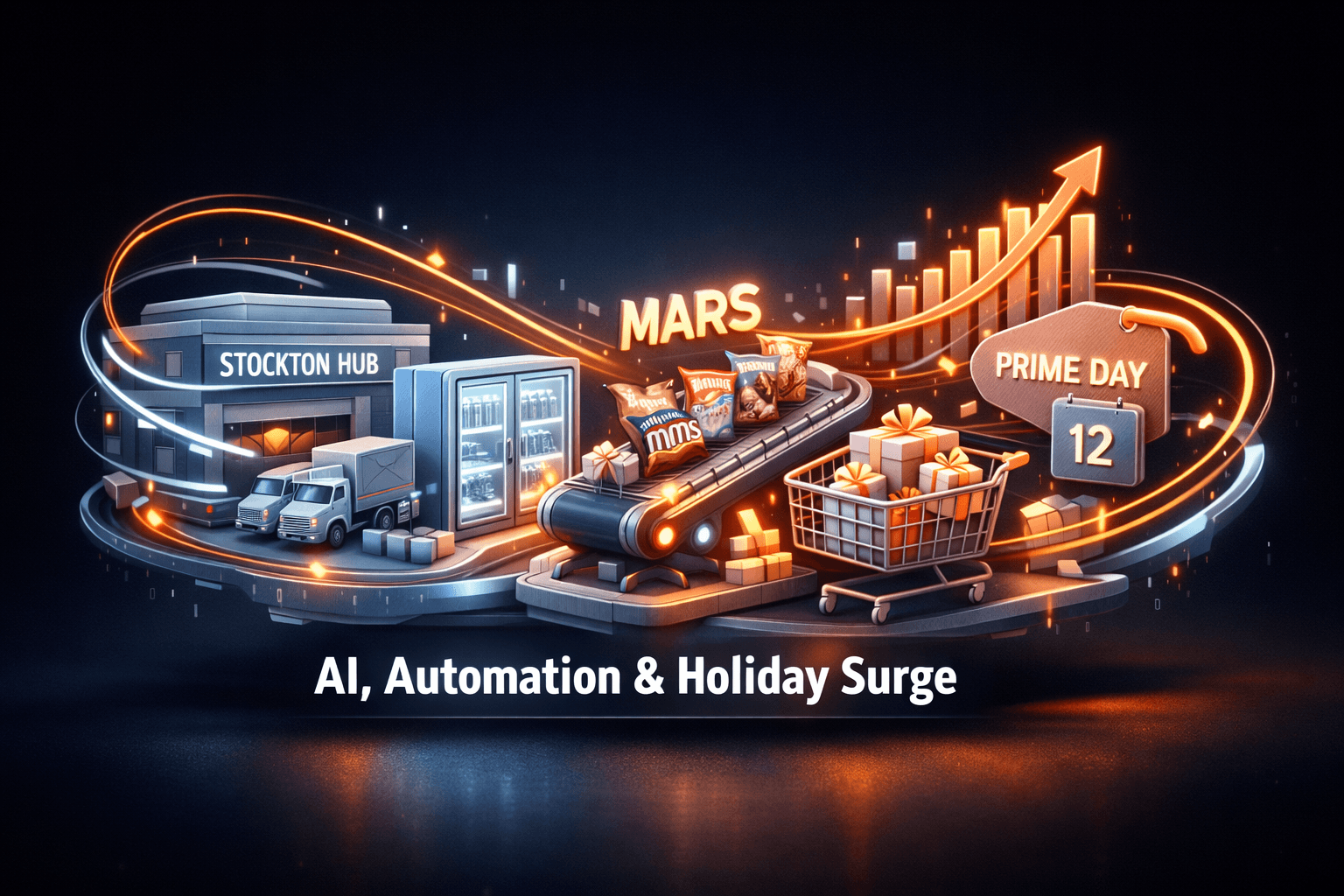
Retailers are moving from experimentation to execution, and you're seeing that in real projects that change cost structures and capacity. Today’s headlines span AI-driven store ideas, energy-saving refrigeration, new fulfillment automation and shifting holiday timing, all of which can influence sales velocity and margins.
Why does this matter to you as an investor? These developments point to faster operational payback on capital, increased fulfillment throughput, and marketing calendars that could bring more revenue into October, not just November and December.
Market Highlights
- Walmart $WMT opened a fifth next-generation fulfillment center in Stockton, California, a 900,000 square foot facility designed to increase storage and order fulfillment capacity on the West Coast.
- Retail tech is leaning heavily into AI and mobility, according to Retail Dive, with applications from checkout to inventory visibility changing the in-store experience and back-end efficiency.
- Grocery Dive reports newer refrigeration systems are delivering quicker energy savings than many operators expect, meaning physical store investments can produce short-term cost relief, a low-hanging fruit for grocers.
- Mars is pushing textured, protein-forward snack innovation, signaling category-level demand shifts that could lift shelf velocity for partners and retailers.
- Modern Retail says the fall Prime Big Deals Days is advancing holiday shopping into October, forcing brands to capture comparison shoppers earlier and retool promotional calendars ahead of Black Friday.
Key Developments
Walmart's Stockton fulfillment hub, $WMT
Walmart's new 900,000 square foot Stockton facility is its fifth next-generation fulfillment center, aimed at boosting capacity for California and the broader West Coast. Digital Commerce 360 notes Walmart ranks No. 2 in its Top 1000 Database, and this center is a clear operational bet on faster delivery and higher order throughput.
For you, higher fulfillment capacity can mean shorter delivery windows and potentially lower per-order costs over time. That supports e-commerce competitiveness and helps retailers handle peak holiday volumes without as much reliance on third-party logistics.
AI at the core of the store
Retail Dive frames the next era of retail tech around AI and mobility, not just for customer experience but for inventory and labor optimization. Retailers are testing AI for tasks from demand forecasting to dynamic store layouts, which could reduce waste and improve stock availability.
How quickly can brands turn these pilots into measurable sales lift? Execution speed and integration with existing systems will be decisive, and the vendors that help scale pilots to enterprise deployments will be worth watching.
Energy savings and on-shelf innovation
Grocery Dive highlights that upgrading refrigeration can start paying back through energy savings sooner than many expect, lowering operating costs for grocers who act now. That operational improvement complements the product-side momentum reported by Food Dive, where Mars is leaning into crunchy, spicy and protein-packed innovations to capture changing snack demand.
Together these stories suggest retailers can improve margins both by cutting energy spend and by reshaping assortments to meet evolving consumer preferences, creating multiple levers for performance this season.
What to Watch
Expect several near-term catalysts that could shift sentiment or results in the sector, and make sure you're tracking the right indicators. You should watch Q3 and Q4 earnings commentary for execution on fulfillment, AI spend and energy-cost reductions.
Key items to monitor include same-store sales and e-commerce growth from major retailers, fulfillment utilization rates at new automated centers, and capital expenditure commentary for store tech and refrigeration upgrades. Also watch promotional cadence, because the post-Fall Prime Day momentum is already compressing the holiday window.
Risks remain, including implementation cost overruns for automation and AI, slower-than-expected adoption of new refrigeration, and the possibility that earlier promotions simply shift future sales rather than expand them. What will matter most is whether these investments translate into margin improvement and sustained revenue growth.
Bottom Line
- Operational investments are moving from pilots to full-scale projects, with Walmart's new 900,000 sq ft Stockton hub a clear example of capacity and automation scale-up.
- AI and mobility are becoming platform bets for retailers, offering potential efficiency gains in inventory, labor and customer experience, though execution speed varies by operator.
- Energy-efficient refrigeration is an immediate cost savings play for grocers, often paying back sooner than expected, and represents near-term margin relief.
- Product innovation, exemplified by Mars' snacking push, and earlier holiday promotions are reshaping timing and assortment strategies heading into Q4.
- Watch earnings commentary, fulfillment metrics, and promotional effectiveness for signs that these moves are improving profitability, not just increasing costs.
FAQ Section
Q: How will new fulfillment centers affect retailer margins? A: New automation-infused centers can lower per-order fulfillment costs over time, increase throughput during peaks, and reduce delivery times, though upfront capital and ramp costs can weigh on near-term margins.
Q: Will refrigeration upgrades pay for themselves quickly? A: Industry reporting suggests newer refrigeration can deliver energy savings that shorten payback periods, making upgrades a viable near-term cost reduction for grocers.
Q: Should you expect AI pilots to boost sales immediately? A: AI pilots often improve operational metrics first, like inventory accuracy and labor efficiency, with sales uplift following as applications scale and integrate into merchandising and pricing workflows.