The Big Picture
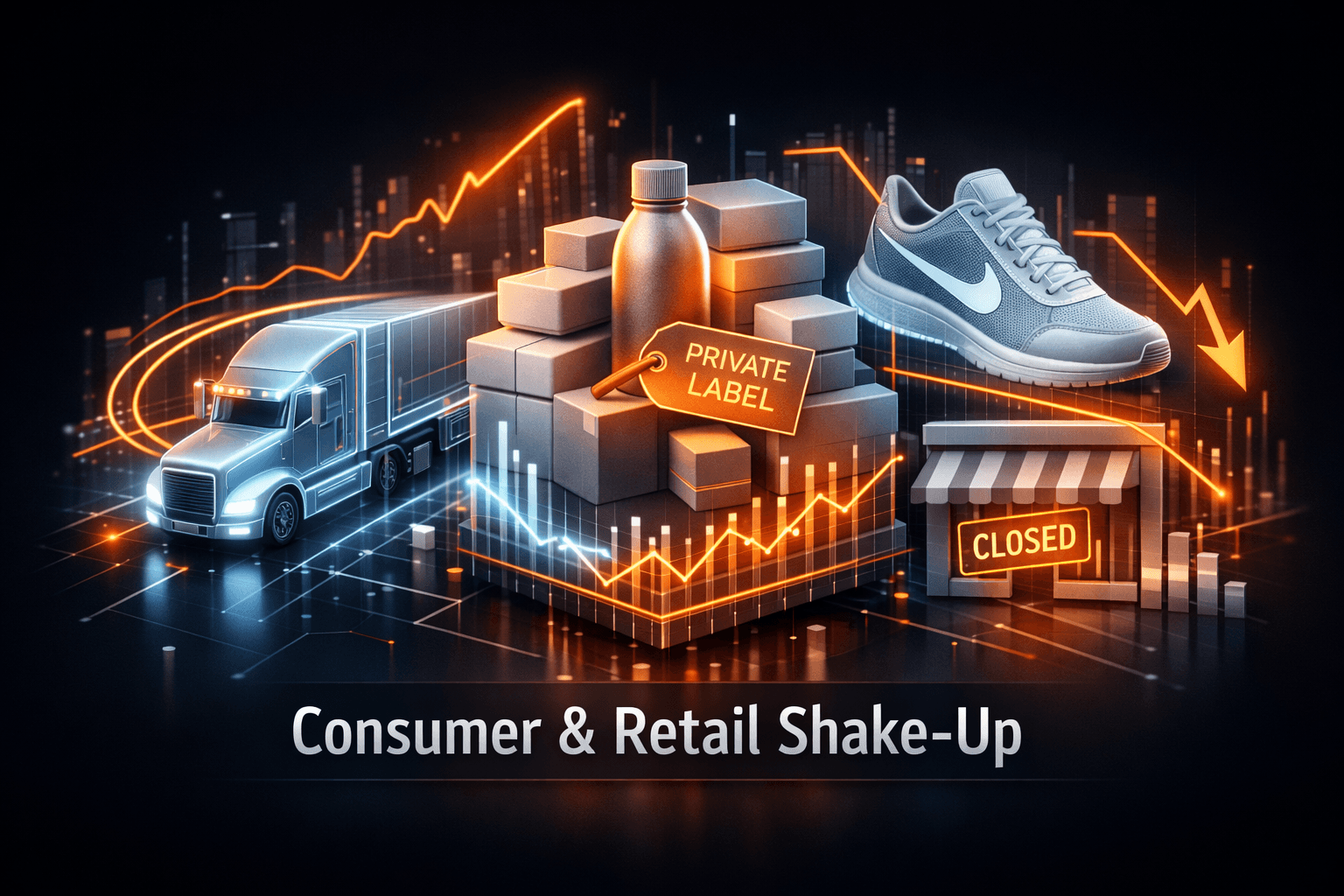
Today’s Consumer & Retail tape served up a blend of innovation and retrenchment, with high‑profile technology moves offset by continued operational resets. Ikea's plan to run fully driverless freight in Texas signaled a tangible logistics advance, while Nike's latest results and restructuring underscore persistent demand and margin pressures in apparel.
Why does this matter to you? The industry is splitting between companies investing for scale and efficiency and those pruning footprints or cutting costs to protect margins. That divergence will shape winners and losers into year‑end and beyond.
Market Highlights
Quick facts and market moves from today you can use to orient your watchlist.
- Ikea and Kodiak to run driverless freight, launching later this year on a roughly 220‑mile route between Houston and Dallas, highlighting logistics automation as a cost and speed lever.
- Ikea is also closing three small plan‑and‑order stores in the D.C.-area, Maryland and Virginia, reflecting a footprint rethink after recent experiments.
- $NKE reported a 4% year‑over‑year revenue decline in its most recent quarter and announced another operational reset with layoffs to follow, citing “significant work ahead.”
- $COST continues to loom as a growing threat to traditional grocers, with commentary today stressing the club’s scale and fresh offerings. Grocery chains made leadership moves, including a new CEO at Stater Bros. and a regional president role at $ACI, while $KR brought back a chief store operations role.
- Product and brand innovation was visible, from Skittles Gummy Crystals to Angara’s Cyber 5 readiness and Revolve launching a print magazine, even as Cato plans to close about 120 stores.
Key Developments
Ikea and Kodiak advance driverless freight
Ikea is moving from tests with safety drivers to a fully driverless freight service in Texas using Kodiak’s technology, focusing on a 220‑mile Dallas to Houston corridor. For investors, the development signals supply chain modernization that could lower distribution costs and improve delivery predictability for big retailers, though regulatory and scaling risks remain.
Ikea trims small‑format footprint as it reshapes omnichannel
At the same time Ikea is closing three small plan‑and‑order stores in the Washington, D.C., metro area, including one that opened within the last year. The closures suggest Ikea is weighing profitable formats versus brand presence, which could mean more capital funneled into centralized fulfillment and tech such as autonomous freight.
Nike's tough quarter and extended reset
$NKE reported a 4% revenue decline and said it will extend its turnaround timeline, with layoffs planned in the new year. Running was a bright spot, but broader weakness forced another operational reset. Analysts note this keeps visibility low and raises questions about inventory, consumer demand and how quickly margins will rebound.
Grocery sector leadership churn and competitive pressure
September brought notable executive moves across grocery chains, including Stater Bros., Albertsons and Kroger. Industry commentary also flagged Costco as an increasingly potent competitor for grocers, driven by fresh offerings and perceived value. Executive reshuffles suggest grocers are preparing for intensified competition into the holiday season.
What to Watch
Here are the catalysts and risks that could move Consumer & Retail names in the coming days and weeks.
- Autonomy and logistics: Watch for regulatory updates and pilot results from the Ikea‑Kodiak Texas rollout, and any commentary on operating cost impacts or route expansion plans.
- Earnings and guidance: Nike commentary on inventory levels and timing for margin recovery will be central, so watch analyst reactions and forward guidance carefully.
- Holiday prep and Cyber 5: Angara’s approach to Cyber 5 and private‑label packaging moves reveal how online and brick retailers plan to remove friction ahead of peak season, which matters to your holiday sales expectations.
- Store closures and real estate: Track further announcements from apparel chains, including Cato’s 120‑store closure plan, and any follow‑on retail footprint adjustments from Ikea.
- Competitive dynamics: Keep an eye on $COST performance and grocers’ promotional cadence, since pricing and assortment moves could shift market share quickly.
Bottom Line
- Innovation and cost savings from logistics tech like autonomous freight are gaining traction, but adoption will be gradual and regulatory outcomes will matter.
- Nike’s results keep apparel on notice, showing there’s still work to restore top‑line momentum and margins.
- Grocery remains a battleground, with $COST’s strength forcing legacy grocers to adjust leadership and operations.
- Private label and experiential product launches show retailers are investing in differentiation as a hedge against margin pressure.
- Overall, the market is sending mixed signals, so take a selective approach and watch near‑term catalysts closely before changing exposure.
FAQ Section
Q: How will Ikea’s driverless freight affect retailers? A: Driverless freight can reduce long haul labor costs and improve scheduling, but benefits depend on scale, route expansion and regulatory approvals.
Q: What should you look for in Nike’s next updates? A: Focus on inventory levels, guidance for the holiday season, and specifics on cost cuts and restructuring timing to assess margin recovery prospects.
Q: Will grocery chains be able to counter Costco’s growth? A: Grocers can respond with targeted promotions, fresh assortment upgrades, and private label differentiation, but execution and price perception will determine effectiveness.
Remember, this roundup presents reporting and analyst commentary for informational purposes only. Analysts note trends and data suggest directions, but these are not recommendations to buy or sell specific securities.